QuantumScape
From R&D to Industrial Scale in Next-Gen Energy Storage

Purpose of the Analysis
This analysis is about more than one company, it’s about understanding whether QuantumScape can transform a decade of scientific ambition into industrial and financial reality.
The purpose of this analysis is to evaluate QuantumScape as both a technology innovator and an investment opportunity, separating promise from execution risk. By examining the company’s strategy, financial profile, regulatory environment, and competitive positioning, the goal is to determine whether its solid-state battery technology can realistically transition from laboratory prototypes to commercial-scale production.
This thesis does not aim to provide short-term trading recommendations, but rather to assess QuantumScape’s long-term potential to become a cornerstone of the global energy transition. For investors, the analysis serves as a framework to weigh the asymmetric risk-reward profile inherent in betting on a generational technology shift.
Ultimately, this work serves as both a due diligence exercise and a forward-looking view on where QuantumScape could fit in the broader EV and energy storage ecosystem. The intent is to help investors and industry observers alike separate narrative from substance, while providing perspective on the asymmetric nature of the opportunity: a company that could either stumble under the weight of execution risk or emerge as a generational winner in the electrification “megatrend”.
Table of Contents
Corporate profile
Founding and Evolution
Company Overview
Management and Leadership
Core Products & Technology Platform
Product Applications & Value Proposition
Operational Readiness & Manufacturing Scale-Up
Commercialization Path & Strategic Partnerships
Market Opportunity & Industry Dynamics
Competitive Landscape
Regulatory & Policy Considerations
Financial Profile & Capital Structure
Key Risks & Execution Challenges
Catalysts
Opinion and Target View
Conclusion
Acknowledgements & Disclaimer
1. Corporate Profile
QuantumScape is a U.S.-based advanced battery developer focused on commercializing solid-state lithium-metal batteries, a technology designed to improve energy density, charging speed, and safety compared to conventional lithium-ion cells. The company operates an R&D-driven model supported by strategic partnerships, most notably with Volkswagen, to transition its proprietary technology from pilot-scale validation to automotive-grade production.
QuantumScape positions itself as a potential enabler of the next generation of electric vehicles, aiming to deliver batteries that extend driving range, shorten charge times, and lower total cost of ownership, thereby capturing a critical role in the accelerating global shift to electrification.

2. Founding and Evolution
Few companies have endured a decade of trial, skepticism, and delay. QuantumScape has, and that endurance may yet redefine the battery industry.
QuantumScape’s history is not one of overnight disruption but of patient persistence in one of the most difficult areas of advanced technology. Since its founding, the company has pursued a singular objective: to make solid-state lithium-metal batteries viable at commercial scale. In a sector where most startups chase incremental gains or pivot under pressure, QuantumScape has doubled down, having technical setbacks, long timelines, and intense scrutiny. This focus has allowed it to build credibility with strategic partners and accumulate the capital needed to sustain a long march toward commercialization. The lesson is that true hard-tech breakthroughs rarely follow smooth trajectories; they are forged through years of resilience and singular focus.
QuantumScape was founded in 2010 by Jagdeep Singh, a Stanford-educated entrepreneur best known for co-founding the optical networking company Infinera, together with Stanford professors Fritz Prinz and Tim Holme. The founders were motivated by a rather simple idea: conventional lithium-ion batteries, while improving incrementally, faced hard limits on energy density, charging speed, and safety due to their liquid electrolyte design.
A breakthrough architecture would be needed if electric vehicles (EVs) were to match the convenience and performance of internal combustion engines. From the beginning, QuantumScape focused exclusively on solid-state lithium-metal batteries, a high-risk, high-reward strategy that differentiated it from peers attempting to optimize existing lithium-ion chemistries.
In its early years, the company operated largely in stealth, funded by venture investors such as Kleiner Perkins and supported by Stanford’s academic ecosystem. This initial phase was marked by a research-driven business model: rather than chasing early revenue, the company prioritized solving fundamental scientific challenges, particularly the development of a stable, dendrite-resistant solid electrolyte.
By 2012, QuantumScape had attracted the attention of Volkswagen Group, which made a strategic investment and later established a deep technical collaboration. This partnership was transformative, not only did it provide financial stability, it also positioned QuantumScape within the supply chain of a top-tier automaker, giving the company a clear commercialization pathway at a time when skepticism about solid-state batteries was widespread.
The mid-2010s were a period of intensive R&D. QuantumScape demonstrated proof-of-concept cells that validated the core chemistry and began scaling to larger multilayer formats. Importantly, Volkswagen increased its stake multiple times, committing more than $300 million over several rounds and eventually securing joint development rights. This level of OEM buy-in was rare in the sector and signaled that QuantumScape’s approach was considered technically credible and strategically important. This period framed QuantumScape less as a speculative lab project and more as a potential cornerstone of the EV supply chain, with long development timelines.
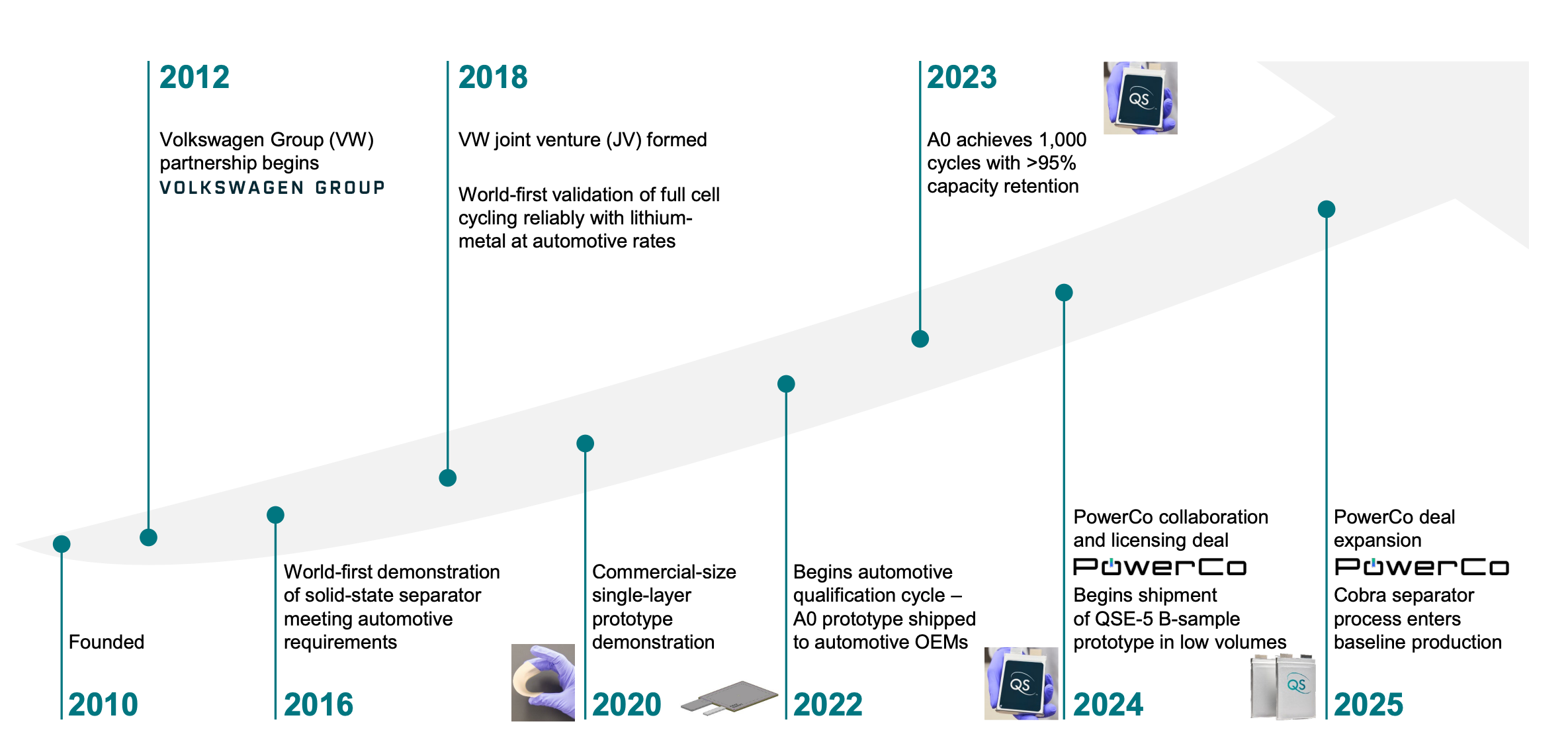
The company’s pivotal strategic leap occurred in late 2020, when it went public via a merger with Kensington Capital Acquisition Corp., a SPAC led by automotive industry veteran Justin Mirro. The deal raised over $1 billion in gross proceeds, at the time one of the largest financings in the battery sector, providing a multi-year funding runway to support the transition from laboratory validation to pilot-scale manufacturing.
The IPO coincided with a surge of investor enthusiasm for EV-related companies, propelling QuantumScape’s market capitalization to levels that briefly exceeded established battery makers despite the absence of revenue. While the capital infusion was unquestionably positive, the public listing introduced a new dynamic: execution milestones would now be scrutinized quarterly, and any slippage in timelines could directly impact investor confidence and valuation.
Post-IPO, QuantumScape’s narrative has been defined by progress toward manufacturability. The company established its QS-0 pilot facility in San Jose to produce multilayer cells at pre-commercial scale and began preparing for customer sampling. The partnership with Volkswagen was further institutionalized through a joint venture aimed at building a large-scale manufacturing facility in Europe, although timelines remain contingent on successful scale-up at QS-0.
Key inflection points in recent years have included demonstrating 10-layer and then 24-layer cells, achieving promising cycle-life data, and reporting progress toward fast-charge performance. Each milestone has been accompanied by heightened scrutiny: investors weigh reported technical progress against the risk that scaling challenges could delay or dilute the technology’s eventual commercialization.
Today, QuantumScape stands at a critical juncture in its evolution. Having secured capital, partnerships, and proof-of-concept results, the company is transitioning from a science-driven startup into an execution-driven enterprise. For long-term investors, the company’s history illustrates both its durability, over a decade of persistence in one of the toughest areas of materials science, and the binary nature of its opportunity.
If successful, QuantumScape could supply the enabling technology behind next-generation EVs and capture significant share in a trillion-dollar market; if unsuccessful, it risks being overtaken by faster-moving incumbents or alternative chemistries. The company’s evolution to date underscores why its future rests on proving not just scientific validity, but, most importantly, industrial scalability.
3. Company Overview
QuantumScape is not chasing incremental gains in batteries, it is betting everything on a breakthrough platform that could reset the EV industry’s performance curve.
The company overview of QuantumScape is best understood as a contrast to conventional battery makers. While most of the sector operates within the boundaries of lithium-ion chemistry, focused on cost reductions and incremental gains, QuantumScape has set itself apart by pursuing a fundamentally different architecture. Its mission is not to compete at today’s margins but to unlock tomorrow’s possibilities, aiming to commercialize solid-state lithium-metal cells that directly tackle the three core barriers to EV adoption: energy density, charging time, and safety.
By anchoring itself to a high-risk, high-reward scientific problem and aligning early with Volkswagen, QuantumScape structured itself more like a deep-tech platform than a commodity producer. This unusual positioning is the foundation of its investment case: if successful, it will not simply participate in the battery market, it could redefine it.
Business focus and mission
QuantumScape Corporation is a U.S.-based advanced battery developer focused on one of the most ambitious goals in clean technology: commercializing solid-state lithium-metal batteries at scale.
Its strategic focus has always been on solving the hard science problem that constrains EV adoption, how to build a fundamentally better battery, not just an incrementally improved one. At the center of QuantumScape’s mission is the belief that step-change advances in energy storage are essential to make electric vehicles competitive with, and ultimately superior to, internal combustion engines on convenience, cost, and performance.
Unlike conventional battery companies that generate revenue early by supplying commodity cells, QuantumScape is structured more like a deep-tech platform company. It has spent over a decade operating in an R&D-driven model, funded by a combination of venture capital, strategic investors, and later public equity markets.
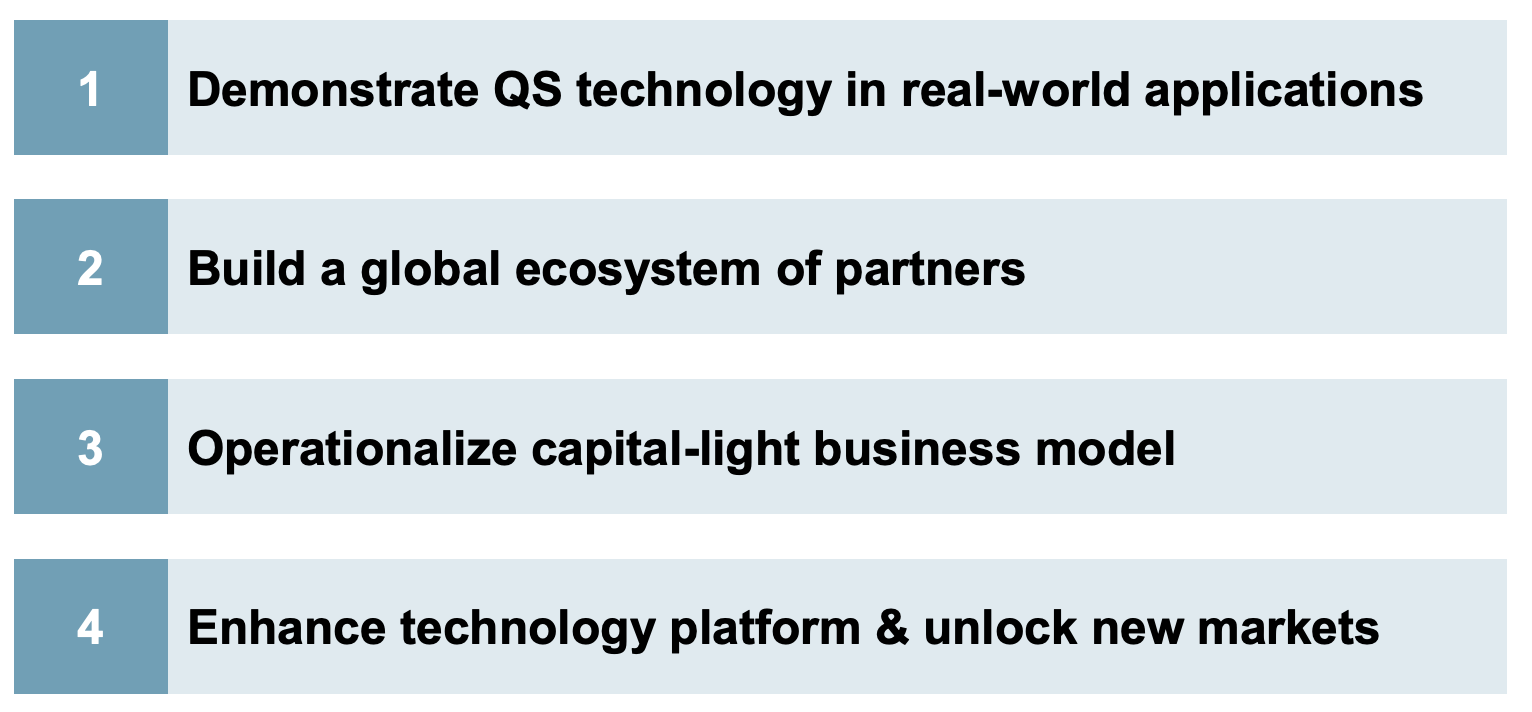
The company’s business model reflects this focus on capital efficiency and long-term positioning. Rather than building massive factories prematurely, QuantumScape plans to progress through stages: laboratory validation, pilot-scale production (the QS-0 line in San Jose), customer sampling, and eventual scale-up in joint facilities with OEMs.
The model envisions multiple revenue streams in the future: direct cell sales through joint ventures, licensing of its proprietary solid-state electrolyte platform, and potentially partnerships beyond automotive, such as in stationary storage or aerospace. Importantly, QuantumScape’s structure allows it to leverage partners’ manufacturing and distribution capabilities while retaining control over its intellectual property, which already includes more than 200 issued or pending patents.
The mission and business design highlight both the opportunity and the risk. The opportunity is clear: if QuantumScape succeeds in achieving its stated performance metrics at commercial scale, it will not simply be another battery supplier, it could redefine the EV value chain and capture disproportionate economics. The risk is equally apparent: as a pre-revenue company dependent on technology scale-up, its future rests on execution over the next five to ten years. Yet this asymmetric profile, the chance to enable the next generation of EVs against the risk of technical or manufacturing failure, is precisely what attracts long-term investors seeking exposure to transformative clean technology.
Market need and problem definition
The transition to electric vehicles (EVs) represents one of the largest industrial shifts of the 21st century, yet it remains constrained by the limitations of today’s lithium-ion batteries. While these batteries have enabled the first wave of EV adoption, they are reaching the practical limits of their performance envelope. The average EV sold today offers a range of 250-300 miles under standard conditions, which, while acceptable for early adopters, still lags consumer expectations shaped by internal combustion vehicles capable of 400–500 miles per tank.
Extending EV range generally requires larger, heavier, and more expensive battery packs, a trade-off that erodes efficiency and profitability. Charging remains another barrier: even at high-powered fast chargers, most EVs still require 30-40 minutes to achieve an 80% charge, a timeframe that falls short of the convenience consumers expect. Safety also remains a persistent concern, as the flammable liquid electrolytes used in lithium-ion batteries can lead to catastrophic failures under thermal runaway conditions.
For automakers, these technological ceilings represent more than an engineering inconvenience, they are a strategic and regulatory risk. Governments in the U.S., Europe, and China have introduced aggressive targets to phase out internal combustion engine sales within the next 10-15 years. To comply, OEMs must not only scale EV production but also convince mass-market consumers to adopt them. That requires batteries with longer ranges, faster charging, and uncompromised safety, delivered at cost structures that allow for profitability.
The scale of the challenge is immense: by 2030, global EV sales are projected to require several terawatt-hours of annual battery capacity, creating a trillion-dollar market opportunity in energy storage. Yet most of the world’s battery supply chain remains committed to incremental lithium-ion improvements, leaving a gap for technologies that can provide a step-change in performance.
This gap defines QuantumScape’s addressable problem. The company’s solid-state lithium-metal design is positioned to directly target the three key consumer and OEM pain points: energy density, charging speed, and safety. By eliminating the liquid electrolyte and enabling lithium-metal anodes, QuantumScape aims to double energy density, allow an 80% recharge in under 15 minutes, and substantially reduce fire risk.
This is not merely an engineering milestone, it is a commercial imperative. As EV penetration accelerates, the OEMs that secure access to superior batteries will capture market share, while those locked into standard lithium-ion chemistries risk commoditization. The timing is critical: the next five years will determine which technologies are validated and scaled in time to meet the 2030 regulatory mandates. QuantumScape’s proposition is to be at the forefront of that transition, offering investors exposure to one of the few technologies with the potential to reset the performance curve of the EV industry.
How QuantumScape’s platform addresses the problem
QuantumScape’s platform is designed to solve the core limitations of lithium-ion batteries by replacing the liquid electrolyte with a proprietary solid ceramic electrolyte and enabling the use of pure lithium-metal as the anode. This architectural shift is fundamental. In conventional lithium-ion cells, the graphite anode occupies substantial volume and weight, limiting how much energy can be stored.
By contrast, lithium-metal anodes offer far higher theoretical energy density. The obstacle historically has been dendrite formation, needle-like growths that short-circuit the cell when lithium is plated onto the anode during charging. QuantumScape claims its solid electrolyte not only blocks dendrites but also allows stable cycling across hundreds of charge-discharge events. If validated at scale, this would unlock a practical pathway to doubling energy density relative to leading lithium-ion cells.
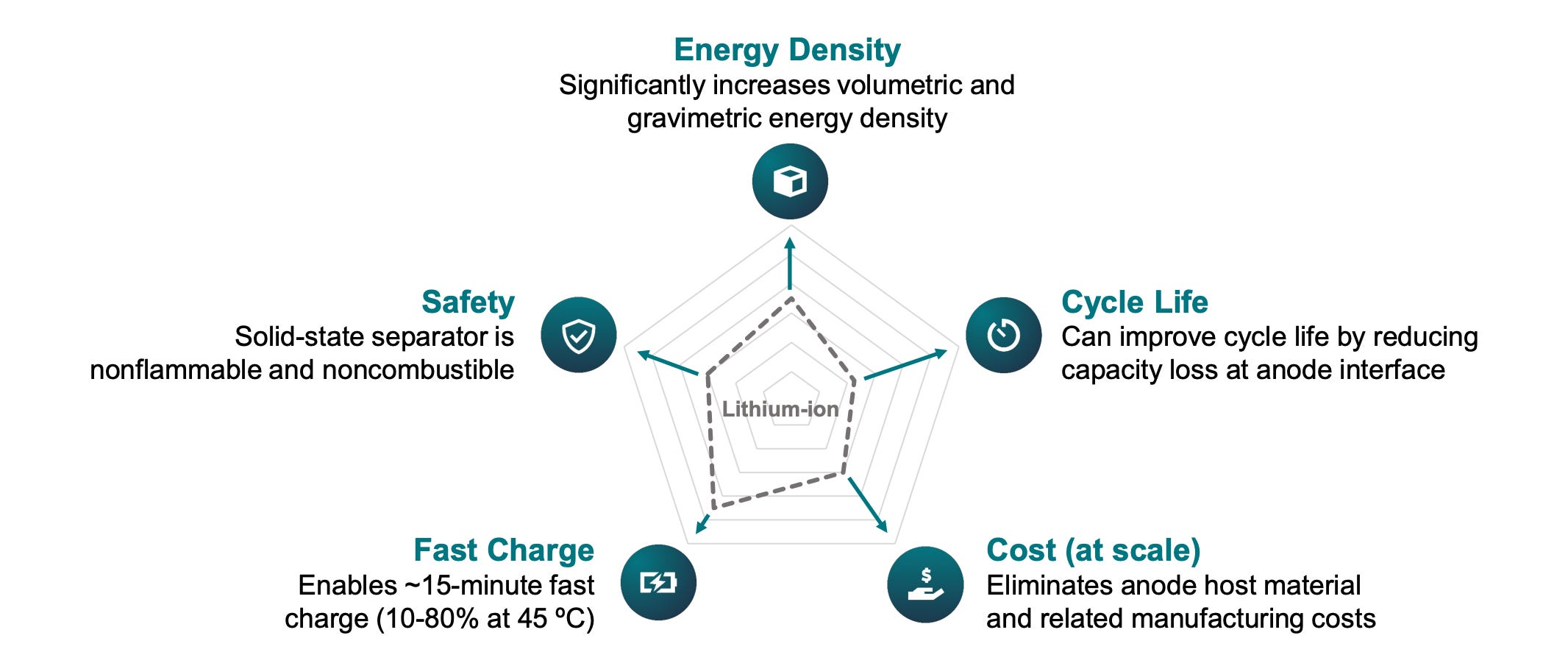
The company has also prioritized fast-charging performance, another consumer pain point. Laboratory data released by QuantumScape suggests its cells can achieve an 80% charge in under 15 minutes without significant degradation. Achieving this at scale would close one of the biggest psychological gaps for consumers comparing EVs with gasoline vehicles. Safety is a third pillar of the value proposition: the solid electrolyte is nonflammable, eliminating the liquid components most prone to combustion in thermal runaway scenarios. This addresses not only consumer confidence but also regulatory and insurance risk, factors that can materially impact EV adoption curves.
Strategically, QuantumScape has focused on maintaining an IP-led platform rather than pursuing early commoditization. Its solid electrolyte design, along with manufacturing processes and cell architecture, are covered by a growing patent portfolio of more than 200 issued or pending patents. This intellectual property is key to the business model: rather than competing directly in the crowded lithium-ion market, QuantumScape intends to supply differentiated cells via joint ventures with automotive OEMs. Volkswagen is the anchor partner, but the platform could theoretically extend to other automakers, consumer electronics, and even grid-scale storage over time.
The near-term execution focus is on manufacturability. Building the QS-0 pilot line in San Jose represents the first step toward proving that its solid-state cells can be produced reliably in multilayer formats, moving from single-layer test cells to 10-, 24-, and eventually 48-layer commercial prototypes. This transition from scientific feasibility to industrial scalability is the most critical inflection point for the company. QuantumScape’s platform offers an asymmetric profile: if the solid electrolyte delivers at scale, the company could leapfrog lithium-ion incumbents and establish itself as a foundational supplier to the EV industry. If it fails, however, years of R&D investment may not translate into commercial relevance. The binary nature of this outcome underscores why QuantumScape is viewed as both a high-risk and potentially transformative investment.
What makes QuantumScape’s profile compelling is not just the technology it pursues but the structure of its strategy. By resisting premature scale-up, focusing on IP protection, and leveraging partners for manufacturing and distribution, the company has designed a model that maximizes upside while mitigating some capital intensity. Its roadmap, from lab validation to pilot-scale to joint ventures, reflects both discipline and ambition.
The overview underscores why QuantumScape is a binary play: years of scientific progress have positioned it as one of the few credible contenders to challenge lithium-ion’s dominance, but execution on manufacturability will determine whether it becomes a cornerstone of the EV supply chain or another casualty of hard-tech risk. The opportunity is generational, the risk, structural, but that is precisely the asymmetry that attracts long-term capital.
Ultimately, the success of this technological and commercial vision depends not only on the strength of the platform, but also on the caliber of the team tasked with executing it, making leadership a critical next focus
4. Management and Leadership
QuantumScape’s leadership is a blend of visionary founders and seasoned operators, united by the task of transforming breakthrough science into industrial reality.
At the heart of QuantumScape’s investment case lies its leadership team. The company’s journey has moved beyond scientific discovery into the far more difficult phase of manufacturing readiness, requiring not only technical brilliance but also operational discipline, financial stewardship, and legal resilience.
From co-founder and CTO Tim Holme, who has provided continuity of vision since inception, to CEO Siva Sivaram, an industry veteran renowned for scaling complex technologies, the team reflects a carefully constructed balance of science and execution. Their combined expertise ensures that QuantumScape is not just advancing chemistry but also building the organizational and operational framework required to industrialize it. For investors, leadership is not an accessory here, it is the decisive factor that determines whether potential becomes reality.
Dr. Siva Sivaram - President & CEO
Professional background and career milestones
Dr. Siva Sivaram is a seasoned technologist and executive whose career spans over three decades, distinguished by leadership roles across semiconductor, data storage, and cleantech industries. He holds a Ph.D. and M.S. in Materials Science from Rensselaer Polytechnic Institute and a B.S. in Mechanical Engineering from the National Institute of Technology, Tiruchirappalli. His early career includes key operational and leadership roles at Intel and Matrix Semiconductor, where he gained significant experience in pioneering 3D semiconductor technologies.
Later, as Executive Vice President of Memory Technology at SanDisk, he oversaw the development of breakthrough NAND flash memory innovations, including early 3D NAND architecture.
In 2008, Dr. Sivaram founded Twin Creeks Technologies, marking his transition into entrepreneurship by steering advanced solar cell and equipment manufacturing. This venture reinforced his capacity to translate research-intensive technologies into scalable product lines. After Twin Creeks, he held senior roles at Western Digital, becoming Executive Vice President of Technology and Strategy and ultimately President of Technology and Strategy. In these capacities, he shaped corporate strategy and operational scaling for one of the world’s largest data storage firms.
He joined QuantumScape in September 2023 as President, tasked with heading technology and manufacturing teams precisely as the company began its transition from lab-based validation to commercial prototyping. In February 2024, he was appointed CEO and a Board member, marking the culmination of a carefully planned leadership transition. His track record of translating complex technologies into high-volume products positions him uniquely to lead QuantumScape through its most critical growth phase. Cultura- and scale-oriented, Dr. Sivaram is the kind of operator who brings scientific capabilities into industrial reality.

Founding vision & role in shaping strategy
Although not a founder, Dr. Sivaram has become the operational steward of QuantumScape’s decade-old vision: to revolutionize energy storage with solid-state lithium-metal batteries. Upon his arrival as President, the company had already established a compelling technology base but lacked a manufacturing mindset. Dr. Sivaram immediately began aligning R&D with pragmatic milestones, such as shipping “Alpha-2” prototypes to automotive customers and defining the QSE-5 cell as its first planned commercial product.
His strategic influence extends to developing a three-part blueprint emphasizing real-world demonstration, ecosystem-building, and continual platform innovation. He has framed the QSE-5 as the launching point for showcasing the company’s technology in production-relevant formats, while also working to forge partnerships across materials suppliers, equipment vendors, and OEMs. Under his direction, QuantumScape pursued a capital-light model, partnering with PowerCo (Volkswagen’s battery unit) to industrialize manufacturing rather than build proprietary gigafactories outright. This model reflects a strategic shift, from building everything in-house to orchestrating a networked platform approach.
Equally important is his role in reframing how the company communicates with investors. Where the founder’s narrative leaned heavily on scientific breakthroughs, Dr. Sivaram now emphasizes industrial feasibility, roadmap clarity, and cross-functional execution. He has introduced greater transparency into milestone reporting, which over time can reduce volatility in investor sentiment. By grounding QuantumScape’s long-term plan in manufacturing realism, while maintaining aggressive innovation, he is positioning the company to deliver on the founder’s vision with timelines and execution discipline that long-term investors can track credibly.
Leadership style & execution track record
Dr. Sivaram leads with a highly pragmatic, execution-focused style defined by transparency, humility, and operational discipline. He has emphasized that “manufacturing teaches you humility,” reflecting recognition that scaling technologies emphasizes consistency over laboratory breakthroughs. His public statements consistently communicate realistic, iterative progress: for example, discussing prototype performance data and milestones without overpromising or speculative rhetoric.
He also prioritizes close collaboration with partners and customers. Dr. Sivaram has underscored the importance of early feedback loops, evident in how he described Alpha-2 customer shipments as a critical input in accelerating product readiness. This iterative feedback-oriented mindset reflects a quality-centric leadership philosophy. He is known for being detail-oriented, ensuring that engineering, operations, and partner engagement are tightly aligned. Importantly, he appears comfortable making trade-offs, recognizing that premature scaling could undermine credibility more than delayed progress.
What distinguishes his leadership is not just technical expertise but his credibility with both engineers and investors. In past roles at Western Digital and SanDisk, he earned a reputation for bringing advanced semiconductor and storage technologies into mass production without compromising quality. That track record reassures stakeholders that QuantumScape’s bold claims will be matched with disciplined execution. For a company where investor trust hinges on meeting milestones, Dr. Sivaram’s blend of pragmatism and accountability provides a stabilizing force. His style helps cultivate confidence that the company’s scientific promise is backed by industrial merit, making him an indispensable figure in QuantumScape’s next chapter.

Alignment with investors & role in investment thesis
Dr. Sivaram’s compensation reflects the significance of his role: in addition to base salary and bonus opportunities, he received substantial equity awards tied to time and performance milestones, aligning his incentives with QuantumScape’s success. Such alignment underscores his personal stake in delivering results. For long-term investors, equity-heavy pay packages are critical, as they link executive outcomes with shareholder value creation.
In the context of your investment thesis, he is the linchpin. QuantumScape’s potential, redefining EV energy storage, rests on one key execution vector: scaling prototype cells into manufacturing-grade products in partnership with OEMs. Dr. Sivaram’s track record suggests he is uniquely capable of delivering on that vector. His background gives institutional credibility, reduces execution risk, and enhances the likelihood that technical breakthroughs translate into commercial relevance.
Moreover, his presence as CEO signals to both partners and markets that QuantumScape is serious about moving beyond the laboratory. Investors often discount pre-revenue technology firms due to lack of experienced industrial leadership; Dr. Sivaram directly addresses that concern. His background in scaling complex, capital-intensive technologies makes him not only a steward of the company but also a bridge of confidence between the lab, the factory floor, and Wall Street. Without him, the story remains a speculative science project; with him, it evolves into a credible industrial execution play. That asymmetry of outcomes, contingent on his leadership, is central to why long-term investors must evaluate his role as inseparable from the QuantumScape thesis.
Dr. Tim Holme - Co-founder & Chief Technology Officer
Dr. Tim Holme is one of QuantumScape’s original co-founders and a key architect of its scientific foundation. He holds a Ph.D. in mechanical engineering from Stanford University, where his research specialized in electrochemical energy systems. Prior to founding QuantumScape, his academic and professional work centered on solving materials and engineering challenges at the intersection of energy and sustainability. This background gave him the technical grounding to lead the development of QuantumScape’s solid-state battery architecture and to oversee its transition from theoretical concept to a validated prototype platform.

In his current role as Chief Technology Officer, Dr. Holme is responsible for guiding the company’s technical vision and overseeing all aspects of research and development. He leads teams focused on electrolyte chemistry, lithium-metal anode integration, and multilayer cell design, ensuring that the firm maintains its edge in a field crowded with competitors chasing incremental advances. Strategically, Holme’s work is not confined to the lab; he plays a pivotal role in aligning long-term R&D with productization goals, ensuring that scientific progress translates into manufacturable outcomes. His leadership has been instrumental in key milestones such as the validation of multi-layer solid-state prototypes and the progression of pilot-line cells for customer sampling.
Dr. Holme’s role is especially critical given the nature of QuantumScape’s thesis. Unlike more established lithium-ion players, the company’s differentiation lies entirely in its ability to execute on a new technology paradigm. As CTO and co-founder, Holme provides both continuity and credibility, ensuring that the scientific rigor underpinning the platform is not diluted as the firm moves toward commercialization. His influence is central to maintaining the company’s technological edge while navigating the inevitable trade-offs between speed, scalability, and performance. Without his stewardship, the risk of strategic drift or technical misalignment would be significantly higher. In short, Holme embodies the link between QuantumScape’s founding vision and its future industrial execution, making his role indispensable to both the company’s success and its long-term investment case.
Dr. Mohit Singh - Chief Development Officer
Dr. Mohit Singh brings a strong background in materials science and battery research, with a Ph.D. in Materials Science and Engineering from Stanford University. Before joining QuantumScape, his career included extensive academic and industry work in electrochemistry, energy storage, and material innovation. His combination of scientific expertise and practical engineering knowledge positioned him to contribute directly to the firm’s core mission of solving the most difficult challenges in solid-state battery development.

As Chief Development Officer, Dr. Singh plays a pivotal role in bridging the gap between research breakthroughs and scalable productization. He is responsible for the design, testing, and iteration of multilayer solid-state cells, leading cross-functional teams that span materials engineering, process development, and systems integration. His work ensures that QuantumScape’s laboratory results are translated into cells that can withstand real-world automotive conditions, meeting the stringent performance, durability, and safety requirements of OEM partners. Strategically, Singh’s oversight of development activities aligns the firm’s technical roadmap with customer milestones, including the delivery of Alpha and B-sample prototypes. By focusing on manufacturability, reliability, and performance validation, he ensures that QuantumScape’s technology matures in step with commercial expectations.
Laboratory successes are meaningful, but the investment thesis requires consistent demonstration of progress toward automotive-grade batteries. Singh’s leadership mitigates a major risk in deep-tech ventures: the failure to bridge the “valley of death” between science and commercialization. His position ensures not only that R&D stays aligned with long-term strategy but also that each milestone reduces uncertainty in the company’s path to market. By driving development discipline, he enhances the probability that QuantumScape’s groundbreaking electrolyte and anode technology can be industrialized at scale, making him a central figure in turning the company’s vision into investable reality.
Dr. Luca Fasoli - Chief Operating Officer
Dr. Luca Fasoli holds a Ph.D. in Physics from the Swiss Federal Institute of Technology (ETH Zurich) and has built a career that blends deep technical expertise with operational leadership. Before joining QuantumScape, he served in senior roles at Applied Materials and other high-tech firms, where he gained experience in scaling advanced manufacturing processes for complex technologies. His background provides him with both the scientific literacy to engage with QuantumScape’s research-heavy environment and the operational acumen to translate innovation into disciplined execution.

As Chief Operating Officer, Dr. Fasoli is responsible for overseeing QuantumScape’s day-to-day operations, with a particular focus on scaling the company’s pilot production capabilities. He manages the integration of engineering, manufacturing, supply chain, and quality systems to ensure that QuantumScape’s prototypes evolve into production-ready cells. His role involves building the operational infrastructure that allows scientific breakthroughs to be repeated at industrial volumes, a challenge that requires both process rigor and cross-functional coordination. Strategically, Fasoli is central to the company’s pilot line (QS-0) and the eventual build-out of joint manufacturing ventures with OEM partners. His leadership ensures that operational execution keeps pace with customer demands and investor expectations, turning technological progress into measurable output.
QuantumScape’s investment thesis hinges not only on the promise of solid-state technology but also on the company’s ability to manufacture consistently at scale. This is where operational leadership becomes a decisive factor. Without a COO capable of aligning R&D, engineering, and production processes, even the best scientific platform would risk stalling in the transition to commercialization. Fasoli’s experience in scaling complex technologies directly reduces this execution risk. For long-term investors, his presence provides confidence that QuantumScape is building not just a breakthrough battery, but the operational backbone required to support industrial-scale production. In this sense, Fasoli is more than an operator; he is the architect of the company’s ability to deliver on its promises at commercial scale, making his role fundamental to the long-term value creation thesis.
Kevin Hettrich - Chief Financial Officer
Kevin Hettrich brings more than two decades of financial leadership across high-growth and technology-driven industries. He holds a degree in finance and has served in senior financial roles at large public companies, including SanDisk and Western Digital. His career has been defined by managing complex capital structures, leading financial planning and analysis teams, and supporting technology organizations through both rapid expansion and restructuring phases. This background gives him a blend of operational finance expertise and capital markets experience, skills well-matched to a pre-revenue, R&D-heavy company like QuantumScape.

As Chief Financial Officer, Hettrich’s role goes far beyond traditional balance sheet oversight. He is responsible for stewarding QuantumScape’s capital, ensuring that the company maintains sufficient liquidity to fund its technology development and pilot production programs through the mid-2020s. This involves structuring budgets for R&D, manufacturing scale-up, and joint venture commitments while maintaining the discipline needed to operate as a pre-revenue firm in public markets. He also manages investor relations, articulating the company’s progress and capital requirements to a market that scrutinizes execution risk closely. Strategically, Hettrich is tasked with aligning the company’s long-term financing needs with its staged commercialization milestones, reducing dilution where possible while maintaining flexibility to raise capital when required.
Unlike established manufacturers with steady operating cash flows, QS’s valuation and survival depend heavily on prudent capital management. Missteps in financing strategy, investor communication, or cost discipline could compromise the firm’s ability to reach commercialization. Hettrich’s leadership mitigates these risks by ensuring a transparent, staged financing roadmap tied to technical milestones. His ability to sustain market confidence, while balancing burn rate with the enormous capital needs of scaling, will likely determine whether the company can navigate the next five years without excessive shareholder dilution. For long-term investors, his role is not just administrative but existential: he manages the lifeline that will determine whether QuantumScape has the runway to turn breakthrough science into a viable industrial business.
Michael McCarthy - Chief Legal Officer & Head of Corporate Development
Michael McCarthy brings over two decades of legal and corporate development expertise, with a career spanning leadership roles in both private and public companies. He holds a J.D. and has served as General Counsel and corporate secretary in several technology-driven organizations, including SanDisk and Western Digital. His background includes leading complex corporate transactions, managing intellectual property strategy, and overseeing governance in highly regulated, innovation-heavy industries. This mix of transactional and operational experience makes him well-suited to support QuantumScape as it navigates the dual challenges of rapid growth and public company scrutiny.

In his current role as Chief Legal Officer and Head of Corporate Development, McCarthy oversees all legal, compliance, and corporate governance functions, while also shaping QuantumScape’s external partnerships and growth initiatives. He manages regulatory disclosures, intellectual property protection, and contractual negotiations with suppliers, customers, and joint venture partners. Strategically, his mandate extends into corporate development, where he plays a central role in structuring deals with automotive OEMs, scaling partners, and potential future collaborators. Given QuantumScape’s reliance on both proprietary IP and strategic alliances for commercialization, McCarthy’s leadership ensures that the firm’s legal and contractual frameworks enable long-term value capture rather than leaving the company vulnerable to competitors or suppliers.
QuantumScape is a pre-revenue, IP-rich company operating in a highly competitive and geopolitically sensitive industry. Its valuation and long-term defensibility depend heavily on the strength of its intellectual property, the durability of its joint venture agreements, and its ability to protect shareholder interests in negotiations with much larger industrial partners. As head of corporate development, McCarthy also influences how QuantumScape pursues strategic options, whether through joint ventures, licensing, or partnerships, which directly impacts the company’s capital efficiency and eventual market positioning. In essence, his role provides the legal and strategic scaffolding that allows the company’s scientific and operational progress to translate into sustainable shareholder value. For investors, this is not peripheral: it is a crucial element of how QuantumScape turns technical potential into defensible, long-term business economics.
Taken together, QuantumScape’s leadership forms a multi-dimensional team designed for one singular mission: bridging the gap between the lab and the factory floor. The founders provide continuity and technological depth, while later-stage executives bring the discipline of scaling, capital management, and legal structure.
This deliberate mix reflects a recognition that success in batteries is not just about discovery but also about execution under immense industrial and financial pressure. Evaluating the company, confidence in management is inseparable from confidence in the thesis. QuantumScape’s future will ultimately be defined not just by its electrolyte or its anode, but by the ability of its leaders to guide those innovations into mass production and defend the value they create.
With the leadership foundation established, attention turns to the company’s core products and technology, the tangible innovations around which the entire thesis is built.
5. Core Products & Technology Platform
QuantumScape isn’t just building a better battery, it’s engineering an entirely new platform for energy storage that could reset the performance curve of electric mobility.
The core of the QuantumScape thesis rests on its technology platform. Unlike conventional lithium-ion companies competing on cost and scale, QuantumScape’s value lies in ‘re-architecting’ the cell itself, introducing a solid ceramic electrolyte and lithium-metal anode that promise step-change improvements in energy density, charge speed, and safety.
This is not an incremental chemistry tweak; it is a reimagining of the battery’s foundation. For investors, understanding the platform is essential, because it defines both the extraordinary upside, transforming EV economics and adoption, and the binary risks tied to manufacturability and scalability.
Core battery architecture
QuantumScape’s core innovation lies in its rethinking of the fundamental architecture of lithium-based batteries. Unlike conventional lithium-ion cells, which rely on a liquid electrolyte and a composite anode made of graphite or silicon, QuantumScape’s design eliminates the need for a host anode material. Instead, the company uses a pure lithium-metal anode that forms in situ during the first charge cycle. This is enabled by a proprietary solid ceramic separator, which performs the dual function of conducting lithium ions while simultaneously acting as a physical barrier against dendrite formation, the long-standing technical hurdle that has prevented lithium-metal batteries from reaching commercialization.
The architecture is built around pouch cells in which multiple layers of cathode, separator, and current collectors are stacked to create a scalable module. The cathode side of the architecture remains compatible with industry-standard materials, including nickel manganese cobalt (NMC) and lithium iron phosphate (LFP), making it adaptable to both premium and cost-sensitive market segments. By enabling the use of a lithium-metal anode, the architecture dramatically increases theoretical energy density, targeting improvements of 50-100% over current lithium-ion designs. This gain comes not from incremental chemistry tweaks but from a reconfiguration of the underlying structure.
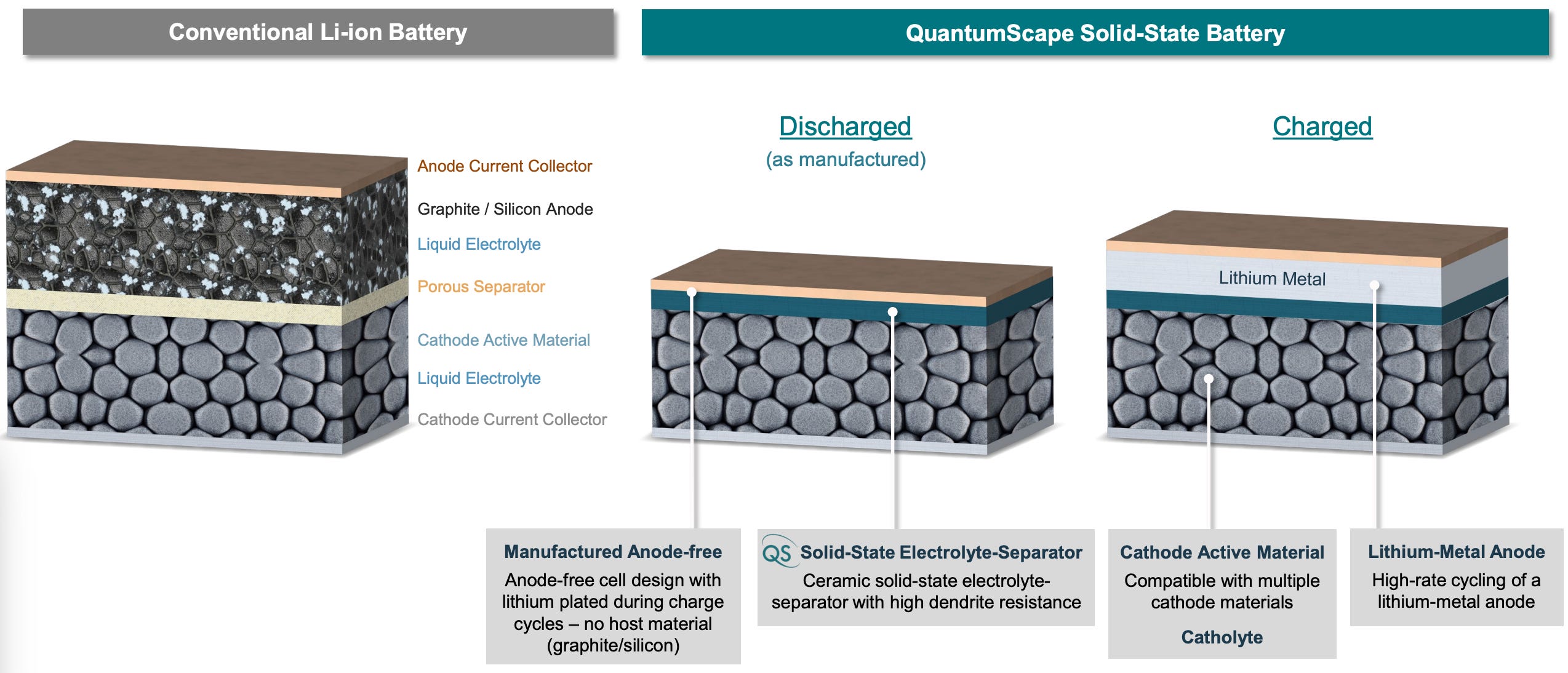
From an operational perspective, the absence of a traditional anode simplifies the bill of materials and reduces manufacturing complexity at the cell assembly stage. However, this comes with new challenges in separator manufacturing and layer stacking, areas where QuantumScape has invested heavily in process engineering. The ceramic separator is central to the platform’s differentiation: it must simultaneously exhibit high ionic conductivity, mechanical strength, and manufacturability at scale. Achieving this balance has required years of proprietary materials research, which the company views as its key competitive moat.
Understanding the architecture is critical because it dictates both the upside and the risks embedded in QuantumScape’s thesis. If successful, the solid-state design could enable vehicles with longer ranges, faster charging, and greater safety capabilities that would command premium adoption among OEMs. But the same architectural departure also introduces execution risks: scaling ceramic separators, ensuring defect-free layer stacking, and integrating the cells into automotive packs are all unproven at industrial levels. The architecture, in essence, is both the company’s greatest strength and the focal point of its execution risk profile, making it central to any long-term investment assessment.
Performance characteristics & differentiation
QuantumScape’s investment case is inseparable from the performance profile of its solid-state battery platform. The company positions its technology as a step-function improvement over incumbent lithium-ion cells, particularly across four dimensions that matter most to automotive OEMs: energy density, charge rate, safety, and cycle life. On each of these, the company has demonstrated compelling laboratory results that, if replicated at scale, would represent a decisive competitive advantage.
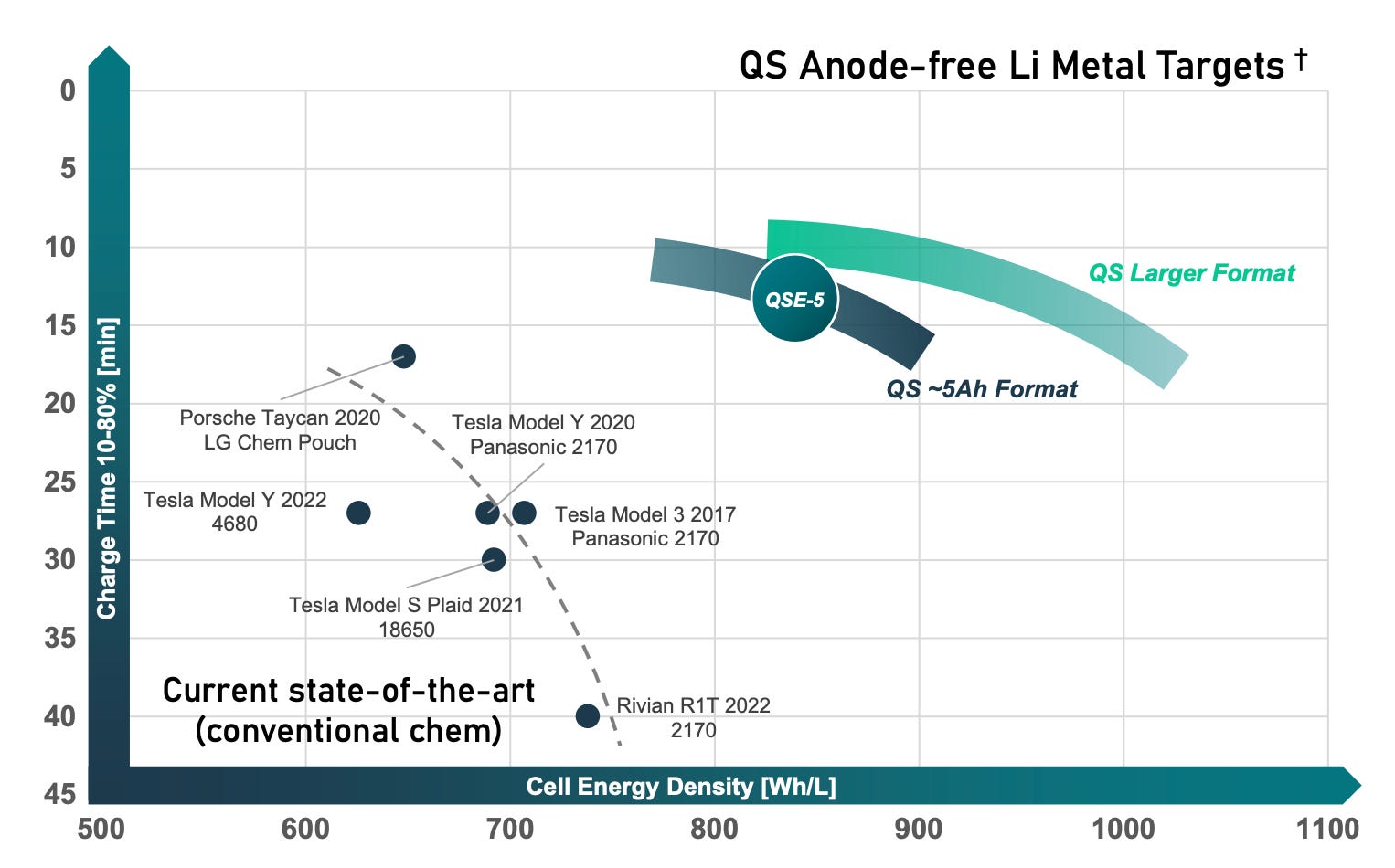
Energy density is the most visible differentiator. By replacing a graphite or silicon anode with lithium-metal, QuantumScape targets energy densities in the 900-1,000 Wh/L range, roughly 50-80% higher than today’s commercial lithium-ion cells. For automakers, this translates into longer driving range without increasing pack size or weight, or alternatively, maintaining current range with smaller, lighter, and cheaper battery packs. In an industry constrained by cost-per-kilowatt-hour and vehicle weight, this kind of efficiency gain is strategically valuable.
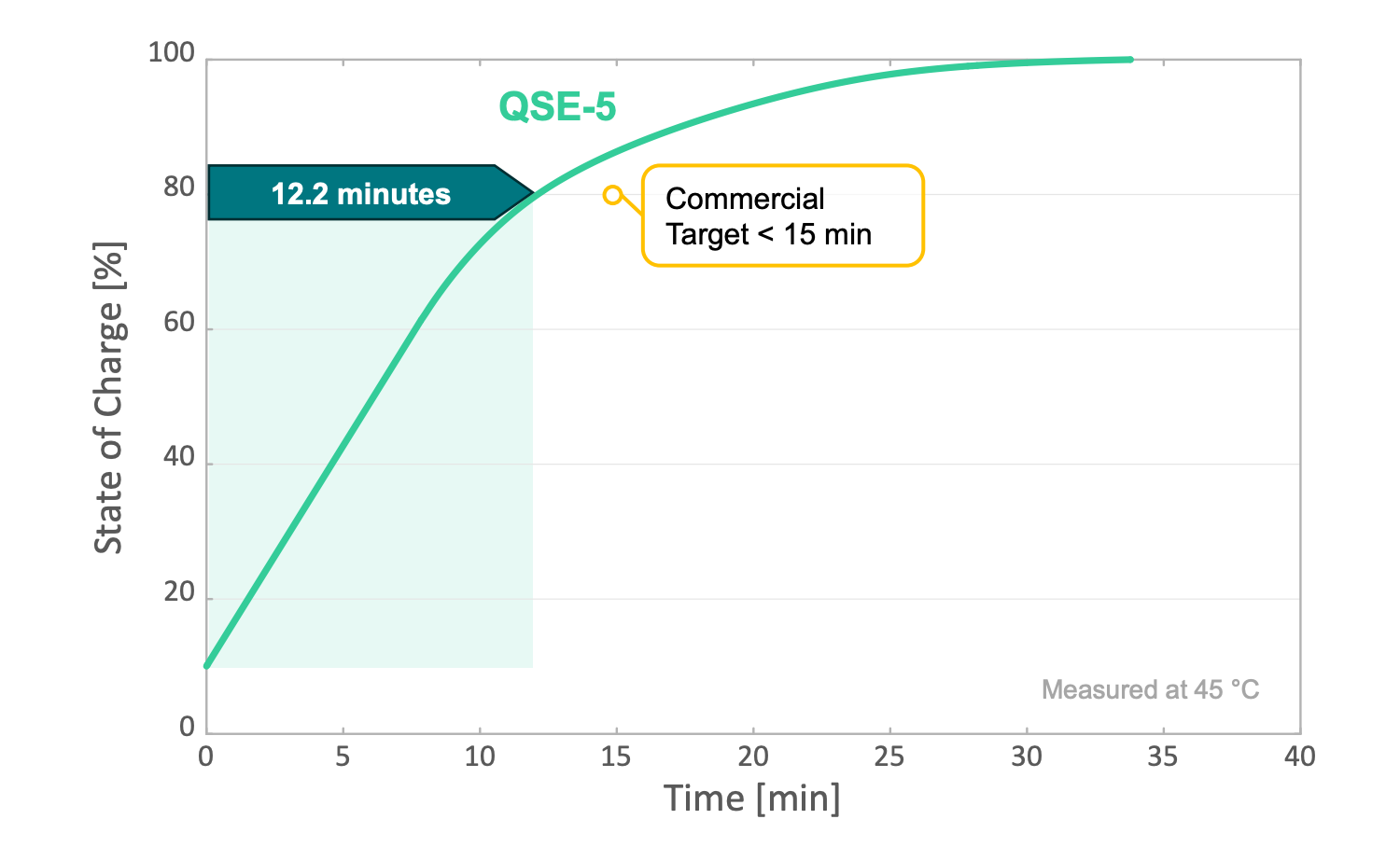
Charge rate is a second critical factor. QuantumScape has reported that its cells can charge from 10% to 80% in approximately 15 minutes under laboratory conditions. This compares favorably to conventional fast-charging lithium-ion systems, which typically require 30-45 minutes for the same interval. Faster charge times reduce range anxiety for consumers and accelerate EV adoption, particularly in mass-market segments where charging infrastructure remains uneven. If replicated in the field, this advantage could become a meaningful selling point for OEMs adopting the technology.
Safety is another area of potential differentiation. Conventional lithium-ion batteries carry the inherent risk of thermal runaway due to flammable liquid electrolytes. QuantumScape’s solid ceramic separator is non-flammable and designed to block dendrite penetration, substantially lowering the probability of catastrophic failure. While safety alone does not guarantee adoption, it is an increasingly critical factor for regulators, insurers, and OEM risk managers, particularly as vehicle electrification scales globally.
Finally, cycle life performance is a decisive hurdle for next-generation cells. QuantumScape has reported that its single- and multi-layer prototypes retain more than 80% of their capacity after hundreds of charge-discharge cycles, even under demanding test conditions. While this remains below the durability expectations of full automotive qualification (>1,000 cycles), the data trajectory indicates meaningful progress. The ability to maintain high energy density and fast charge rates without sacrificing longevity is central to the platform’s promise.
The performance characteristics form the cornerstone of the thesis. If QuantumScape can deliver on even a portion of these advantages at scale, it will have a differentiated product that justifies premium positioning with OEMs. However, until durability, cost, and manufacturability converge in a commercial-grade cell, the performance profile remains more of a forward-looking asset than a proven differentiator. This duality, clear theoretical superiority but unproven industrial reliability, defines both the upside and the binary risk of the investment.
Intellectual property & proprietary advantages
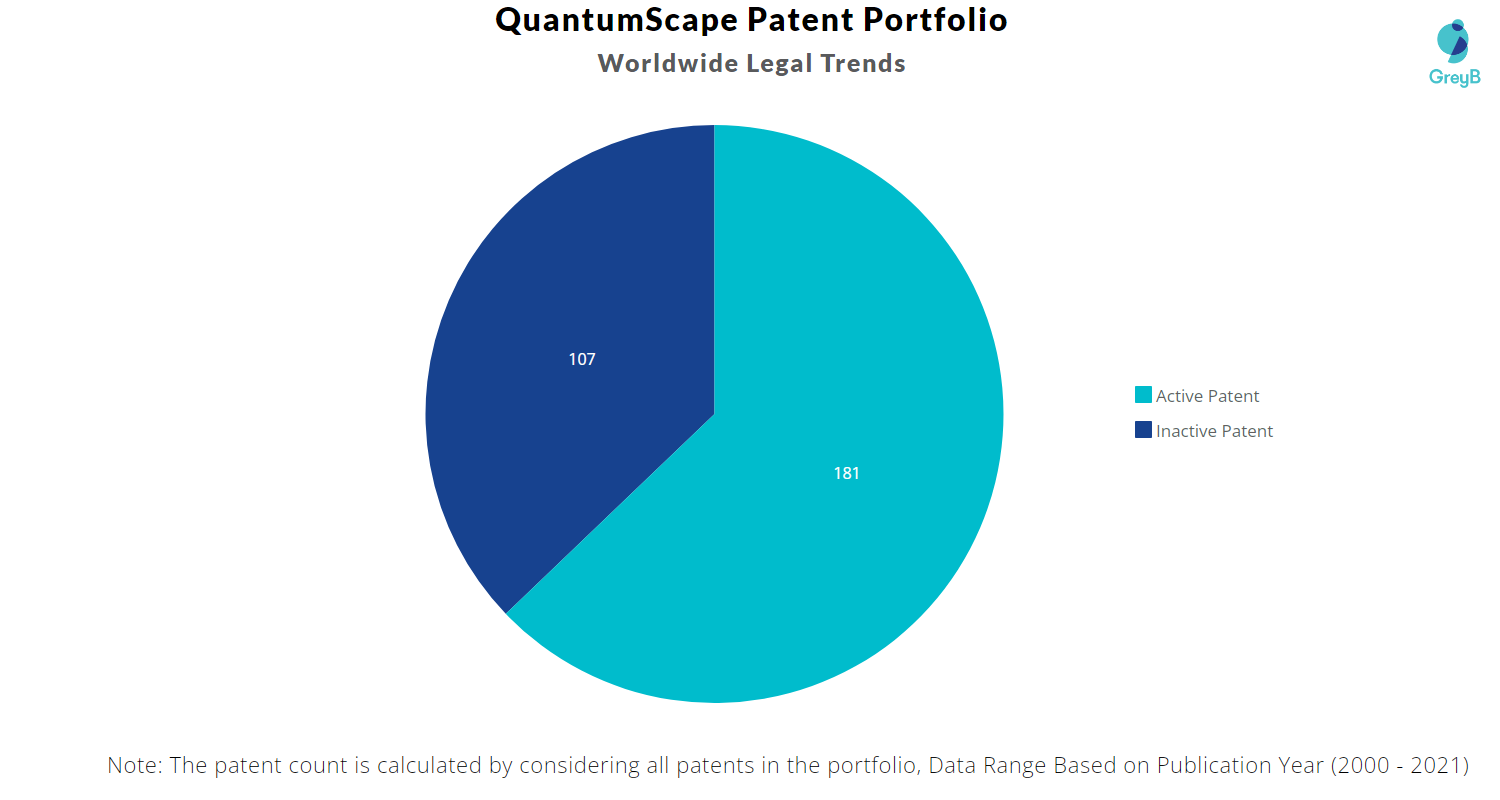
A core component of QuantumScape’s moat lies in its intellectual property portfolio and the proprietary know-how embedded in its platform. As of its latest disclosures, the company holds or has filed more than 200 patents and patent applications spanning materials science, electrochemistry, separator design, and manufacturing processes. These patents are not narrowly concentrated; rather, they cover the entire architecture of the solid-state cell, from the ceramic electrolyte composition to the methods of producing defect-free multilayer structures. For an early-stage energy storage company, such breadth is critical, as it protects against workarounds by competitors and strengthens the firm’s bargaining position in joint ventures or licensing negotiations.
The centerpiece of the company’s IP estate is its solid ceramic separator. This material is the enabling innovation that allows the use of lithium-metal anodes while suppressing dendrite formation. While many solid-state battery startups and academic labs have explored polymer-based or hybrid electrolytes, QuantumScape’s ceramic solution has demonstrated the best balance of ionic conductivity, stability, and mechanical strength in automotive-relevant conditions. Patents around the composition, processing, and integration of this separator provide defensive barriers against direct replication, effectively making the separator the “crown jewel” of the platform.
Beyond patents, QuantumScape’s accumulated process know-how represents an underappreciated proprietary asset. The company has spent more than a decade refining methods for stacking, sintering, and integrating multilayer cells. These techniques are often not fully disclosed in patents, remaining as trade secrets or institutional expertise embedded in the workforce and pilot line processes. For competitors, catching up would require not only replicating the materials science but also solving for the engineering challenges that QuantumScape has iterated on for years. This tacit knowledge creates switching costs for partners and raises the barriers to entry for would-be rivals.
The defensibility of the technology matters as much as the performance itself. The battery industry has historically been characterized by commoditization, with incremental innovations quickly diffused across suppliers. If QuantumScape’s IP portfolio succeeds in securing durable differentiation, it can justify premium pricing and ensure that the value of solid-state batteries accrues to the company rather than being competed away. Moreover, strong IP enhances optionality: QuantumScape could monetize its technology through licensing or joint ventures, not solely through direct manufacturing. This provides flexibility in capital allocation and reduces the risk that the company must bear all the costs of scaling alone.
Ultimately, the intellectual property and proprietary process knowledge serve as a foundation for investor confidence. They are what transform QuantumScape’s story from a promising lab result into a potentially defensible business model. Without this moat, the company’s long-term economics would be far less attractive; with it, the firm is positioned to capture disproportionate value if solid-state technology achieves commercial adoption.
Technology maturity & development progression
QuantumScape’s value proposition rests not only on what its technology can theoretically achieve, but on how far along the company is in proving that those capabilities can be translated into commercial-grade products. Over the past decade, the company has progressed from single-layer proof-of-concept cells to increasingly complex multilayer prototypes, demonstrating incremental advances in both performance and manufacturability. This trajectory matters because it provides a measurable roadmap of de-risking: each technical milestone narrows the gap between laboratory validation and automotive qualification, a journey that is essential for investor confidence.
The company’s development path began with single-layer coin cells that showcased the core properties of the ceramic separator and lithium-metal anode system. These early devices provided proof that the platform could suppress dendrite formation and maintain high coulombic efficiency. Over time, QuantumScape advanced to multilayer pouch cells, eventually producing 10-layer, 24-layer, and most recently 48-layer cells. These devices are closer to the format and complexity required for EV packs, though they remain in prototype stages. Each progression has been accompanied by performance data, such as cycle life retention, charge rate tests, and low-temperature operation, designed to validate that the core advantages persist at higher levels of complexity.
Today, the company is operating a pilot production facility (QS-0) that is intended to support both internal testing and limited customer sampling. The pilot line is not yet scaled to full automotive-grade volumes, but it represents a critical inflection point: QuantumScape is no longer a purely R&D organization but one engaged in early-stage manufacturing. This distinction is material for investors. Many advanced battery concepts fail not in theory but in practice, when laboratory conditions cannot be replicated at industrial scale. By investing in pilot-line engineering, yield management, and equipment qualification, the company is attempting to cross the so-called “valley of death” that separates research from commercialization.
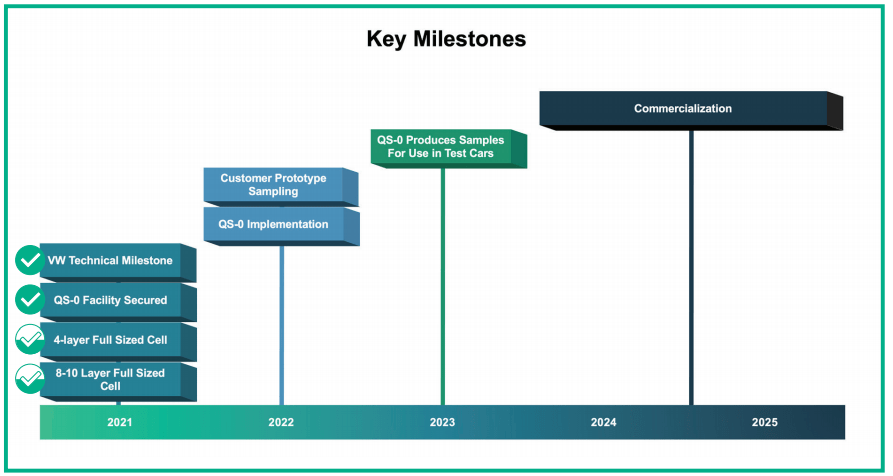
From an investor’s perspective, technology maturity is a leading indicator of credibility. While the company is still several years away from revenue, the steady cadence of progression from single-layer to multilayer prototypes and from lab to pilot line provides tangible evidence that execution risk is being managed systematically. That said, the journey remains incomplete: automotive qualification requires thousands of cycles, rigorous safety validation, and consistent manufacturability at scale. Until these are proven, the platform remains pre-commercial, with its valuation supported more by optionality than by cash flow. For long-term investors, the trajectory of maturity is therefore as important as the technology itself, as it dictates the probability that QuantumScape can eventually convert scientific advantage into economic value.
Taken together, QuantumScape’s architecture, performance claims, intellectual property, and staged development path form a technology platform with transformative potential. The innovations are defensible, the laboratory results are promising, and the company has demonstrated a methodical progression toward manufacturability.
Yet the challenges remain immense: scaling ceramic separators, achieving defect-free multilayers, and passing automotive qualification will determine whether the company’s promise becomes a commercial reality. This section underscores the asymmetric profile of QuantumScape, the possibility of unlocking a dominant position in a trillion-dollar EV battery market balanced against the execution risks inherent in industrializing a first-of-its-kind technology.
Understanding the underlying technology is only part of the picture; the real test lies in how these products translate into value across specific markets and customer applications.
6. Product Applications & Value Proposition
QuantumScape’s promise isn’t just about better batteries, it’s about reshaping entire industries, from cars and phones to the very grids that power our world.
QuantumScape’s technology is defined not only by what it is but by where it can go. While the automotive sector remains the company’s first and most critical proving ground, the platform’s flexibility extends to consumer electronics and even long-term stationary storage.
Each of these markets shares the same set of pain points, energy density, charge time, safety, and durability, that solid-state batteries are uniquely positioned to address. Understanding the breadth of these applications highlights why the company’s value proposition stretches beyond a single market, presenting investors with exposure to a potentially transformative energy platform.
Automotive applications
The automotive sector represents the primary and most strategically important application for QuantumScape’s solid-state battery technology. Electric vehicles (EVs) are the company’s first commercial target, and for good reason: the sector is both the largest near-term market for advanced batteries and the one where QuantumScape’s performance advantages translate most directly into customer value. Automakers today face three interrelated challenges that limit EV adoption: range anxiety, charging time, and safety concerns. QuantumScape’s platform is designed to address each of these, making its relevance to the automotive market particularly acute.
The most direct benefit lies in extended range. With energy density potentially 50-80% higher than conventional lithium-ion, QuantumScape’s batteries could allow EVs to travel significantly farther on a single charge without increasing pack size or weight. For OEMs, this creates optionality: extend range at current pack sizes to appeal to premium buyers, or maintain current range while reducing pack size, weight, and cost for mass-market vehicles. Either outcome improves vehicle economics and consumer appeal. Range improvements are not just a marketing advantage; they have a quantifiable impact on adoption rates, as surveys consistently show that limited range remains the top barrier to EV purchases.
Charging speed is a second differentiator. With demonstrated potential to reach 80% state-of-charge in roughly 15 minutes, QuantumScape’s technology approaches the convenience threshold of refueling a gasoline vehicle. For OEMs and charging infrastructure operators, this is strategically valuable, as it allows networks to serve more vehicles per charger and reduces consumer hesitation about long-distance travel. If validated at commercial scale, this advantage could help accelerate adoption in markets where charging infrastructure expansion is lagging.
Safety, while less visible to consumers, is another critical factor for automakers. Lithium-ion batteries remain vulnerable to thermal runaway and fire risk, raising both regulatory and reputational concerns. QuantumScape’s ceramic solid-state separator eliminates flammable liquid electrolytes and is designed to block dendrite penetration, substantially reducing these risks. This enhances not only consumer safety but also lowers potential liability for OEMs. In an industry under increasing scrutiny from regulators and insurers, a safer cell chemistry is a tangible strategic advantage.
The automotive application is central to the QuantumScape thesis because it defines the scale of the opportunity. EV battery demand is projected to grow into the multi-terawatt-hour range by 2030, representing hundreds of billions in annual revenues. If QuantumScape captures even a modest share of this market through partnerships like Volkswagen’s PowerCo, it could generate significant long-term value. The flip side is that failure to prove automotive readiness would undermine the majority of the investment case, as other applications are smaller or longer-dated. The automotive market, therefore, is not just an application, it is the company’s proving ground and the single largest determinant of its long-term success or failure.
Consumer electronics & mobility
While the automotive sector is QuantumScape’s flagship opportunity, consumer electronics and light mobility represent secondary but strategically significant application areas. Devices such as smartphones, laptops, drones, and e-bikes face many of the same battery-related pain points as EVs, namely, limited runtime, lengthy charging cycles, and safety concerns associated with lithium-ion chemistries. Solid-state technology offers a pathway to extend device usage, reduce charging downtime, and minimize fire risk, all of which are commercially attractive in consumer markets where differentiation often depends on battery performance.
QuantumScape’s architecture is inherently modular, meaning that cells can be adapted to smaller form factors without altering the core chemistry. For consumer electronics, the promise of higher energy density translates into thinner and lighter devices, or devices with longer runtime at the same size. Fast-charging capability is especially relevant in this segment, where convenience is a key driver of purchasing behavior. The solid-state ceramic separator also provides a safety advantage in environments where batteries are used intensively, often under conditions of frequent charging, discharging, and exposure to heat. For manufacturers of laptops or smartphones, this could become a differentiating feature, particularly as consumers grow more aware of battery safety.
From a strategic perspective, consumer applications could serve as an early commercialization pathway for QuantumScape. The performance requirements for electronics, measured in cycle life, energy density, and power output, are generally less demanding than those for automotive systems. This makes consumer electronics a potentially attractive “stepping stone” market, allowing QuantumScape to validate its technology in commercial products ahead of full automotive qualification. Revenue generation from licensing or small-scale production in consumer devices could provide incremental cash flow, reduce reliance on equity raises, and demonstrate progress to investors and partners.
For long-term investors, the consumer electronics segment is not the core driver of valuation but a meaningful optionality play. While the addressable market for batteries in phones and laptops is large, it is still materially smaller than the automotive sector. However, the ability to generate earlier, lower-risk revenue streams could de-risk the timeline to commercialization and demonstrate the versatility of the platform. If QuantumScape can establish a beachhead in consumer applications while advancing toward EV readiness, it would enhance its credibility, provide validation of manufacturing scalability, and extend its cash runway. In this sense, consumer electronics are less about displacing incumbents at scale and more about proving out the technology in a commercial context, making them strategically important to the investment case even if not central to the ultimate market opportunity.
Stationary storage & grid applications
Beyond transportation and consumer electronics, stationary energy storage represents a long-term but potentially transformative application for QuantumScape’s solid-state platform. As renewable penetration increases worldwide, grid operators face a growing challenge: intermittency. Solar and wind generation often peak at times misaligned with demand, creating the need for scalable, safe, and durable energy storage solutions. Today, lithium-ion dominates grid storage, but it has clear drawbacks, thermal runaway risk, limited cycle life, and declining economics as cells degrade under heavy cycling. Solid-state batteries could address these pain points, positioning QuantumScape for eventual relevance in this multi-billion-dollar segment.
The characteristics that make QuantumScape’s technology attractive for EVs, high energy density, fast charge/discharge rates, and enhanced safety, also align with grid requirements, albeit with different emphases. In stationary storage, cycle life and safety are paramount. Utility operators demand batteries capable of enduring thousands of deep charge-discharge cycles with minimal degradation. If QuantumScape’s ceramic separator enables longer durability and lower degradation rates than conventional lithium-ion, it could create a strong value proposition in grid applications. Safety is equally critical: large-scale installations in urban or industrial areas face heightened scrutiny from regulators and insurers, and the elimination of flammable liquid electrolytes could lower both risk and insurance costs.
From a commercial strategy perspective, the grid storage market is attractive but secondary to automotive. Margins are thinner, customers are more cost-sensitive, and the supply chain is heavily commoditized. However, the market’s sheer scale and policy tailwinds, particularly in regions like the U.S., EU, and China where renewables build-out is accelerating, make it a potential growth avenue. QuantumScape is unlikely to target this segment in its early commercialization phase, but partnerships with utilities or energy storage integrators could become a realistic option once the platform matures. The modularity of the solid-state architecture provides flexibility for scaling cells into larger packs for stationary applications without requiring fundamental redesigns.
Stationary storage should be viewed as long-dated optionality rather than a near-term driver. The automotive sector will dictate valuation for the next five years, but the grid market extends the total addressable market and underscores the durability of the technology’s relevance beyond vehicles. If QuantumScape achieves success in EVs, expansion into stationary storage could multiply the commercial upside, turning the company from an auto-supplier into a broader energy storage platform. Conversely, if EV commercialization proves slower than expected, stationary storage could provide a secondary monetization path. This optionality, while not priced into the stock today, is an important consideration for investors evaluating QuantumScape’s long-term role in the energy transition.
Overall value proposition to stakeholders
QuantumScape’s value proposition extends beyond performance specifications; it lies in how the company’s technology creates differentiated benefits for stakeholders across the EV value chain. For automakers, the case is centered on product differentiation and compliance. Higher energy density translates into longer range and lighter packs, enabling OEMs to market superior vehicles while potentially lowering production costs.
Faster charging enhances consumer adoption, while improved safety reduces liability exposure. These attributes allow automakers to accelerate electrification roadmaps without waiting for incremental lithium-ion improvements. Importantly, the technology is compatible with existing cathode chemistries, which lowers the switching costs and facilitates integration into OEM supply chains.
For consumers, the value proposition is straightforward: an EV with greater range, faster charging, and lower safety risks represents a better product. Range anxiety has consistently ranked as the top barrier to EV adoption, while long charging times rank second. A battery that narrows these gaps between EVs and internal combustion vehicles has the potential to accelerate mainstream acceptance.
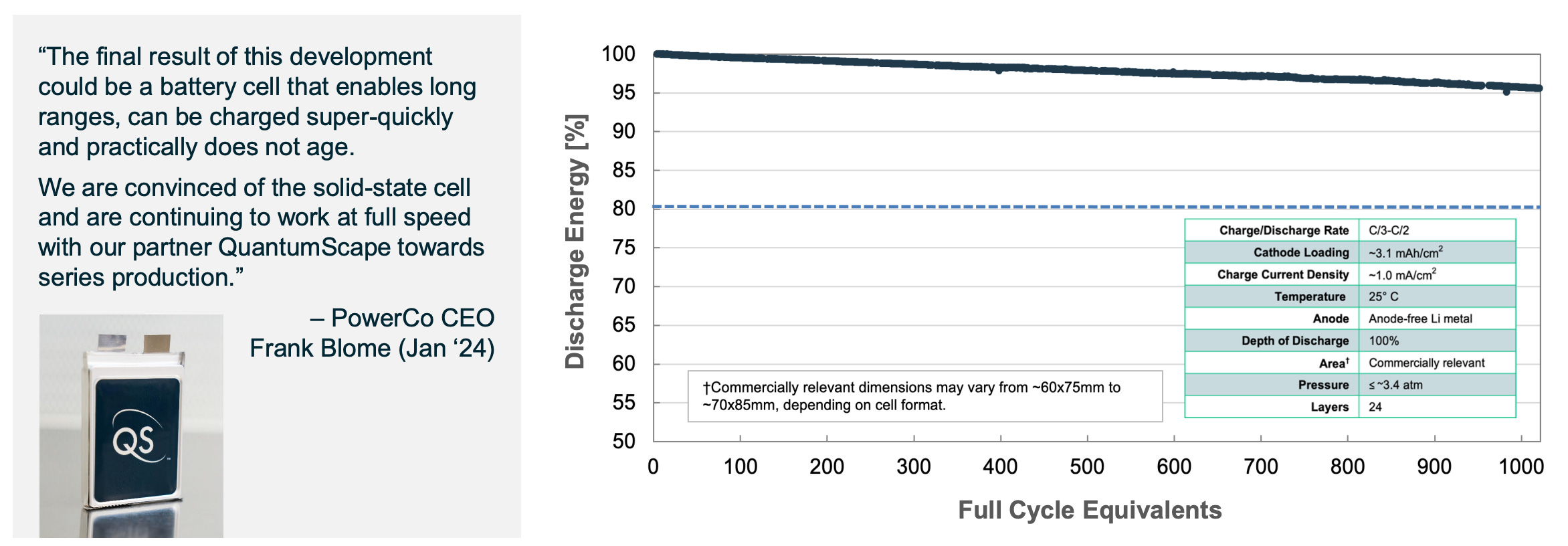
Safety, while less visible, is equally important. Consumers have become more aware of battery fires in both vehicles and consumer devices; a chemistry that mitigates these risks strengthens trust in electrification. Taken together, QuantumScape’s technology could meaningfully shift consumer preferences, particularly in markets where infrastructure is still catching up.
From a regulatory and policy perspective, the technology offers alignment with decarbonization goals. Governments worldwide are tightening fuel economy and emissions standards, while simultaneously incentivizing EV adoption. A battery platform that improves range and charging convenience helps OEMs meet these mandates while enabling policymakers to accelerate their electrification targets. QuantumScape’s technology could therefore benefit indirectly from regulatory momentum, even if it does not participate directly in subsidy programs.
The value proposition lies in both economic upside and defensibility. Solid-state technology, if proven, represents a generational shift that could reset the competitive landscape in batteries. QuantumScape’s patent portfolio, manufacturing know-how, and OEM partnerships provide barriers to entry that could allow it to capture a disproportionate share of the value created. The staged commercialization model, centered on joint ventures rather than standalone gigafactories, also provides a more capital-efficient pathway to scale.
Taken together, QuantumScape’s applications form a layered value proposition. Automotive markets provide the scale and urgency, consumer devices offer earlier revenue opportunities and validation, and grid storage represents longer-term optionality. Across all three, the benefits converge: higher energy density, faster charging, improved safety, and defensible integration with existing supply chains.
For stakeholders, whether automakers, consumers, or policymakers, the company’s technology addresses the central barriers to electrification. This breadth reinforces the asymmetric potential: success in EVs alone could be transformational, but the platform’s versatility creates additional pathways to scale and relevance over time.
But demonstrating value in principle is not enough,investors must also weigh whether QuantumScape can manufacture these products at scale and deliver them reliably to customers.
7. Operational Readiness & Manufacturing Scale-Up
The real test of QuantumScape isn’t science, it’s scale, and the company is now stepping onto the factory floor where theories meet reality.
If QuantumScape’s past was defined by discovery, its future will be determined by execution. The transition from lab-based prototypes to scalable manufacturing is the single most important, and riskiest, phase in the company’s evolution. The QS-0 pilot line, process development breakthroughs, and its joint venture with Volkswagen represent more than operational updates; they are the crucibles where industrial credibility is forged. Operational readiness is not a side story, it is the lens through which the entire value proposition must now be judged.
Pilot line infrastructure (QS-0 facility)
QuantumScape’s pilot line, referred to as QS-0, represents a critical inflection point in the company’s journey from a research-driven enterprise to a pre-commercial manufacturer. Located in San Jose, California, the facility is designed not as a revenue-generating plant but as a bridge between laboratory-scale prototypes and eventual high-volume production. Its primary function is to produce multilayer solid-state pouch cells in quantities sufficient for internal testing, external validation, and customer sampling. QS-0 is quite important, as it marks the transition out of pure R&D mode and into a phase where manufacturability, repeatability, and scale become measurable.
The facility houses the specialized equipment needed to fabricate QuantumScape’s proprietary ceramic separators and assemble them into multilayer cell stacks. Unlike conventional lithium-ion manufacturing, which leverages decades of process refinement, solid-state production requires new methods of handling, sintering, and stacking fragile ceramic components. QS-0 therefore serves as both a learning environment and a proof point: it allows the company to iterate rapidly on process flows while generating real-world data on yields, throughput, and defect rates. This is where QuantumScape begins to demonstrate whether its core technology can withstand the rigors of industrialization.
QS-0 also plays a key role in supporting the company’s relationships with OEM partners, particularly Volkswagen’s PowerCo. By delivering early cell samples produced on pilot-line equipment, QuantumScape provides customers with visibility into the technology’s progress and performance under conditions that are closer to production reality than lab-scale coin cells. These early samples are essential for securing customer confidence, guiding joint development work, and aligning roadmaps. In capital markets, such customer-facing milestones often serve as catalysts that reinforce credibility or, conversely, expose gaps in execution.
The QS-0 facility is less about output volume and more about risk reduction. The success or failure of this pilot line will reveal whether QuantumScape can control variability, maintain separator quality, and scale multilayer stacks without significant performance loss. Each incremental improvement in throughput or defect reduction increases the probability of successful scaling into joint venture facilities. Conversely, persistent bottlenecks or high scrap rates could signal that the company remains years away from manufacturability, undermining the commercialization timeline.
In short, QS-0 represents the linchpin between science and industry. It is the tangible platform through which QuantumScape can prove to OEM partners, regulators, and investors that its technology is not just theoretically superior but industrially viable. For long-term investors, the performance of QS-0 will likely serve as one of the clearest indicators of whether the company’s roadmap is credible and whether the eventual scale-up to automotive production is achievable.
Manufacturing process development
If the QS-0 pilot line represents the physical infrastructure for QuantumScape’s scale-up, the underlying manufacturing process development is the intellectual backbone that determines whether the company can ultimately succeed in commercialization. The central challenge is not only making a single solid-state cell work in the lab, but replicating that performance at scale with consistent quality and acceptable cost. This requires engineering solutions to problems that do not exist in conventional lithium-ion production, particularly around the handling and integration of QuantumScape’s ceramic separator.
Unlike polymer-based electrolytes, the ceramic separator must be produced with extreme precision to achieve the ionic conductivity and mechanical strength required for high-performance cells. Even microscopic defects can compromise performance or lead to premature failure, creating yield challenges that are magnified as the company transitions from single-layer cells to 24- and 48-layer stacks.
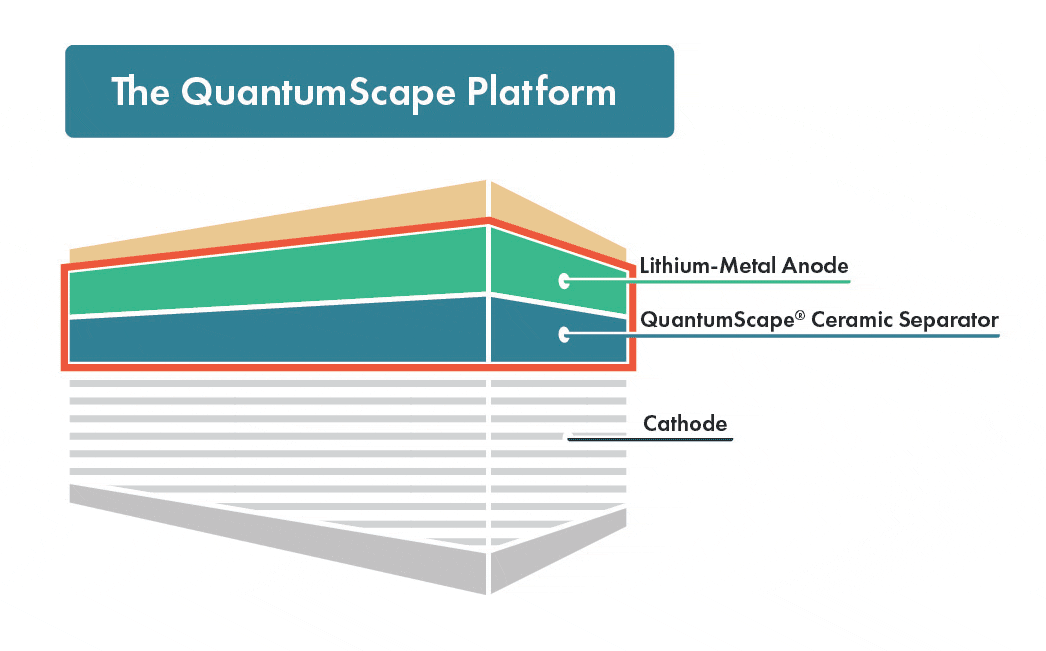
Process innovations in sintering, coating, and separator fabrication are therefore essential to achieve manufacturability. Similarly, the stacking and lamination of multiple layers must be performed with tight tolerances to avoid misalignments, air gaps, or micro-cracks that can degrade performance. These are engineering hurdles that no existing lithium-ion supply chain is currently optimized to solve.
QuantumScape has invested heavily in developing proprietary techniques for addressing these challenges. The company has reported progress in improving separator throughput and reproducibility, as well as advances in multilayer assembly. Automation, quality control systems, and yield management strategies are increasingly emphasized, reflecting the company’s recognition that commercialization is less a matter of pure chemistry and more a matter of industrial engineering. Investors should note that this mirrors the historical trajectory of lithium-ion itself: scientific breakthroughs often occur years before viable production processes catch up.
The critical implication is that process readiness is as central to the investment case as the core chemistry itself. Even if the separator delivers superior performance, the company must demonstrate that it can be produced in high volumes without prohibitive costs or yields that erode margins. This is why each quarterly update on separator throughput, defect rates, and multilayer reproducibility is closely scrutinized by institutional investors. Progress here reduces execution risk; stagnation increases the likelihood of delays, cost overruns, and dilution.
Process development is the lever that determines whether QuantumScape’s technology remains a scientific curiosity or matures into a scalable business. The competitive advantage of higher energy density will mean little if the company cannot translate lab-scale innovation into industrial consistency. In this sense, manufacturing process development is not an adjunct to the thesis, it is the core determinant of whether the company can eventually justify its valuation.
Joint venture and scaling strategy
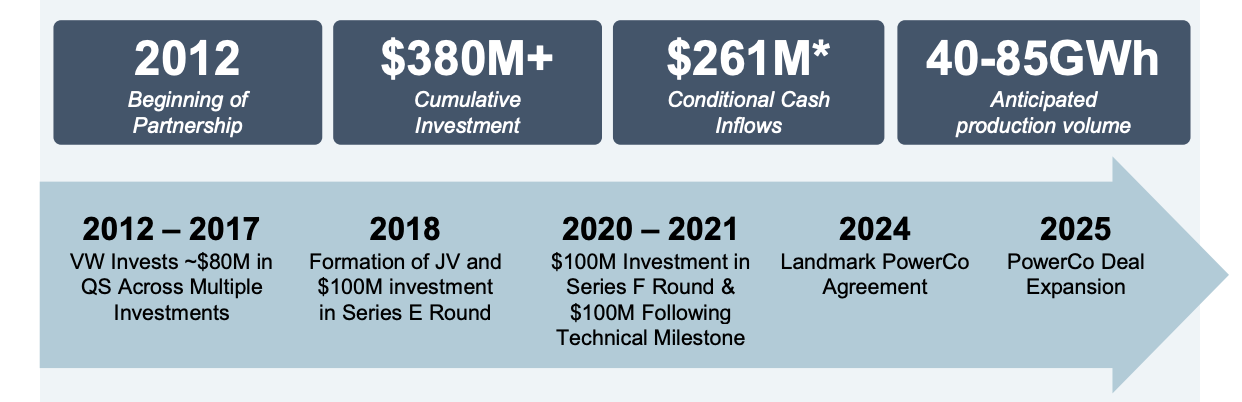
QuantumScape’s scaling strategy is built around partnerships, most notably its long-standing relationship with Volkswagen, which through its battery subsidiary PowerCo, has committed significant capital and resources to the joint venture. This approach reflects a deliberate decision to avoid the capital intensity of building standalone gigafactories, a path that has burdened other battery startups with heavy fixed costs and high cash burn. Instead, QuantumScape aims to leverage OEM partners’ manufacturing expertise, distribution channels, and capital bases to accelerate its commercialization timeline while maintaining a leaner balance sheet.
The Volkswagen joint venture is structured to eventually scale to multi-gigawatt-hour production capacity, with the first commercial facility (often referred to as QS-1) expected to be co-developed once pilot-line validation is achieved. Volkswagen has already invested over $300 million into QuantumScape, a signal of its strategic commitment. This alignment is important because it creates a ready-made customer and manufacturing partner, reducing go-to-market risk. At the same time, the JV structure helps to allocate capital expenditures more efficiently: QuantumScape contributes the core technology, while Volkswagen brings the scale, supply chain access, and integration expertise needed to industrialize production.
Beyond Volkswagen, QuantumScape has signaled openness to additional partnerships with other automakers and potentially non-automotive customers. The company’s business model envisions joint ventures or licensing structures as the primary commercialization pathway, rather than vertically integrating into a full-stack cell manufacturer. This is strategically significant because it suggests a capital-light approach relative to peers like Solid Power or ambitious vertical integrators such as CATL. If successful, the strategy could allow QuantumScape to scale faster and with less dilution, a key factor for investors monitoring cash burn.
However, reliance on joint ventures introduces its own risks. Execution timelines are partially dependent on partners, and strategic alignment is not guaranteed over multi-year horizons. Investors must also consider concentration risk: at present, Volkswagen remains QuantumScape’s anchor partner, and delays or strategic shifts at VW could materially affect QuantumScape’s trajectory. Diversifying the partner base over time will be essential to derisking this dependency.
The JV strategy offers both upside and risk asymmetry. On one hand, it enables access to multi-billion-dollar production capacity without assuming all the capital burden, preserving shareholder value. On the other hand, it ties QuantumScape’s execution to the timelines, governance, and strategic priorities of large industrial partners. The balance between these factors will be pivotal in determining whether the company’s commercialization path is smooth or constrained. Ultimately, the JV model is a pragmatic way to bridge the gap between innovation and industrialization, but its success hinges on execution discipline and alignment with OEM partners.
Execution timelines and milestones
The most tangible measure of QuantumScape’s progress is its ability to meet stated timelines and milestones on the road from R&D to commercialization. The company has articulated a phased development plan that mirrors the automotive industry’s standard qualification pathway: Alpha samples (early prototypes for internal and limited external testing), Beta samples (refined prototypes produced on pilot-line equipment for OEM evaluation), and finally A-sample and B-sample cells (pre-production versions suitable for integration testing and regulatory qualification). This staged approach is critical, as each milestone reduces risk and validates another layer of the technology’s manufacturability.
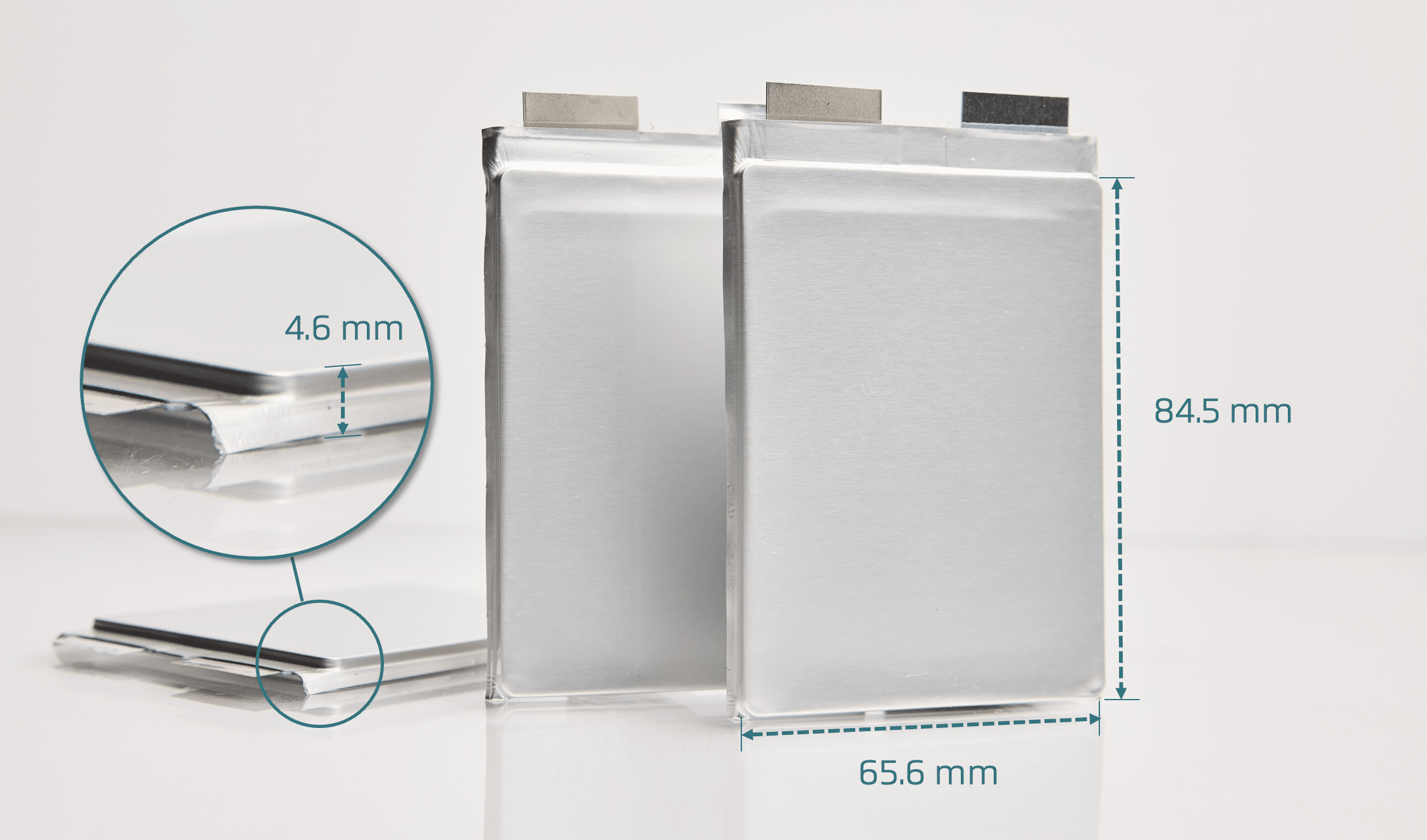
QuantumScape has already achieved meaningful progress on its Alpha sample program, with multilayer pouch cells delivered for internal testing and limited partner evaluation. The next step, which investors watch closely, is the successful transition to Beta samples produced consistently on the QS-0 pilot line. This milestone is particularly significant because it demonstrates whether the company can replicate laboratory performance in a semi-industrial environment. Failure to show yield consistency or durability at this stage would imply longer timelines and higher capital needs. Conversely, a successful Beta program would increase confidence in the company’s ability to scale into the Volkswagen JV and beyond.
The automotive qualification process itself is notoriously rigorous and time-consuming. Even once Beta cells meet partner expectations, full A-sample and B-sample integration into vehicles requires multi-year validation, including safety testing, cycle life benchmarking, and pack-level performance assessments. Investors should therefore expect commercial production only toward the latter part of this decade, consistent with the company’s communicated roadmap. While this timeline may appear long relative to market expectations, it is not unusual in the context of new battery chemistries. The critical factor is less about speed than about credibility: hitting milestones on or ahead of schedule builds confidence and derisks the path to revenue.
For the capital markets, milestone updates often act as binary catalysts. Announcements of successful multilayer demonstrations or customer sample deliveries have historically triggered sharp stock reactions, both positive and negative. This reflects the binary nature of the investment case, progress validates the path to commercialization, while delays fuel skepticism about scalability. Investors evaluating the long-term thesis should therefore not only monitor technical milestones but also assess the credibility of management’s guidance and the consistency of execution against stated goals.
Ultimately, the execution timeline defines the pacing of QuantumScape’s investment narrative. Each milestone crossed increases the probability that the company can bridge the gap from innovation to commercialization. For long-term investors, the ability to critically assess these checkpoints, distinguishing between genuine de-risking and incremental lab updates, is central to sizing exposure and managing risk in a highly binary story.
QuantumScape’s scale-up strategy is both its greatest opportunity and its greatest risk. Success at QS-0, credible Beta sample delivery, and alignment with partners like Volkswagen would validate the technology as more than a scientific breakthrough, it would prove it can be manufactured reliably at industrial scale. Failure to execute, however, would push commercialization further into the future and erode investor confidence. This is the binary inflection point: QuantumScape is no longer judged on promise alone but on its ability to turn cutting-edge chemistry into a repeatable, bankable product.
Scaling production naturally leads to the question of commercialization: which partners, contracts, and go-to-market strategies will convert technical capability into revenues.
8. Commercialization Path & Strategic Partnerships
QuantumScape’s path to market isn’t about going it alone, it’s about turning breakthrough science into scalable business through partnerships built to last.
Commercialization is where QuantumScape’s bold vision meets the hard realities of the automotive industry. The company’s roadmap, from Alpha prototypes to full-scale joint venture production, lays out a clear but demanding journey that mirrors the sector’s rigorous qualification process. Anchored by Volkswagen and its PowerCo subsidiary, QuantumScape’s strategy relies on leveraging partnerships to scale efficiently while reducing the capital intensity that has burdened other battery ventures. The story here is as much about who QuantumScape aligns with as it is about what it builds.
Commercialization roadmap
QuantumScape’s commercialization roadmap is structured to align with the automotive industry’s well-established qualification process, which is designed to ensure new technologies can meet the stringent performance, safety, and reliability standards required for integration into vehicles. This phased progression is not unique to QuantumScape but is an industry convention that dictates the timeline from lab prototype to mass production. The roadmap serves as both a guide to expected cash needs and a framework for evaluating the credibility of execution.
The first stage of this journey centers on Alpha samples, early prototypes designed primarily to validate basic performance under real-world conditions. QuantumScape has already demonstrated Alpha cells to select partners, using multilayer pouch cells produced in limited volumes. These samples are intended less for integration and more for validating that the technology’s core advantages, energy density, fast charge, and safety, translate outside of laboratory testing. Successful Alpha validation builds confidence in the technology itself, though not yet in manufacturability.
The next stage is Beta samples, which represent a critical inflection point. Beta cells must be produced on pilot-line equipment at QS-0, demonstrating that performance can be replicated consistently in semi-industrial conditions. This stage provides OEM partners with data on reproducibility, yields, and defect rates, factors that determine whether scaling is feasible. The transition to Beta is often viewed as a binary moment: success signals real progress toward commercialization, while setbacks highlight the execution risks inherent in scaling a novel technology.
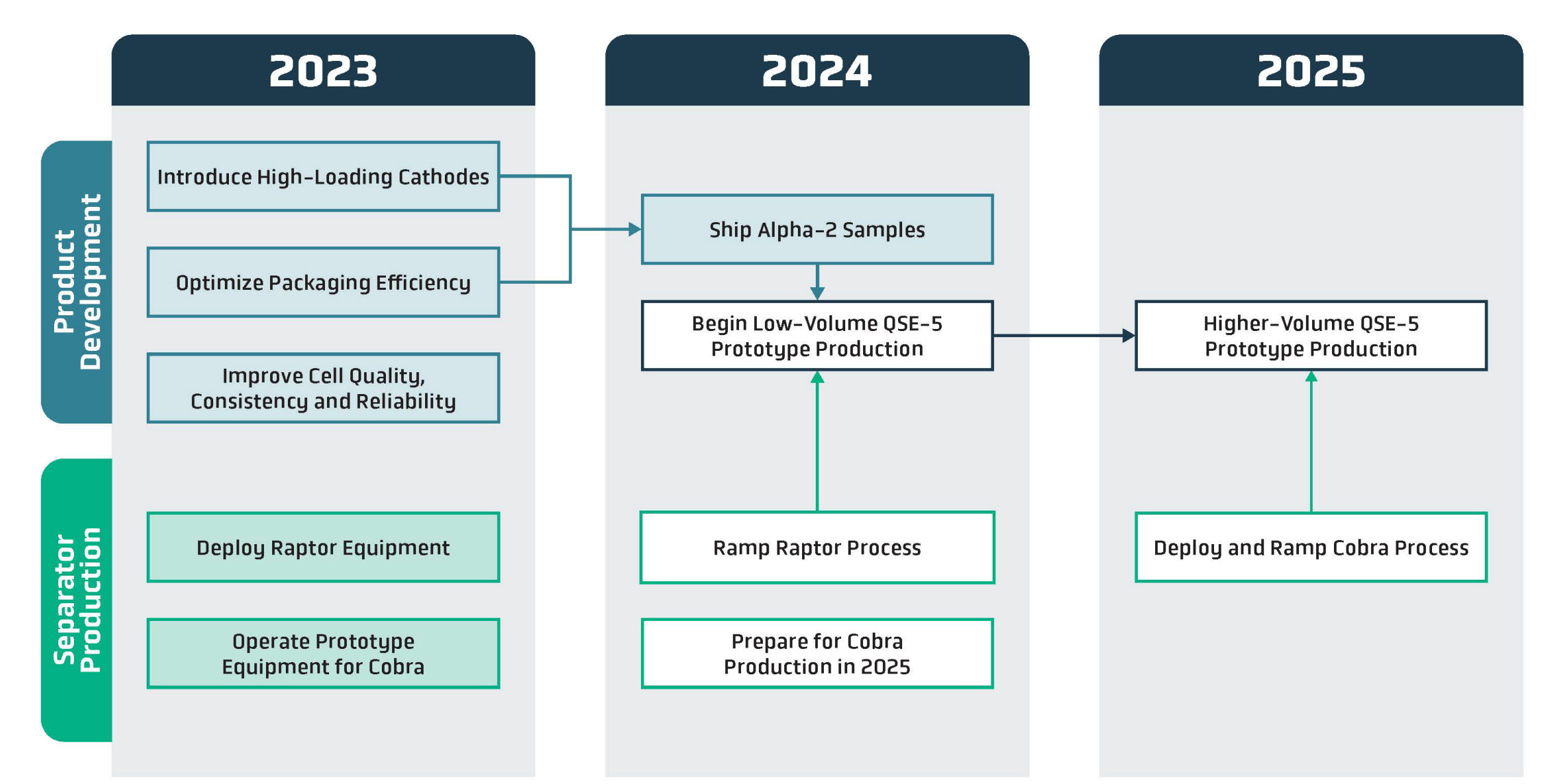
Beyond Beta, the roadmap advances to A-sample and B-sample qualification, where cells are integrated into vehicle packs and subjected to extensive durability and safety testing by OEMs. This process, which can span multiple years, is where the technology must prove its cycle life, thermal stability, and pack-level performance under the harsh conditions of automotive use. Only after these rigorous stages can QuantumScape’s cells advance to Start of Production (SOP), where mass manufacturing begins through joint venture facilities. Based on the company’s disclosures, SOP is unlikely before the latter half of the decade.
For long-term investors, the roadmap underscores both the promise and the risk of the QuantumScape thesis. The upside case rests on the technology clearing each milestone, progressively reducing risk and building OEM confidence. The downside risk is that delays, failures, or yield bottlenecks extend timelines and force additional capital raises. In a binary story such as QuantumScape’s, the roadmap is not just a technical outline, it is the investment thesis in practice, mapping the probability-weighted path from innovation to monetization.
Volkswagen / PowerCo partnership
The partnership with Volkswagen, and more specifically its battery subsidiary, PowerCo, is the cornerstone of QuantumScape’s commercialization strategy. Volkswagen was one of the earliest strategic backers of QuantumScape, investing more than $300 million since 2012 and becoming the company’s anchor OEM partner. In 2021, the collaboration deepened with the formation of a 50-50 joint venture aimed at building the first large-scale production facility, often referred to as QS-1. This alignment provides QuantumScape with both a clear commercialization channel and a credible industrial sponsor, reducing one of the largest risks faced by battery startups: lack of downstream integration.
The partnership offers several strategic advantages. First, it ensures that QuantumScape has a committed customer with the scale and resources to bring a new battery technology to market. Volkswagen is aggressively pushing toward electrification, with plans to build multiple gigafactories through PowerCo across Europe and North America. Embedding QuantumScape’s solid-state technology into this strategy could give it a fast track to market adoption, bypassing the long and uncertain process of building customer trust from scratch. Second, the JV structure helps distribute capital intensity. While QuantumScape is responsible for providing the core technology and early process know-how, Volkswagen brings the financing, industrial expertise, and global supply chain needed to scale production. This model is materially less dilutive than attempting to raise the billions required for standalone gigafactories.
However, this reliance on Volkswagen introduces a concentration risk that investors must carefully weigh. At present, Volkswagen remains QuantumScape’s dominant customer and commercialization partner. Any delays, strategic pivots, or financial retrenchment by Volkswagen could materially impact QuantumScape’s trajectory. In addition, as the JV structure matures, governance and alignment issues may emerge, particularly if the timelines or technical requirements of the two companies diverge. These risks highlight the importance of eventual customer diversification, both within the automotive sector and beyond.
The Volkswagen partnership should be viewed as both a validation and a dependency. On one hand, having one of the world’s largest automakers commit hundreds of millions of dollars and co-invest in production infrastructure is a powerful vote of confidence in QuantumScape’s technology. On the other hand, the company’s near- to medium-term fortunes are disproportionately tied to Volkswagen’s strategic decisions. The balance of these forces underscores the asymmetric nature of the investment: Volkswagen de-risks the commercialization pathway but also concentrates execution risk. Long-term credibility will therefore hinge not only on the continued success of the Volkswagen partnership but also on QuantumScape’s ability to replicate this model with additional OEMs.
Broader OEM & industry partnerships
While Volkswagen remains the anchor of QuantumScape’s commercialization efforts, the company’s long-term success will hinge on its ability to broaden its partnership base across both automotive and adjacent industries. Diversification of customers is not simply a matter of capturing additional revenue streams; it is a strategic imperative for reducing dependency on a single OEM and for validating the universality of QuantumScape’s technology. Investors should assess new partnerships as leading indicators of commercial relevance, as each additional customer adoption signals broader confidence in the platform.
Within the automotive sector, expanding to other OEMs is the most natural next step. Automakers such as BMW, Mercedes-Benz, Toyota, and Stellantis are all pursuing electrification strategies that rely heavily on differentiated battery technology. For these companies, QuantumScape’s value proposition, higher energy density, faster charging, and improved safety, directly addresses consumer adoption barriers. Securing even one additional Tier-1 OEM partnership would materially de-risk the company’s commercial prospects by demonstrating that Volkswagen is not an outlier, but rather an early adopter of a technology with broader applicability. Such partnerships would also increase QuantumScape’s bargaining power and provide optionality in scaling production capacity beyond the Volkswagen JV.
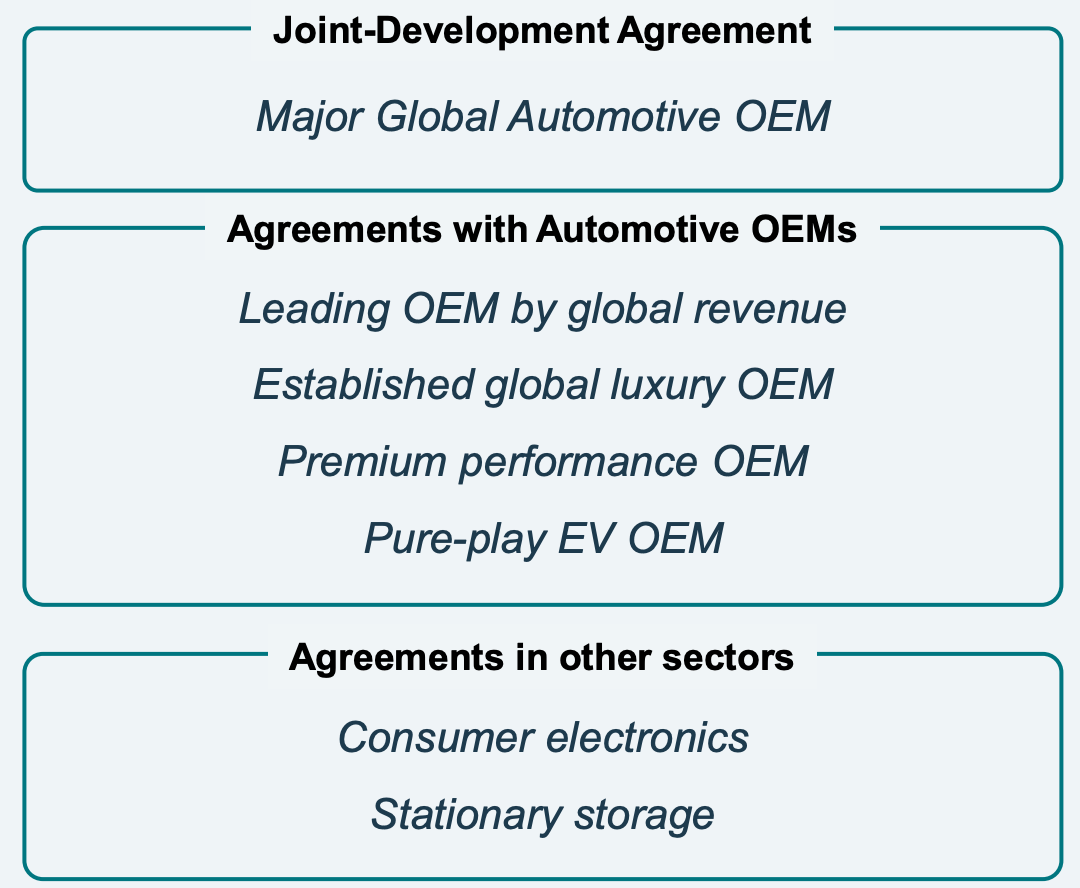
Beyond automotive, QuantumScape has potential opportunities in consumer electronics and grid storage, as outlined in the product applications section. Partnerships in these areas, while not immediately transformative in terms of revenue, could serve as critical early commercialization pathways. Consumer electronics manufacturers, for example, often move faster than automakers in adopting new technologies and could validate manufacturing scalability on smaller formats. Similarly, partnerships with grid storage integrators or renewable developers could position QuantumScape to tap into the rapidly growing stationary storage market once durability and cost metrics are proven.
The breadth of partnerships is a proxy for both commercial traction and technological defensibility. A technology that is truly differentiated should, over time, attract interest from multiple stakeholders across industries. Conversely, if QuantumScape remains tied exclusively to Volkswagen for an extended period, skepticism about scalability and relevance may grow. The company’s ability to announce new collaborations, even in non-automotive segments, will be an important signal for institutional investors assessing whether the platform is a one-customer story or a broadly applicable solution.
In sum, broader partnerships represent more than incremental growth opportunities; they are a hedge against concentration risk and a validation of QuantumScape’s platform technology. For a long-term investor, monitoring the pipeline and credibility of new partnerships will be central to assessing whether QuantumScape evolves into a single-OEM supplier or a broadly relevant battery technology leader.
Capital efficiency & go-to-market strategy
One of the most important yet underappreciated elements of QuantumScape’s strategy is its deliberate emphasis on capital efficiency. Unlike traditional lithium-ion incumbents, which have pursued growth through the construction of vertically integrated gigafactories, QuantumScape’s model is built around joint ventures and partnerships that distribute capital requirements. This approach acknowledges the enormous capex burden of battery manufacturing, where individual gigafactories can cost $2-5 billion to construct. By focusing on supplying its proprietary technology and intellectual property while leveraging partners’ industrial infrastructure, QuantumScape seeks to scale without overextending its balance sheet.
The Volkswagen/PowerCo JV exemplifies this model. QuantumScape contributes the core solid-state separator technology and early manufacturing know-how, while Volkswagen provides capital, supply chain expertise, and access to large-scale distribution. This reduces the amount of equity capital QuantumScape must raise independently, limiting shareholder dilution. Moreover, it positions the company more as a technology enabler than a commodity cell manufacturer. By monetizing IP and process expertise through joint ventures or licensing, QuantumScape could potentially achieve attractive margin structures relative to peers that shoulder the full burden of manufacturing capex.
This capital-light approach also has important implications for go-to-market speed. Building a fully integrated gigafactory organization is not only costly but time-consuming, often requiring years of site development, permitting, and supply chain buildout. By contrast, partnering with established OEMs that already possess much of this infrastructure allows QuantumScape to accelerate its path to production and focus resources on its true differentiator: the ceramic solid-state platform. For investors, this translates into a potentially faster route to commercialization, though still bound by the inherent timelines of automotive qualification.
That said, the strategy is not without trade-offs. By outsourcing much of the capex and integration burden to partners, QuantumScape cedes a degree of operational control. Pricing, margins, and production volumes will depend on negotiations within the JV structures, which may not always align perfectly with shareholder interests. Additionally, while capital-light relative to peers, the company will still require substantial funding to support ongoing R&D, pilot-line expansion, and its share of JV commitments. Investors should therefore expect periodic equity raises until meaningful revenue is realized.
For long-term investors, QuantumScape’s capital-efficient model provides both upside and risk management. If successful, the company could generate licensing-like economics in one of the most capital-intensive industries, creating a rare combination of growth potential and structural capital discipline. However, the ultimate viability of this model hinges on execution, ensuring that reliance on partners accelerates rather than constrains commercialization. In this sense, QuantumScape’s go-to-market strategy is both a differentiator and a critical variable in the investment thesis.
The commercialization pathway reflects both the promise and the fragility of QuantumScape’s model. Strategic partnerships, especially with Volkswagen, provide validation, resources, and an entry point to the world’s largest EV markets. Yet they also concentrate execution risk, underscoring the need for diversification into additional OEMs and adjacent industries.
The key question is whether QuantumScape can broaden its customer base and prove its capital-light approach at scale. If it succeeds, the company won’t just commercialize a battery, it will redefine how breakthrough energy technologies come to market.
Partnerships provide entry points, but their ultimate significance depends on the broader market context and the structural dynamics shaping the battery industry.
9. Market Opportunity & Industry Dynamics
QuantumScape sits at the intersection of a trillion-dollar EV transition and a rare technology shift that could redefine how value is captured in the battery industry.
The global shift to electric mobility is creating one of the largest industrial transformations of the century, with battery demand expected to multiply several-fold by 2030. For QuantumScape, this isn’t just a rising tide, it’s a market expansion that magnifies the impact of even modest share gains.
Regional policy tailwinds in Europe, China, and the U.S. are accelerating adoption, while OEMs seek alternatives to entrenched Asian incumbents. Against this backdrop, QuantumScape’s solid-state platform positions it not as a marginal participant but as a potential disruptor in a multi-terawatt-hour industry.
Global EV battery demand outlook
The global demand outlook for EV batteries underpins the investment case for all next-generation battery companies, and QuantumScape is no exception. Forecasts from BloombergNEF, the IEA, and major investment banks consistently point to a multi-terawatt-hour (TWh) market by the end of this decade, with EVs driving the overwhelming share of growth. Today’s global EV penetration remains under 20% of new car sales, but projections suggest it could exceed 50% in leading regions like Europe and China by 2030, with the U.S. catching up later in the decade. This inflection in adoption translates into an exponential rise in battery demand, from roughly 700 GWh in 2022 to an estimated 2.5-3.0 TWh by 2030.
Regionally, dynamics differ in ways that are strategically relevant for QuantumScape. Europe is the most aggressive in regulatory support, with the EU mandating the phase-out of internal combustion sales by 2035 and requiring automakers to significantly ramp EV offerings well before then. China remains the largest EV market by volume, supported by local champions such as CATL and BYD, though this creates an environment with fierce domestic competition. The U.S., meanwhile, has lagged in adoption but is now accelerating under the Inflation Reduction Act, which provides subsidies for domestically produced batteries and EVs. For QuantumScape, these regional differences matter: Europe, through Volkswagen and PowerCo, is the company’s first natural commercialization base, while U.S. manufacturing incentives could create long-term opportunities for domestic scale-up.
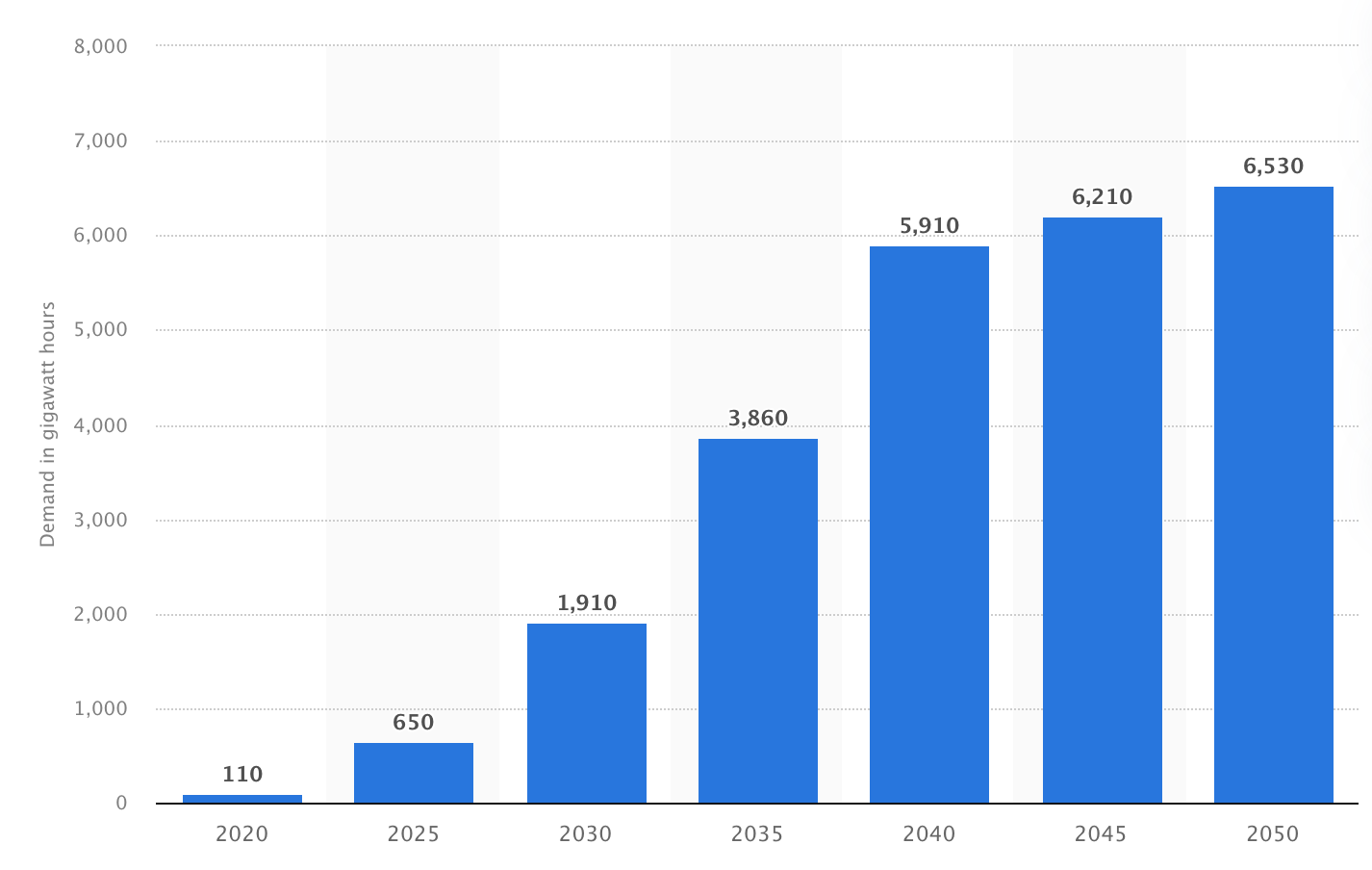
Crucially, the TAM QuantumScape is pursuing is not static but expanding. Each incremental gain in EV penetration compounds battery demand, while the average battery size per vehicle is also rising as automakers push for longer ranges and larger vehicle formats. For instance, a shift from 60 kWh packs in early EVs to 80–100 kWh packs in SUVs and trucks magnifies overall cell demand. This trend aligns directly with QuantumScape’s value proposition: higher energy density per cell enables automakers to offer greater range without unsustainable increases in vehicle weight and pack size.
The takeaway is clear: the addressable market for QuantumScape’s technology is massive, even if the company captures only a fraction. A 1% share of a 3 TWh market equates to 30 GWh of annual production capacity, representing billions in potential revenue. The flip side is that competition will intensify as both incumbents and startups vie for slices of this expanding pie. QuantumScape’s success will therefore depend less on whether the market grows, because, believe me, it will, but on its ability to meet timelines and achieve cost and performance metrics that make it a viable participant in a multi-TWh global industry.
Solid-state adoption curve
While overall EV battery demand is forecast to grow at an exponential rate, the path to solid-state adoption is expected to be more gradual and nonlinear. Investors must recognize that incumbent lithium-ion technology benefits from decades of manufacturing optimization, vast installed capacity, and falling costs through scale. Against this backdrop, solid-state batteries will likely emerge first in premium or performance-oriented applications before achieving broad penetration in the mass market. This staged adoption curve has important implications for QuantumScape’s commercialization strategy and valuation horizon.
The most plausible scenario is that solid-state cells debut in premium EV segments where performance attributes, longer range, ultra-fast charging, and safety, command a premium price point. Automakers such as Volkswagen, BMW, or Mercedes could position solid-state-powered models as flagship products, differentiating them from conventional lithium-ion vehicles. This mirrors historical adoption curves in the automotive industry, where advanced technologies often first appear in luxury models before diffusing down to mass-market platforms. In this phase, volumes are relatively modest, but margins are higher, enabling companies like QuantumScape to establish credibility and recoup early production costs.
A second phase would see broader adoption across mass-market EVs as manufacturing yields improve, costs decline, and OEMs seek differentiation at scale. This transition depends heavily on manufacturing learning curves, reducing defect rates, improving throughput, and optimizing supply chains. Industry analysts suggest that mass-market adoption of solid-state may not occur until the early-to-mid 2030s, given the inherent challenges of scaling new chemistries. For QuantumScape, success in this stage requires demonstrating not only performance but also cost competitiveness against advanced lithium-ion variants such as lithium iron phosphate (LFP) or high-nickel cathodes.
Finally, solid-state technology could extend into non-automotive applications such as stationary storage or consumer electronics, leveraging its safety and durability advantages. These markets, however, are likely to be secondary in adoption order, given that their economics are more cost-sensitive and margins thinner compared to automotive.
The adoption curve is unlikely to be a straight line. Breakthroughs in manufacturing could accelerate timelines, while setbacks in yield or durability could delay them. The market has already priced QuantumScape as a binary bet on solid-state becoming real and scalable. The investment case, therefore, is not about whether EV demand will exist, that is given, but about whether solid-state can transition from niche premium volumes into a meaningful share of a multi-TWh global market. Success in doing so would justify a multi-billion valuation; failure would relegate the technology to a perpetual “five years away” story.
Industry structure & supply chain dynamics
The global battery industry is currently dominated by a small set of entrenched Asian incumbents, namely CATL, LG Energy Solution, Panasonic, BYD, and Samsung SDI. These firms collectively control the majority of global lithium-ion capacity and enjoy significant economies of scale, optimized supply chains, and deep relationships with automakers. For a company like QuantumScape, this structural backdrop represents both a challenge and an opportunity. On one hand, it is difficult for a new entrant to penetrate an industry where capacity decisions are made years in advance and capital requirements are measured in billions. On the other, automakers, particularly in Europe and the U.S., are eager to diversify their supplier base away from near-total dependence on Asian incumbents. This creates an opening for Western startups with differentiated technologies.
The supply chain dynamics of battery manufacturing amplify these challenges. Key raw materials, lithium, nickel, cobalt, and manganese, are globally concentrated, with refining capacity dominated by China. While QuantumScape’s solid-state design does not eliminate dependence on these inputs, it could mitigate some constraints. By enabling higher energy density, solid-state cells could reduce the amount of cathode material required per unit of energy, effectively stretching scarce resources further. Moreover, the absence of graphite anodes in QuantumScape’s lithium-metal design reduces exposure to a supply chain heavily dependent on China. These nuances matter for investors, as they hint at potential long-term structural advantages if solid-state achieves scale.
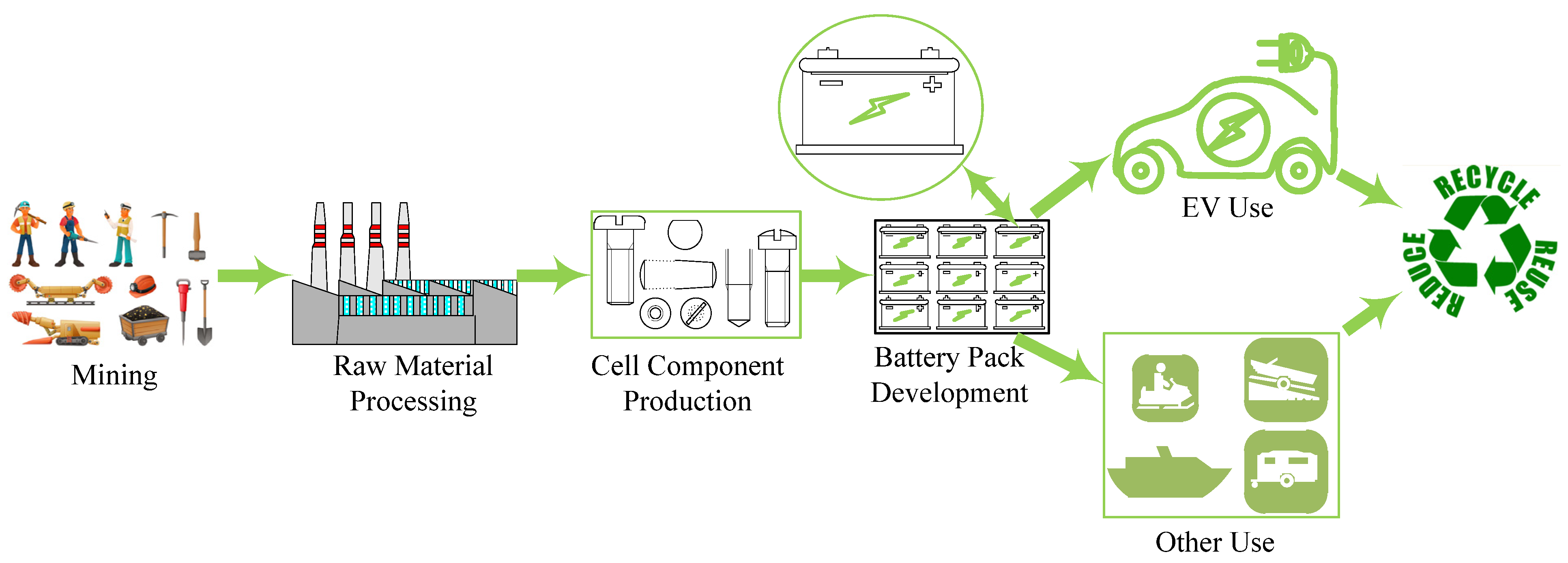
From an industry structure standpoint, the barriers to entry are high not only because of capex but also because of qualification timelines. Automakers cannot afford to adopt unproven suppliers given the safety-critical nature of batteries. This reality slows the entry of startups but also strengthens the position of those who do manage to achieve qualification. For QuantumScape, the Volkswagen partnership provides a credible route into this system, effectively sponsoring its entrance into an otherwise closed supplier base.
The broader industry dynamic is also being reshaped by policy and geopolitics. The U.S. Inflation Reduction Act and Europe’s Green Deal industrial policies are pushing to localize battery production, reduce reliance on China, and incentivize domestic capacity. For QuantumScape, this environment is constructive. As a U.S.-based company with European partnerships, it is well-positioned to benefit from government subsidies, loan guarantees, and favorable customer procurement dynamics.
QuantumScape operates in one of the most concentrated and strategically critical supply chains in the world. The company’s ability to insert itself into this oligopoly, leveraging Western industrial policy and OEM demand for diversification, could be a structural tailwind. Conversely, failing to meet cost or volume expectations risks marginalization in a market where incumbents continue to scale aggressively.
Strategic positioning & market share potential
QuantumScape’s strategic positioning within the global battery landscape hinges on its ability to deliver a step-change improvement over incumbent lithium-ion technologies while carving out a role in an industry dominated by large, well-capitalized incumbents. The company’s edge lies in its differentiated ceramic solid-state separator, which, if successfully scaled, could confer a defensible technological moat. For automakers, this translates into a pathway to longer range, faster charging, and improved safety, key differentiators in the competitive EV market. By anchoring its commercialization around Volkswagen, QuantumScape positions itself initially as a premium technology supplier to one of the world’s largest OEMs.
From a market share perspective, QuantumScape does not need to displace incumbents on a massive scale to justify meaningful enterprise value. With global EV battery demand projected to exceed 2.5-3.0 TWh by 2030, even capturing 1% of the market, roughly 25-30 GWh of annual production, could translate into multi-billion-dollar revenue potential. In practical terms, this could equate to supplying cells for several hundred thousand EVs annually, a realistic target if Volkswagen integrates solid-state into premium models before expanding to higher-volume platforms. This asymmetry is critical: small slices of a massive TAM can still produce transformative upside.
Over time, QuantumScape’s positioning could evolve from a single-OEM supplier to a broader platform technology provider. If partnerships beyond Volkswagen materialize, the company could scale into multiple JVs across Europe, North America, and Asia, diversifying both its customer base and geographic exposure. This would reduce concentration risk and allow QuantumScape to target multiple market segments, from luxury EVs to potentially mass-market models. The optionality to expand into stationary storage and consumer electronics, while secondary in near-term relevance, adds further long-dated upside and reinforces the platform nature of the technology.
However, competitive dynamics must not be overlooked. Solid Power, Toyota, and a range of Asian incumbents are all pursuing solid-state or semi-solid variants, meaning QuantumScape’s lead is not uncontested. The company’s ability to maintain technological differentiation and translate it into manufacturability will determine whether it captures durable share or is outpaced by better-capitalized rivals. This makes execution the central variable: a proven, scalable process could secure QuantumScape a protected niche, while setbacks could relegate it to the margins of an industry moving at scale without it.
Ultimately, QuantumScape’s market share potential is less about total dominance and more about proving relevance in a trillion-dollar transition. If the company can secure even modest penetration with a differentiated product, the financial upside is substantial. If it fails, the binary nature of the story becomes evident. For long-term investors, this asymmetric payoff profile is the essence of the thesis.
The opportunity before QuantumScape is massive, but so are the stakes. Success depends less on whether EV demand materializes, it will, and more on the company’s ability to turn its technical edge into manufacturable, cost-competitive products. A small foothold in this trillion-dollar market could transform its financial profile, while execution missteps could erase its relevance amid aggressive incumbents. The asymmetric payoff lies in this dynamic: even limited adoption of solid-state at scale could make QuantumScape a meaningful player in one of the world’s most strategic supply chains.
Of course, opportunity alone does not guarantee success; assessing the competitive landscape is essential to gauge how durable QuantumScape’s positioning might be.
10. Competitive Landscape
QuantumScape faces a dual challenge: outrun lithium-ion incumbents that are “good enough” today while fending off solid-state peers racing to commercialization.
The competitive backdrop for QuantumScape is shaped by two powerful forces: entrenched lithium-ion giants with scale and cost advantages, and an emerging cohort of solid-state rivals pursuing alternative architectures. Incumbents such as CATL, LG, and Panasonic control more than three-quarters of the market and continue to push incremental advances that could delay the urgency of adoption for next-gen technologies.
At the same time, startups like Solid Power, ProLogium, and Factorial, along with industry heavyweights like Toyota, are pressing forward with their own solid-state strategies, each balancing trade-offs between manufacturability, performance, and capital intensity. This competitive landscape is not static but a fast-moving race in which timelines, partnerships, and proof points will determine who captures the first meaningful share of the solid-state market.
Incumbent lithium-ion leaders
The global EV battery market today is overwhelmingly controlled by a handful of lithium-ion incumbents: Contemporary Amperex Technology (CATL), LG Energy Solution, Panasonic, Samsung SDI, and BYD. Collectively, these firms account for more than 75% of installed global capacity, with CATL alone commanding roughly one-third of the market. Their dominance is built on years of cumulative capital investment, economies of scale, and an entrenched position in automaker supply chains. For QuantumScape, this represents both the competitive backdrop it must enter and the benchmark against which it will be judged.
The advantages of incumbents are formidable. First, they operate at multi-gigawatt-hour scale, with global networks of gigafactories strategically located across China, Europe, and North America. This gives them a cost advantage that new entrants will struggle to match in the near term. Second, their processes are highly optimized, with defect rates that have fallen steadily as learning curves steepened. This cost and process maturity allows them to reduce prices year over year, maintaining competitiveness even as commodity costs fluctuate. For automakers under pressure to reduce EV sticker prices, incumbents offer reliability, scale, and predictable economics.
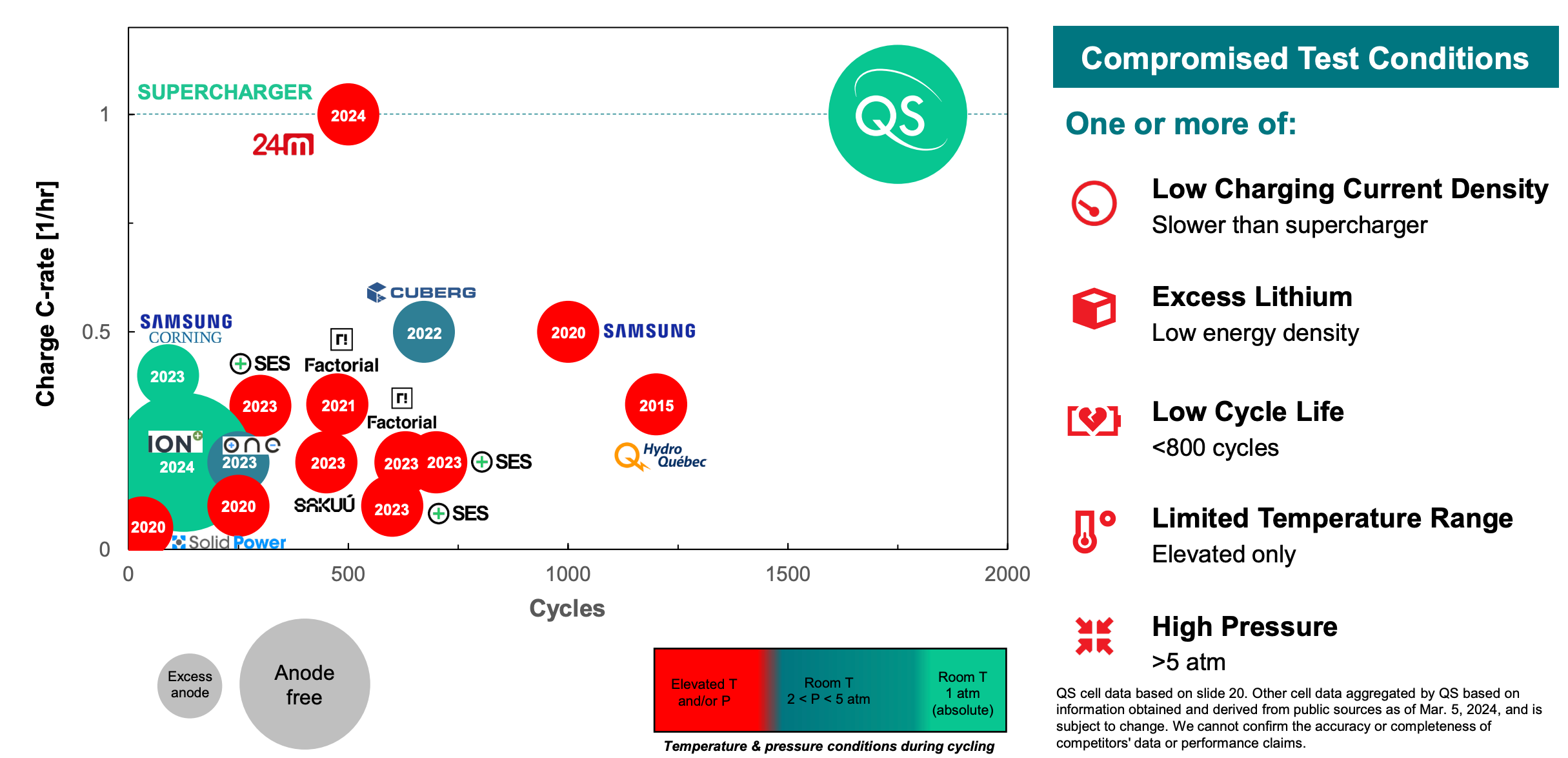
Beyond cost, incumbents are not standing still on technology. CATL, for instance, has advanced lithium iron phosphate (LFP) chemistries into mass-market adoption, offering a low-cost solution with acceptable range for mainstream vehicles. LG and Panasonic continue to push high-nickel cathodes for premium applications, while BYD has leveraged vertical integration to achieve both cost and supply chain resilience. These incremental innovations extend the relevance of lithium-ion technology and may delay the urgency of adopting alternatives like solid-state.
From an investor perspective, incumbents pose two distinct risks to QuantumScape. First, they can leverage their scale to adopt solid-state or hybrid technologies themselves, either through internal R&D or acquisition of startups. Second, their ongoing improvements in lithium-ion, particularly in charging speed and energy density, may prove “good enough” for mass-market EV adoption, eroding the premium QuantumScape seeks to command. If a 300-mile range with 15-minute charging becomes achievable on lithium-ion at scale, the adoption curve for solid-state could be pushed further out.
That said, incumbents also provide a form of validation. The fact that companies like Toyota, CATL, and Samsung are investing heavily in solid-state R&D demonstrates that the industry sees eventual transition as inevitable. For QuantumScape, the challenge is to commercialize fast enough to establish a first-mover position before incumbents can fully absorb or replicate the technology. In this sense, the incumbents are both the competitive threat and the ultimate acquirers or partners, depending on how the story unfolds.
Direct solid-state competitors
QuantumScape’s most direct competitors are other startups and incumbents pursuing solid-state battery architectures, though the approaches differ significantly. The most notable peer is Solid Power, a U.S.-based company developing sulfide-based solid electrolytes rather than QuantumScape’s ceramic oxide separator. Solid Power has positioned itself as a development partner with both Ford and BMW, with a strategy of supplying electrolyte materials rather than manufacturing complete cells at scale. While this capital-light model has appeal, sulfide electrolytes face challenges around stability, moisture sensitivity, and scalability. QuantumScape, by contrast, is betting that its ceramic separator will deliver greater long-term stability, albeit with more complex manufacturing requirements.
ProLogium, a Taiwan-based private company, has also emerged as a serious player, with a decade-long history of working on oxide-based solid-state cells. ProLogium has established partnerships with Mercedes-Benz and has announced plans to build production capacity in Europe. Unlike QuantumScape, which remains pre-revenue, ProLogium has produced smaller-format solid-state cells for consumer applications, providing it with early manufacturing experience. However, scaling to automotive-grade multilayer cells remains a challenge, and its durability and cost metrics are not yet fully proven.
Meanwhile, Factorial Energy, a Massachusetts-based startup backed by Hyundai, Stellantis, and Mercedes, is developing a “quasi-solid-state” electrolyte that blends solid and liquid components. This hybrid approach may accelerate manufacturability by leveraging more existing lithium-ion processes, though it potentially sacrifices some of the performance and safety benefits of a true solid-state system. Similarly, Toyota, the largest automaker in the world, has made significant in-house investments in solid-state R&D, reportedly targeting limited production of hybrid models with solid-state cells by the mid-2020s. While Toyota’s scale and resources make it a formidable competitor, its conservative timelines suggest it faces similar hurdles around cost and durability.
The critical insight is that no single solid-state approach has yet proven dominant. Each competitor balances trade-offs between performance, manufacturability, and capital intensity. QuantumScape’s differentiation rests on its lithium-metal anode and ceramic separator, which, if manufacturable, offer a step-change in energy density and charging speed. The risk is that competitors pursuing hybrid or semi-solid solutions may reach commercialization faster, capturing early OEM partnerships even if their performance is incrementally weaker.
The competitive race is therefore as much about time-to-market as it is about ultimate performance. If QuantumScape can validate its technology and scale production within the next five years, it could establish a defensible first-mover advantage. If it falls behind, better-capitalized peers or incumbents may seize the early solid-state market, relegating QuantumScape to a follower position. For long-term investors, this makes monitoring competitor progress just as important as tracking QuantumScape’s own milestones.
Adjacent technology alternatives
While solid-state batteries promise a step-change in performance, QuantumScape must also contend with adjacent innovations in conventional lithium-ion that could blunt or delay demand for its technology. Automakers are pragmatic: they care less about chemistry purity and more about achieving performance, cost, and safety targets at scale. If incremental improvements to existing lithium-ion chemistries meet consumer expectations, the urgency for solid-state adoption could be reduced, posing a strategic risk to QuantumScape’s market penetration.
The most significant of these alternatives is the continued evolution of lithium iron phosphate (LFP). Once seen as a low-range option, LFP has rapidly gained traction due to cost advantages, long cycle life, and improved charging rates. CATL’s “cell-to-pack” and “cell-to-chassis” architectures have further boosted volumetric efficiency, making LFP viable for mainstream EVs. With Tesla, BYD, and others embracing LFP for high-volume vehicles, this chemistry could dominate the cost-sensitive mass-market segment, leaving solid-state to compete in niches where premium range and performance are valued.
Another vector is the integration of silicon anodes into conventional lithium-ion systems. Companies like Sila Nanotechnologies and Group14 are pushing silicon-based materials that promise substantial improvements in energy density and fast charging while remaining compatible with existing production infrastructure. While cycle life and swelling issues remain challenges, even partial silicon integration (e.g., 10-20%) can deliver meaningful range improvements. If successfully scaled, silicon-enhanced lithium-ion could narrow the performance gap that solid-state seeks to exploit.
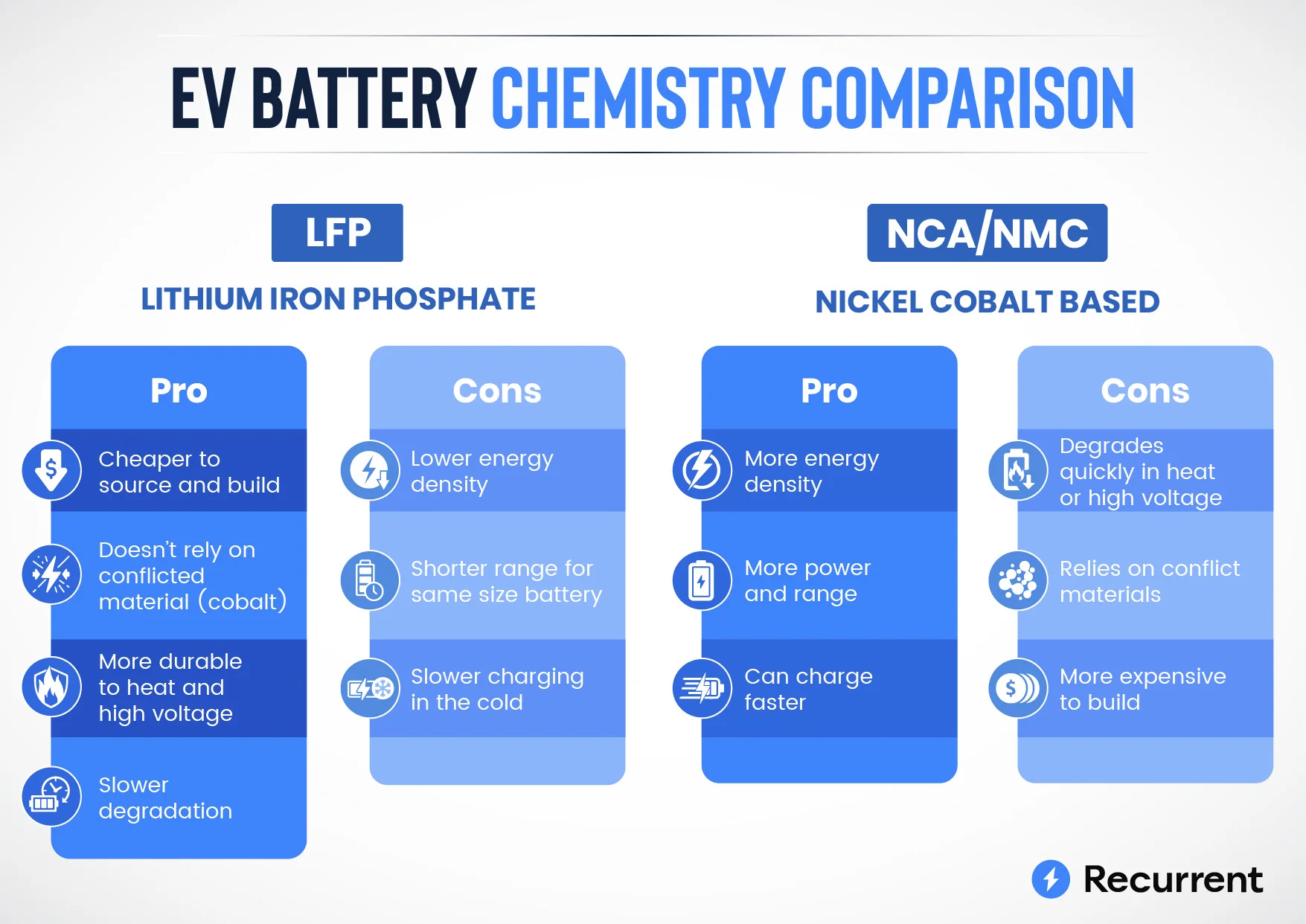
In parallel, high-nickel cathodes (NCM 811, NCMA) continue to improve, offering higher energy density at the expense of cost and safety complexity. Meanwhile, research into sodium-ion batteries, led by CATL and others, could create an entirely new low-cost category for stationary storage and entry-level EVs. Though sodium-ion lacks the energy density to compete in premium EVs, its adoption could absorb some of the demand growth that solid-state companies are banking on, particularly in geographies focused on affordability.
The risk is that these adjacent technologies create a “good enough” paradigm. If EVs can reliably deliver 300-400 miles of range with sub-15-minute charging at lithium-ion cost levels, automakers may delay or limit the shift to solid-state until costs converge. In that case, QuantumScape’s window to capture meaningful share narrows, and its premium differentiation risks being confined to a small slice of the market.
The flip side is that continued improvements in lithium-ion validate the scale of EV demand, ensuring a massive TAM. QuantumScape’s challenge is not whether EVs will need better batteries, they will, but whether its technology can arrive at scale before lithium-ion closes enough of the performance gap to make “revolutionary” unnecessary.
QuantumScape’s relative positioning
QuantumScape’s positioning within the competitive landscape hinges on two defining factors: the distinctiveness of its technology and the credibility of its commercialization pathway. Among solid-state contenders, its ceramic solid-state separator coupled with a lithium-metal anode represents one of the most ambitious approaches, aiming for a true step-change in energy density, charging speed, and safety. Unlike hybrid or semi-solid approaches that seek incremental manufacturability gains, QuantumScape is pursuing a purist design that, if scalable, could yield the most differentiated product in the market. This ambition provides investors with asymmetric upside but also elevates execution risk.
Relative to peers, QuantumScape has made significant progress in de-risking the technical side. The company has demonstrated multilayer pouch cells with performance metrics, cycle life, charge rates, dendrite suppression, that compare favorably to known alternatives. The partnership with Volkswagen further validates the platform, offering a credible commercialization channel. Few competitors can match the depth of this OEM alignment, which provides both capital and a clear integration pathway. In this sense, QuantumScape is arguably better positioned than many peers that lack anchor partners or are forced to balance multiple smaller collaborations.
The company’s IP portfolio further strengthens its positioning. With hundreds of patents and patent applications covering its separator materials, cell architecture, and manufacturing processes, QuantumScape has built a defensible technological moat. For investors, this is crucial: if the company achieves scale, strong IP protection increases the likelihood of sustainable margins and strategic value, potentially positioning it as a must-have acquisition or JV partner for OEMs seeking differentiation.
That said, QuantumScape’s positioning is highly binary. Its competitors pursuing polymer or sulfide-based systems may reach manufacturability faster, even if their performance is lower. If these peers secure early OEM contracts and begin scaling, QuantumScape risks losing the first-mover advantage. Additionally, incumbent lithium-ion leaders, CATL, LG, Panasonic, are increasingly experimenting with solid-state variants themselves. Their scale and financial resources could enable them to catch up quickly once proof of concept is achieved, challenging QuantumScape’s ability to defend share.
For long-term investors, QuantumScape’s relative positioning can be framed as a high-risk, high-reward asymmetry. If successful, the company could set the standard for solid-state batteries, commanding strategic value disproportionate to its size. If it falters, competitors with more pragmatic approaches or incumbents with scale could marginalize it. The market, therefore, is not simply a race to solid-state, it is a race to validate, manufacture, and commercialize at scale. QuantumScape’s unique positioning offers investors exposure to the “purest” solid-state bet, but it comes with execution dependency that few incumbents face.
QuantumScape’s relative position is both differentiated and precarious. Its ceramic separator and lithium-metal design promise the most ambitious performance gains, backed by deep IP and the validation of Volkswagen as an anchor partner. Yet ambition comes with risk: competitors pursuing hybrid or sulfide-based systems may reach scale sooner, and incumbents have the resources to close gaps quickly once viability is proven. The investment case is therefore highly asymmetric.
If QuantumScape executes, it could define the benchmark for solid-state batteries and command outsized strategic value; if it falters, the market will not wait. Monitoring both competitor progress and QuantumScape’s execution cadence is central to assessing whether this story plays out as industry leadership or as another cautionary tale in the high-stakes race to power the EV future.
Competition plays out not only in technology and scale, but also within the regulatory and policy frameworks that can accelerate or constrain adoption.
11. Regulatory & Policy Considerations
Policy is not just a tailwind, it is the force turning EV batteries from an optional innovation into a strategic imperative, and QuantumScape is positioned at the nexus of this transformation.
The regulatory landscape is the single most powerful driver of EV adoption, and by extension, of QuantumScape’s opportunity. Unlike consumer-driven markets where preferences shift gradually, electrification is now being legislated into inevitability. Europe’s 2035 ICE ban, China’s NEV mandates, and the U.S. Inflation Reduction Act all create a binding demand floor for batteries while reshaping the economics of where and how they are made.
For QuantumScape, this policy-driven environment is both a structural tailwind and a compression of timelines: success depends not only on advancing technology but on aligning scale-up with rapidly tightening mandates for performance, safety, and localization.
Global regulatory push for electrification
The most powerful tailwind behind QuantumScape’s addressable market is the global regulatory shift mandating the transition from internal combustion engines (ICE) to electric vehicles. Unlike many technology markets that rely on purely consumer-driven adoption, EV demand is increasingly shaped by government mandates, emissions standards, and subsidy frameworks. This creates a policy-driven demand floor that strengthens the case for scaling new battery technologies, while also compressing the timeline for their adoption.
Europe remains the most aggressive jurisdiction, having legislated a 2035 ban on the sale of new ICE vehicles, alongside intermediate fleet-average CO₂ reduction targets in 2025 and 2030. These rules effectively compel automakers to accelerate their EV rollouts or face punitive fines. For Volkswagen, QuantumScape’s anchor partner, the EU’s regulatory environment makes access to differentiated battery technology strategically vital. The combination of range pressure, consumer expectations, and compliance costs ensures that premium EV platforms will be at the center of near-term electrification efforts, precisely where QuantumScape’s high-performance cells could find early adoption.
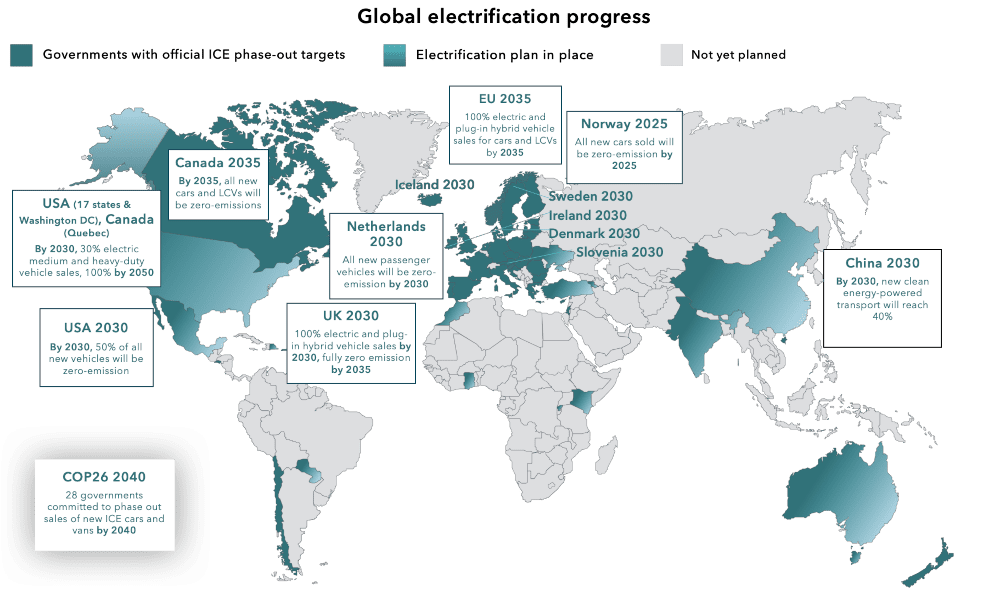
China, the world’s largest EV market, takes a different approach, combining subsidies with production mandates under its New Energy Vehicle (NEV) credit system. By tying automaker compliance to the share of EVs in their sales mix, China has effectively institutionalized rapid electrification, driving EV penetration above 30% by 2023. Although QuantumScape is unlikely to target China as a first commercialization geography, the scale of Chinese adoption sets the global competitive tempo and reinforces the inevitability of EV demand growth.
In the U.S., policy momentum has accelerated significantly under the Inflation Reduction Act (IRA). The IRA extends and expands EV purchase tax credits, while tying eligibility to domestic content requirements for battery materials and manufacturing. Combined with state-level ZEV mandates, such as California’s 2035 ICE phase-out, the U.S. is now embedding electrification into both consumer incentives and industrial policy. For QuantumScape, this provides dual benefits: long-term demand certainty and potential eligibility for supply-chain subsidies as it scales domestic production.
The significance of these policies is twofold. First, they de-risk demand: the electrification transition is no longer discretionary, but regulatory-driven, ensuring that multi-TWh battery demand materializes. Second, they raise the bar for technology competitiveness. As automakers face binding deadlines, they will prioritize solutions that can be qualified and scaled in time. For QuantumScape, regulatory momentum is a structural tailwind, but it also compresses execution windows; any delay risks missing critical compliance-driven adoption cycles.
Incentives and subsidies for battery manufacturing
While regulatory mandates create demand certainty for EVs, the economics of scaling new battery technologies like solid-state are heavily influenced by government incentives and subsidies. In this respect, the current policy environment is unusually constructive for QuantumScape. Across the U.S. and Europe, governments are actively underwriting battery supply chains to accelerate domestic capacity, reduce dependence on Asia, and secure jobs in clean-tech manufacturing. For a pre-revenue company facing multi-billion-dollar capex hurdles, these frameworks significantly reduce the financing burden and mitigate dilution risk.
The most consequential development is the U.S. Inflation Reduction Act (IRA), which provides both demand-side and supply-side support. On the demand side, consumer EV tax credits of up to $7,500 are contingent on sourcing thresholds for critical minerals and components, creating a direct incentive for automakers to source domestically manufactured batteries. On the supply side, the IRA introduces a $35/kWh production tax credit for cells manufactured in the U.S., declining after 2032. For a company like QuantumScape, which may produce tens of gigawatt-hours per year if successful, this credit could translate into hundreds of millions in annual subsidies, an effective buffer against early cost disadvantages relative to incumbent lithium-ion.
In addition, U.S. federal programs like the Department of Energy’s Loan Programs Office (LPO) provide low-cost capital for building advanced manufacturing capacity. Multiple battery companies, including peers such as Solid Power, have already benefited from DOE support. QuantumScape’s positioning as a U.S.-based developer of a strategically critical clean technology makes it a natural candidate for such funding, which could significantly reduce the equity burden of scaling production.
Europe offers a parallel policy tailwind through initiatives like the Green Deal Industrial Plan and the Important Projects of Common European Interest (IPCEI) funding for batteries. Billions of euros have been earmarked for European gigafactories, with preference given to technologies that reduce carbon intensity or improve energy efficiency. Given QuantumScape’s alignment with Volkswagen and PowerCo in Europe, access to EU subsidies or low-cost financing could materially improve the economics of scaling in the region.
These programs reshape the capital structure risk profile. QuantumScape’s path to commercialization still requires significant funding, but the availability of subsidies, tax credits, and low-cost debt materially improves capital efficiency. Subsidy-driven economics also increases the strategic value of being an early mover: the first wave of qualifying projects may secure the most generous support, while laggards face reduced benefits. Ultimately, policy incentives do not guarantee success, but they provide critical tailwinds that lower dilution risk and extend QuantumScape’s runway to scale.
Supply chain security and localization requirements
Beyond mandates and subsidies, a central pillar of today’s battery policy landscape is the strategic drive for supply chain security and localization. Governments in the U.S. and Europe view batteries not just as a clean-tech product but as a national security priority, given the heavy reliance on China for critical materials processing and cell manufacturing. For QuantumScape, this geopolitical realignment offers both opportunities and constraints, shaping how and where it must scale to remain competitive and compliant.
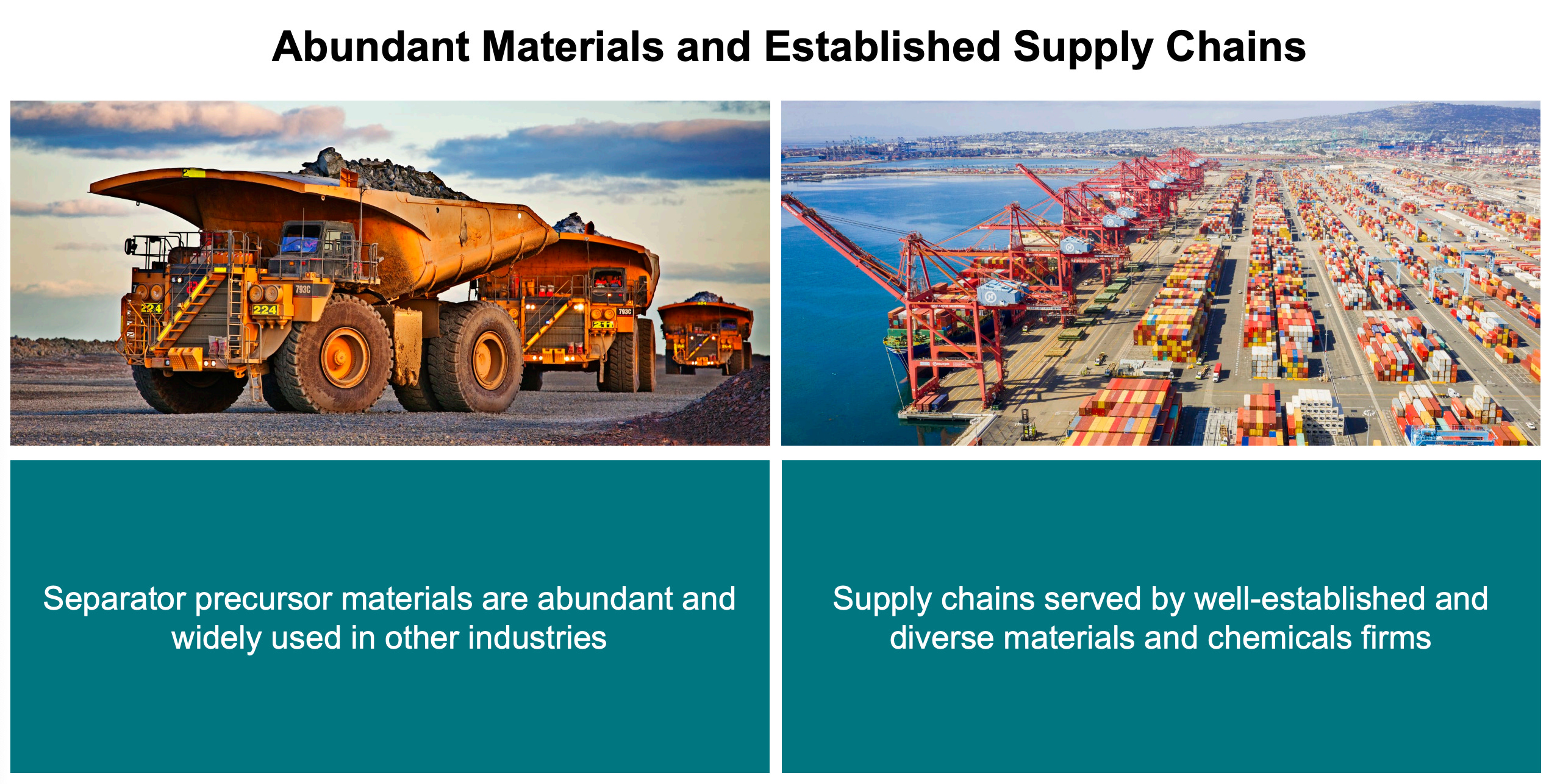
The U.S. Inflation Reduction Act (IRA) makes this explicit. To qualify for the $7,500 EV tax credit, vehicles must source a rising share of critical minerals (lithium, nickel, cobalt, manganese) from the U.S. or free-trade partners. Simultaneously, cells and packs must be assembled in North America, with thresholds increasing each year. By 2027, batteries with significant Chinese content will be excluded entirely. This effectively forces OEMs to localize supply chains and seek U.S.-based cell suppliers. QuantumScape, as a domestic technology developer, is well-positioned to benefit from this policy tailwind, assuming it can scale manufacturing within North America in parallel with its European Volkswagen partnership.
In Europe, a similar trend is unfolding. The EU’s Critical Raw Materials Act sets targets for regional extraction, processing, and recycling capacity to reduce dependence on third countries. Moreover, the EU Battery Regulation mandates strict supply chain due diligence, carbon footprint disclosures, and recycling obligations. For QuantumScape, working with Volkswagen’s PowerCo in Europe creates alignment with these policies, while its U.S. base provides flexibility to meet IRA criteria. Companies without geographic alignment to these policy shifts risk being structurally disadvantaged, regardless of technological merit.
From an investor’s standpoint, localization rules introduce execution complexity but also strategic insulation. If QuantumScape successfully establishes qualifying production footprints, it becomes a scarce domestic supplier of advanced cells at a time when automakers are under pressure to comply with regional sourcing mandates. This scarcity could translate into pricing power, stronger partnerships, and access to preferential subsidies. Conversely, failure to localize on policy-compliant timelines could lock the company out of critical demand channels, particularly in the U.S. where IRA compliance directly affects consumer affordability.
Ultimately, supply chain localization is both a hurdle and a moat. It raises the capital and execution burden for new entrants, but it also erects barriers to foreign competitors and magnifies the strategic value of domestic innovators. For QuantumScape, aligning its scale-up strategy with these evolving requirements is not optional, it is central to its ability to capture share in a policy-driven market.
Safety, testing, and certification frameworks
Perhaps the most underappreciated regulatory factor for investors in QuantumScape is the safety and certification framework governing automotive batteries. Unlike consumer electronics, automotive cells must meet rigorous performance, durability, and safety standards set by regulators and OEMs, with qualification cycles often stretching five to seven years. These protocols are designed to minimize risk of thermal runaway, fires, or catastrophic failures in vehicles that may operate under extreme conditions for over a decade. For QuantumScape, this reality represents both a structural moat, once qualified, suppliers are deeply entrenched, and a major gating factor that slows commercialization.
Solid-state batteries promise inherent safety advantages by eliminating flammable liquid electrolytes, but this does not exempt them from testing. QuantumScape must prove not only that its ceramic separator blocks dendrites and prevents short circuits, but also that it can withstand vibration, temperature extremes, overcharging, and mechanical abuse without degradation. Meeting these requirements across multilayer automotive-sized cells is more complex than demonstrating performance in small lab formats. Even with strong early data, scaling to thousands of cycles under diverse operating conditions remains a long road.
Regulatory testing frameworks vary by region but are broadly harmonized. In the U.S., the Federal Motor Vehicle Safety Standards (FMVSS) and SAE testing protocols govern battery packs, while the UN ECE R100 regulation provides an international baseline for electric vehicle safety. In Europe, the EU Battery Regulation is introducing additional lifecycle performance and carbon footprint disclosure requirements. Automakers themselves often impose even stricter internal standards before adopting new suppliers, reflecting their liability exposure. For QuantumScape, this means that passing external regulatory bars is necessary but not sufficient, OEM validation is equally critical.
Here, the implications are twofold. First, the certification burden creates long lead times: even if QuantumScape achieves technical readiness in the lab, it may take several additional years before products are approved for mass-market integration. This extends the commercialization horizon and reinforces the need for a patient capital base. Second, once validated, certification creates stickiness: OEMs are reluctant to switch suppliers given the cost and risk of requalification. If QuantumScape clears this hurdle with Volkswagen, it could secure a durable, long-term revenue stream insulated from rapid competitive displacement.
Ultimately, safety and certification are the bottleneck that separates lab success from commercial reality. For QuantumScape, achieving these milestones will be as important as solving technical and cost challenges. For long-term investors, they represent the final filter that determines whether the company becomes a core automotive supplier, or remains a perpetual R&D story.
Regulation is the double-edged sword defining QuantumScape’s path. Incentives, subsidies, and localization rules can de-risk capital intensity and elevate its value as a scarce domestic supplier, while rigorous testing and certification frameworks ensure that once qualified, supplier positions are highly defensible. Yet these same dynamics compress execution windows, requiring QuantumScape to prove not only that its cells work, but that they can be validated, manufactured, and delivered within policy-driven adoption cycles.
This creates a rare asymmetry: policy has made multi-terawatt-hour demand inevitable, but the spoils will accrue only to those technologies that arrive on time. QuantumScape’s future hinges on whether it can meet that moment.
While policy support can shape demand, the company’s ability to capture it ultimately depends on its financial resilience and capital structure.
12. Financial Profile & Capital Structure
QuantumScape’s statements tell the story of a company betting big: heavy losses today, but a fortress of liquidity and capital discipline that could buy it a front-row seat to one of the largest industrial transitions of the century.
QuantumScape’s financial profile reflects its stage as a high-capex, pre-revenue innovator: no top line, widening operating losses, and a heavy reliance on external capital. R&D dominates the cost structure, swelling from $65 million in 2020 to nearly $385 million LTM, underscoring the difficulty of scaling solid-state prototypes. SG&A remains modest by comparison, signaling focus and discipline, while free cash flow burn continues to run above $300 million annually.
The balance sheet, however, provides an unusual cushion: nearly $800 million of liquidity and minimal leverage give the company room to invest aggressively in pilot production and IP while navigating long commercialization cycles.
Income statement dynamics
QuantumScape’s income statement reflects the financial profile of a deep R&D-stage company: no revenue, escalating operating expenses, and widening net losses. For long-term investors, the absence of top-line visibility is not unusual for a pre-commercial hardware innovator, but the scale and trajectory of expenses provide critical insight into the company’s execution path and capital intensity.
Operating expenses have grown significantly over the past four years, rising from $81 million in 2020 to nearly $500 million in 2024. The largest component is R&D, which expanded from $65 million in 2020 to nearly $385 million LTM. This reflects the company’s aggressive investment in scaling multilayer solid-state prototypes, expanding pilot-line capacity, and deepening materials science research. Unlike many early-stage cleantech peers, QuantumScape’s R&D intensity is unusually high, signaling both the technical difficulty of its challenge and its prioritization of IP defensibility.
SG&A, by contrast, is modest relative to R&D, peaking at $131 million in 2023 and declining to $83 million LTM. This suggests management discipline in overhead and commercial functions, consistent with a company still focused on technical validation rather than scaling sales infrastructure. The combination of falling SG&A and rising R&D implies that costs are being channeled more directly into the product engine rather than administrative expansion, an encouraging sign for investors focused on capital efficiency.
Net income has been consistently negative, ranging from a $46 million loss in 2021 (inflated by non-operating gains) to nearly $463 million LTM. The extreme $1.68 billion loss in 2020 was driven by unusual non-operating items, not recurring operations, and thus less relevant to forward analysis. Excluding those one-offs, losses have steadily grown in line with R&D scale-up. Importantly, stock-based compensation has become a notable expense line, exceeding $140 million annually, which inflates reported losses and contributes to ongoing shareholder dilution. While non-cash, it materially impacts per-share economics.
EBITDA trends underscore the capital intensity of the model: losses expanded from $74 million in 2020 to nearly $400 million LTM, with limited year-over-year improvement despite operating scale. This lack of operating leverage reflects QuantumScape’s pre-revenue status, but it also emphasizes the company’s dependence on future production scaling to flip the income statement profile.
The current income statement highlights both the binary nature of the bet and the need for patience. Current losses are structurally tied to development, not failed commercialization. However, with burn rates approaching half a billion dollars annually, the path to profitability is entirely contingent on technical success and timely OEM adoption. Until then, the income statement will remain a function of expense discipline, dilution management, and subsidy support rather than revenue growth.
Balance sheet strength and liquidity
QuantumScape’s balance sheet is one of its most important assets, both as a defensive buffer against heavy cash burn and as a strategic differentiator versus less capitalized peers. Despite accumulating operating losses of several hundred million dollars annually, the company continues to hold a substantial cash cushion, giving it the ability to pursue aggressive R&D and scale-up without immediate financing pressure.
As of the latest period, QuantumScape reported $910 million in cash and short-term investments, down from a peak of $1.45 billion in 2021 but still significant relative to its annual cash burn of ~$300-350 million. This liquidity profile provides a multi-year runway under current expenditure levels, positioning the company to advance into mid-stage commercialization milestones without near-term solvency concerns. The decline in balances reflects both sustained operating losses and ongoing capital expenditure for pilot facilities, but the overall balance sheet remains robust for a pre-revenue cleantech firm.
The company’s debt load is minimal, with total liabilities of only $144 million LTM, translating to a net cash position of over $700 million. This conservative leverage profile underscores management’s reliance on equity financing rather than debt, an approach consistent with its pre-commercial stage and the high technical risks that would make lenders cautious. Importantly, this leaves QuantumScape with the option to layer in low-cost debt later, potentially through government programs such as DOE loans or EU industrial funding, without burdening the balance sheet upfront.
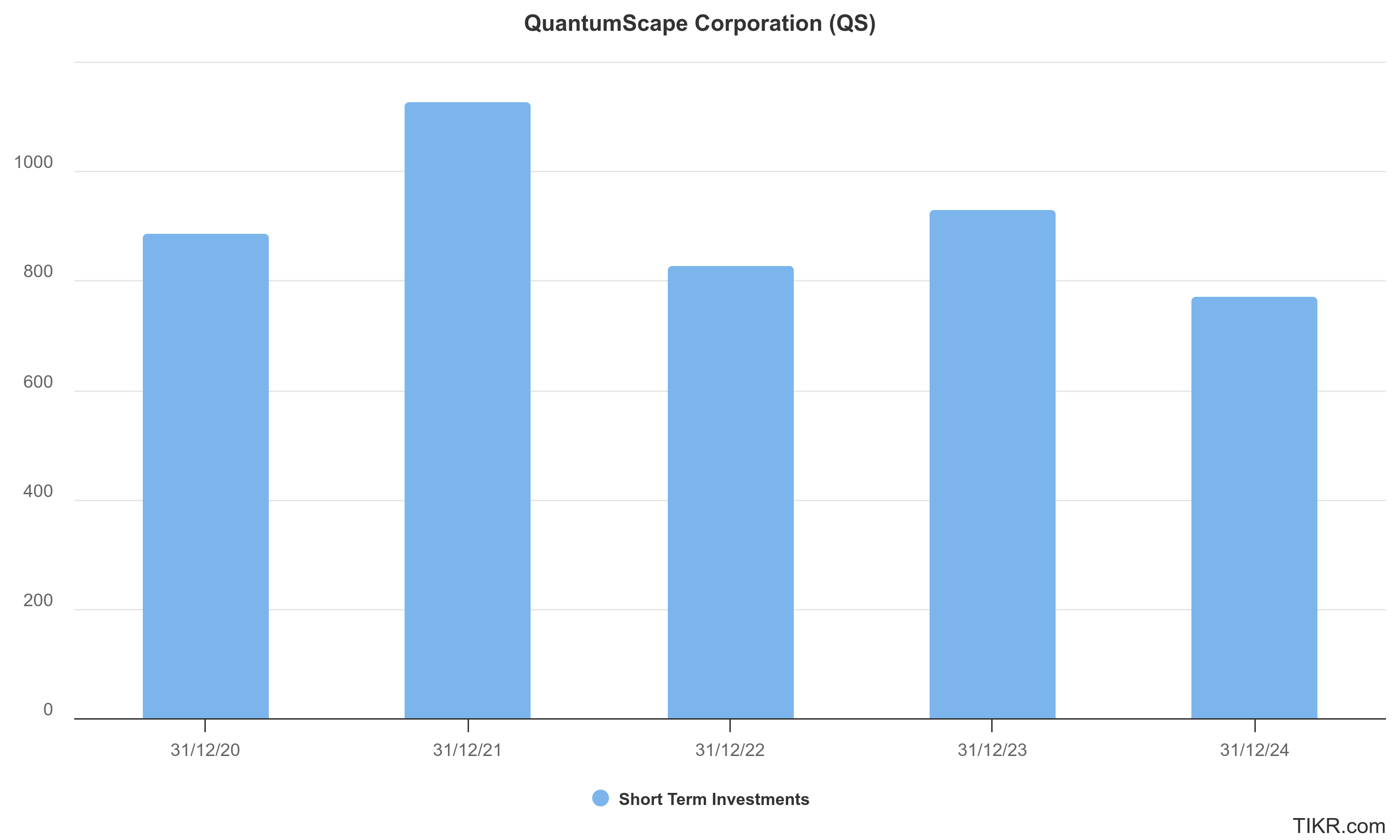
On the asset side, property, plant, and equipment (PP&E) has grown meaningfully, from $55 million in 2020 to over $336 million LTM, reflecting investments in pilot production lines and test facilities. This steady capital deployment is a tangible marker of progress toward commercialization, and while depreciation is still relatively modest, it will scale as infrastructure expands. The PP&E line provides visibility into the company’s transition from a pure R&D lab into an emerging manufacturing entity.
Equity remains the dominant component of the capital base, with $1.02 billion in book equity LTM, although this has declined from $1.6 billion in 2021 due to cumulative net losses. On a per-share basis, tangible book value has fallen from $3.75 in 2021 to $1.81 LTM, reflecting both ongoing losses and share count expansion. While declining book value per share highlights dilution risk, the fact that equity still materially exceeds liabilities reinforces the company’s solvency buffer.
For long-term investors, QuantumScape’s balance sheet offers a critical cushion that de-risks execution timelines. However, it also signals an eventual capital markets dependency: even with $800 million of liquidity, the company will require additional raises to fund commercial-scale manufacturing. The balance sheet buys time, but not permanence.
Cash flow trends and burn rate
QuantumScape’s cash flow statement underscores the company’s defining financial challenge: the need to sustain high-intensity development spending while bridging a long gap to commercialization. In my opinion, cash burn trends are often the clearest lens into capital discipline and runway, given the absence of revenue, which is the case here.
Operating cash outflows have consistently widened alongside R&D intensity. Cash from operations fell from -$128 million in 2021 to -$240 million in 2023, with the latest twelve months still at -$274 million. This progression reflects not only higher research spending but also rising non-cash charges such as stock-based compensation, which exceeded $140 million annually in recent years. While such expenses don’t directly impact cash, they contribute to dilution and highlight the tension between conserving liquidity and incentivizing talent.
Capital expenditures add another layer of drain. From $24 million in 2020, capex climbed to $158 million in 2022 before moderating to $43 million LTM. These investments correspond to pilot-line buildouts and equipment purchases necessary for scaling multilayer solid-state prototypes. Importantly, capex outlays are lumpy and expected to rise again as the company advances toward pre-commercial production facilities. This creates uneven but recurring pressure on free cash flow, which has consistently been negative, reaching -$317 million LTM.
Historically, financing activities have filled the gap. In 2021, QuantumScape raised $732 million through equity issuance, while subsequent years saw smaller but still meaningful inflows, $314 million in 2023 and $159 million LTM. This reliance on equity highlights management’s preference to avoid leverage at this stage, though it has resulted in significant share count growth. The absence of material debt issuance reinforces the view that the company’s near-term capital flexibility will come from equity markets and, increasingly, from public subsidies tied to manufacturing expansion.
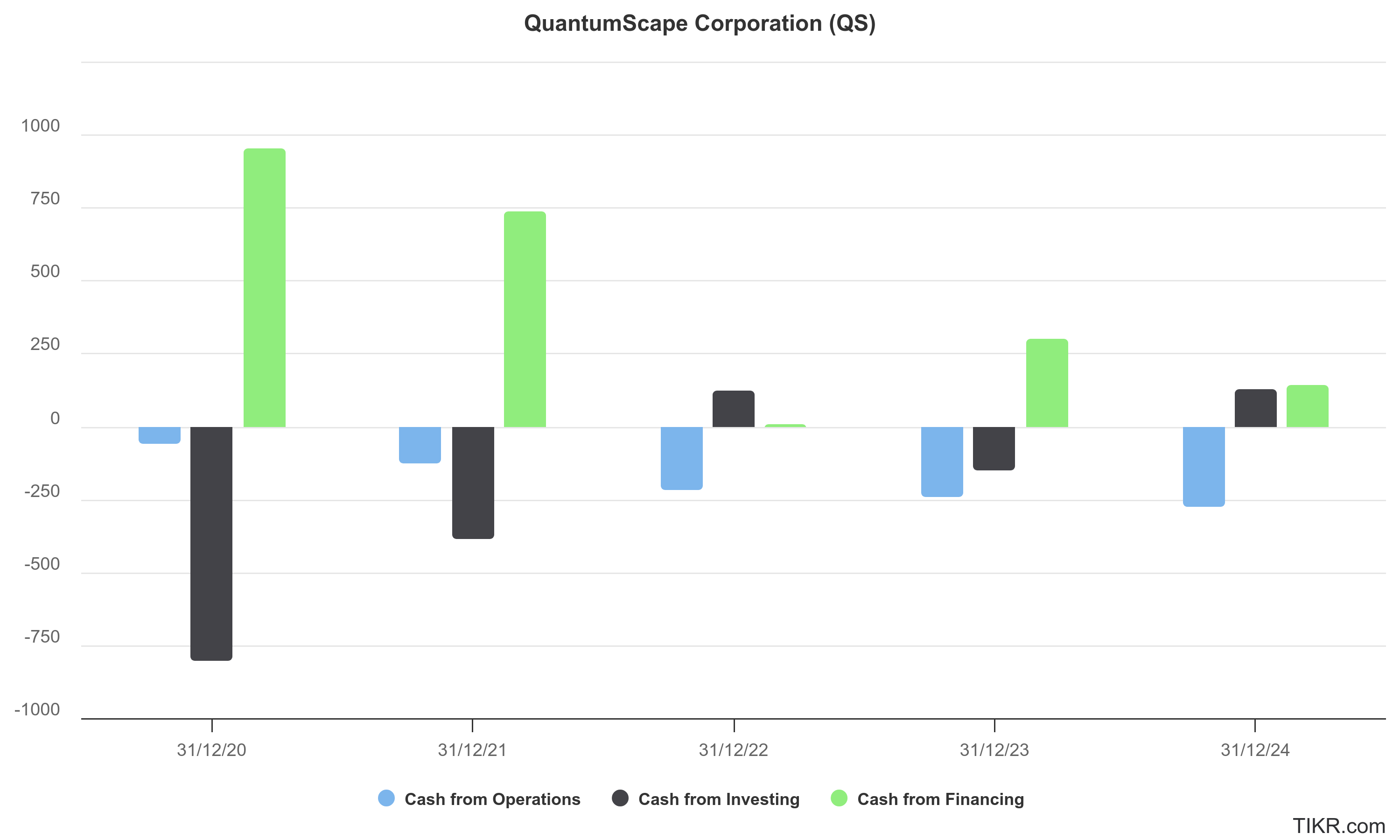
The trajectory of net cash change highlights the volatility inherent in this financing strategy. Despite large raises, cash balances have steadily declined from a peak of $1.45 billion in 2021 to under $800 million LTM, as burn has consistently outpaced inflows. Based on current trends, QuantumScape’s runway likely extends two to three years without additional financing, assuming steady-state burn. However, any acceleration in pilot-line capex or delays in subsidy disbursement could pull forward the timeline for capital raises.
Cash flow analysis reinforces the binary risk-reward profile: the company has sufficient liquidity to reach critical validation milestones, but not enough to fund full-scale commercialization. Success will hinge on maintaining access to external financing, either through equity raises, strategic OEM partnerships, or policy-linked debt programs, before burn rates overwhelm liquidity.
Capital structure and shareholder dilution
QuantumScape’s capital structure is emblematic of a pre-revenue, high-capex innovator: overwhelmingly equity-funded, with minimal leverage, but exposed to persistent dilution risk. Understanding this profile is critical, as share count expansion has been and will continue to be a defining factor in returns until revenue scale changes the financing equation.
The company has raised capital primarily through equity issuances since going public via SPAC in 2020. This reliance is visible in the share count trajectory: 252 million diluted shares in 2020 has grown to 536 million LTM, representing more than a 110% increase in just four years. Equity raises in 2021 ($732 million), 2023 ($314 million), and the most recent period ($159 million) underscore the company’s dependence on external markets to sustain operations. While each raise has extended runway, they have also compressed per-share economics, with tangible book value per share declining from $3.75 in 2021 to $1.81 LTM.
On the positive side, QuantumScape’s balance sheet leverage remains negligible, with just $89 million of debt outstanding against over $700 million of net cash. This clean structure leaves optionality to add debt later, particularly through government-backed programs such as DOE loan facilities, which are well-suited to pre-commercial infrastructure projects. For now, management has prudently avoided debt, reflecting the binary nature of its technology risk, equity is more flexible in the event of delays or setbacks.
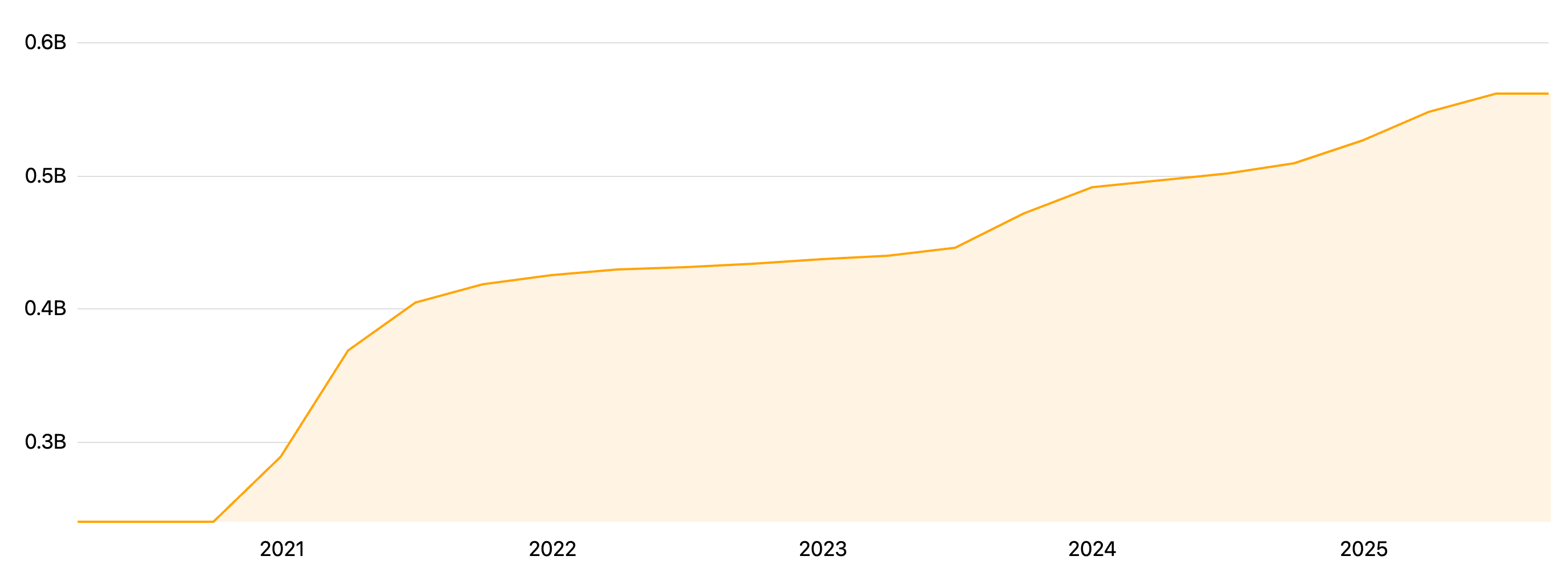
Stock-based compensation adds a secondary dilution vector. With annual SBC exceeding $140 million, the company is issuing a meaningful number of shares each year to retain talent. This compounds the impact of capital raises, as organic dilution from compensation eats into ownership alongside external issuance. This is typical for Silicon Valley-style innovators, but it does require investors to assume an expanding denominator until revenues materialize.
Looking ahead, the scale-up to commercial production will require billions in capital, far beyond the company’s current liquidity. Even with subsidies, government loans, or OEM contributions, equity issuance will almost certainly remain part of the funding mix. The key investor question, therefore, is not whether dilution occurs, but whether QuantumScape’s valuation can remain high enough to offset its effects. In practice, this means milestones that validate technical progress and de-risk commercialization will be crucial to timing future raises at favorable prices.
The takeaway is clear: QuantumScape’s capital structure provides flexibility and solvency today, but shareholder dilution is an unavoidable feature of the story. The investment thesis must therefore rest on the belief that successful commercialization will expand the equity value pie faster than dilution erodes ownership slices.
The capital structure reveals the trade-off at the core of the QuantumScape bet. Equity-funded runway and government-backed incentives provide flexibility, but persistent cash burn and stock-based compensation mean ongoing dilution is inevitable until revenues materialize.
The outcome is asymmetric: if technical and manufacturing milestones are validated, early losses and share count growth will be overshadowed by access to multi-billion-dollar markets; if not, investors face erosion without offsetting upside. Ultimately, the financials are less about current performance and more about endurance, the ability to fund years of R&D, withstand dilution, and remain alive long enough to prove whether the technology delivers.
These financial realities sharpen the importance of understanding the risks, both technical and strategic, that could derail the investment case.
13. Key Risks & Execution Challenges
Behind QuantumScape’s promise lies a gauntlet of risks, technological, financial, and competitive, that will test whether it becomes a category-defining leader or a cautionary tale of overreach.
The risks surrounding QuantumScape are as defining as its opportunities. Unlike incremental lithium-ion players, its bet on solid-state lithium-metal batteries is inherently binary: either it cracks the scale-up challenge and redefines the industry, or it struggles against manufacturing complexity, OEM dependence, and financial burn.
Execution timelines are long, capital requirements are steep, and competition is fierce, not just from peers chasing solid-state, but also from lithium-ion incumbents steadily raising the bar. Layered on top are regulatory and policy uncertainties that could reshape cost structures or access to subsidies. These risks are not peripheral, they are the essence of the investment profile.
Technology and scale-up risk
At the core of QuantumScape’s investment risk profile is the challenge of moving from lab-scale innovation to automotive-scale production. Solid-state lithium-metal batteries are widely regarded as the “holy grail” of energy storage, promising higher energy density, faster charging, and improved safety compared to conventional lithium-ion. Yet, no company has successfully mass-produced these cells at commercial scale. This represents the single largest binary factor: either QuantumScape solves the scale-up challenge and establishes itself as a disruptive supplier, or it struggles to translate breakthroughs into manufacturable products, eroding long-term value.
The company’s technology rests on a proprietary ceramic separator, which is designed to prevent dendrite formation and enable lithium-metal anodes. Early single-layer and small-format tests have been encouraging, showing competitive cycle life and high energy density. However, scaling to multilayer cells, necessary for automotive applications, introduces exponential complexity. Uniformity across hundreds of layers, stability under high current densities, and consistent performance under extreme temperature and vibration conditions remain unproven at volume. Even small manufacturing variances can cause catastrophic failures, rendering yield rates a critical unknown for investors assessing long-term gross margins.
Durability is another challenge. Automakers require cells to last 1,000+ cycles over a decade of use, with minimal capacity fade under real-world conditions such as fast charging and temperature swings. While QuantumScape has published promising data on limited prototypes, independent third-party validation at scale remains limited. If degradation proves higher than expected, the cells may only be viable for niche applications, undermining the thesis of broad automotive adoption.
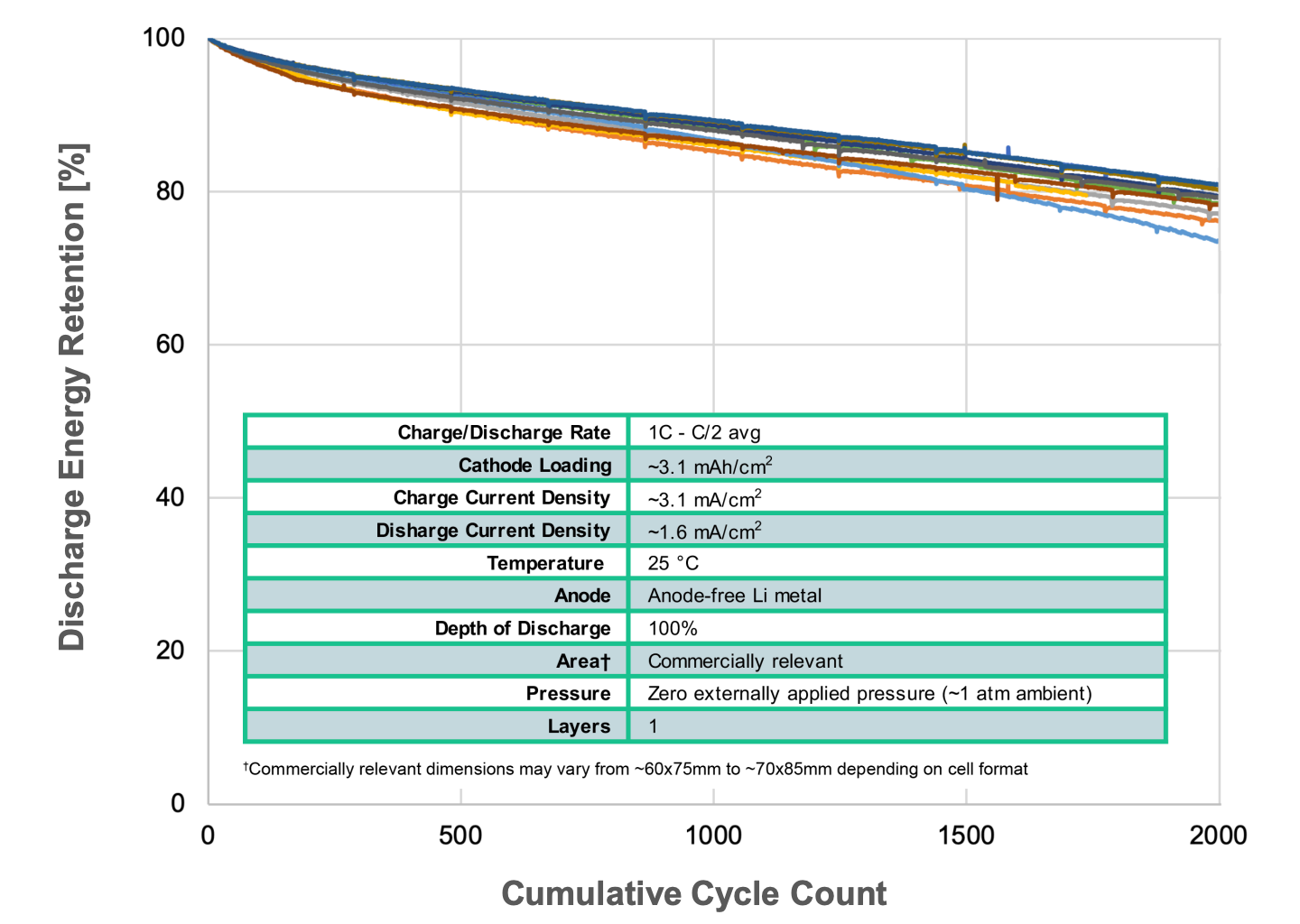
The timeline risk is equally material. QuantumScape has repeatedly pushed back commercialization targets, now aiming for mid-to-late decade milestones. Battery qualification cycles with OEMs typically span five to seven years, meaning even small delays compound into longer commercialization gaps. Every year of slippage increases the likelihood that competing technologies, whether advanced lithium-ion, sodium-ion, or alternative solid-state chemistries, catch up and erode QuantumScape’s differentiation.
Finally, manufacturability is an underappreciated risk. Building at gigawatt-hour scale requires not only technical readiness but also supply chain alignment, automation, and cost control. Yield losses in early ramp could dramatically inflate costs, forcing either larger-than-expected capital raises or delayed breakeven economics.
Basically, technology and scale-up risk represent the existential challenge for QuantumScape. The upside case rests on solving these hurdles and becoming the first to deliver a commercially viable solid-state battery. The downside is equally stark: failure to scale transforms years of R&D into sunk cost, leaving investors with a permanently unprofitable enterprise.
Commercialization and partnership dependence
QuantumScape’s commercialization strategy is deeply tied to its relationships with automotive OEMs, most notably Volkswagen, which remains its largest partner, investor, and prospective first customer. This concentration creates a critical risk dynamic: while Volkswagen’s validation provides credibility and resources, the company’s dependence on a single anchor partner magnifies execution and timing risks. For long-term investors, this duality, strategic alignment with a global leader on one hand, vulnerability to partnership concentration on the other, is a central consideration.
Volkswagen has committed significant capital to QuantumScape and has structured joint ventures to support commercialization. However, progress is contingent on Volkswagen’s own EV platform rollout, priorities, and timelines. Should Volkswagen shift its strategy, slow EV adoption targets, or pivot to alternative chemistries, QuantumScape’s path to market could be materially delayed. Unlike commodity suppliers, advanced battery startups cannot easily diversify customer bases in early stages due to the lengthy qualification cycles. This means that for the next several years, QuantumScape’s success is disproportionately tied to one OEM’s decisions.
Broader OEM adoption is also constrained by industry norms. Automakers typically require five to seven years of rigorous testing before adopting new cell technologies in mass-market vehicles. Even if QuantumScape achieves technical readiness sooner, customer validation cycles will stretch commercialization timelines. This creates a potential mismatch between investor expectations for revenue inflection and the reality of OEM integration processes. Moreover, each OEM maintains unique performance specifications, requiring tailored engineering that complicates scale and extends R&D intensity.
The risk of partnership exclusivity further compounds the issue. While Volkswagen provides initial scale and validation, its stake in QuantumScape could deter other OEMs from engaging until later stages. This delays the diversification of the customer base and increases concentration risk in early years of production. In contrast, competitors like Solid Power have pursued multiple partnerships, spreading risk across several OEMs. QuantumScape’s strategy represents a higher-beta approach: success with Volkswagen could deliver outsized rewards, but failure or delay would leave the company exposed.
Finally, partnership dependence influences financing options. Strong OEM alignment can unlock subsidies, joint funding, or preferential access to capital markets. However, if progress stalls or Volkswagen reduces support, QuantumScape’s bargaining power in future raises diminishes, forcing more dilutive financing.
In essence, commercialization risk is inseparable from partnership dependence. For QuantumScape, Volkswagen is both its greatest asset and its greatest liability. Investors must weigh whether the anchor relationship provides enough certainty to justify the lack of diversification, or whether the company is overly exposed to the strategic whims of a single counterparty.
Financial and capital market risk
QuantumScape’s financial position illustrates both resilience and fragility. On one hand, the company maintains a sizable cash balance of nearly $800 million in liquidity and no meaningful debt, providing a buffer to continue operations for the next two to three years. On the other, its burn rate of $300-350 million annually ensures that further financing will be required well before the company reaches commercialization. This introduces a persistent risk tied to capital markets sentiment, equity valuations, and the availability of non-dilutive funding sources.
The most immediate risk lies in dilution. Share count has more than doubled since 2020, climbing from 252 million to over 536 million. Stock-based compensation compounds this effect, with annual SBC exceeding $140 million. While this incentivizes retention of technical talent, it steadily erodes shareholder value in the absence of offsetting revenue growth. Future equity raises, inevitable to fund gigafactory-scale buildouts, could be highly dilutive if timed during periods of market weakness or negative sentiment toward speculative growth equities.
Capital markets volatility amplifies the challenge. As a pre-revenue cleantech firm, QuantumScape trades more on expectations and milestones than fundamentals. Investor enthusiasm can swing dramatically with updates on prototype performance, partnerships, or industry sentiment. A miss on technical milestones or delays in commercialization could compress valuation, forcing the company to raise equity at unattractive levels. Conversely, strong milestone execution could allow opportunistic raises at premium valuations. This binary dynamic leaves the company’s capital strategy closely tied to its ability to deliver consistent technical progress.
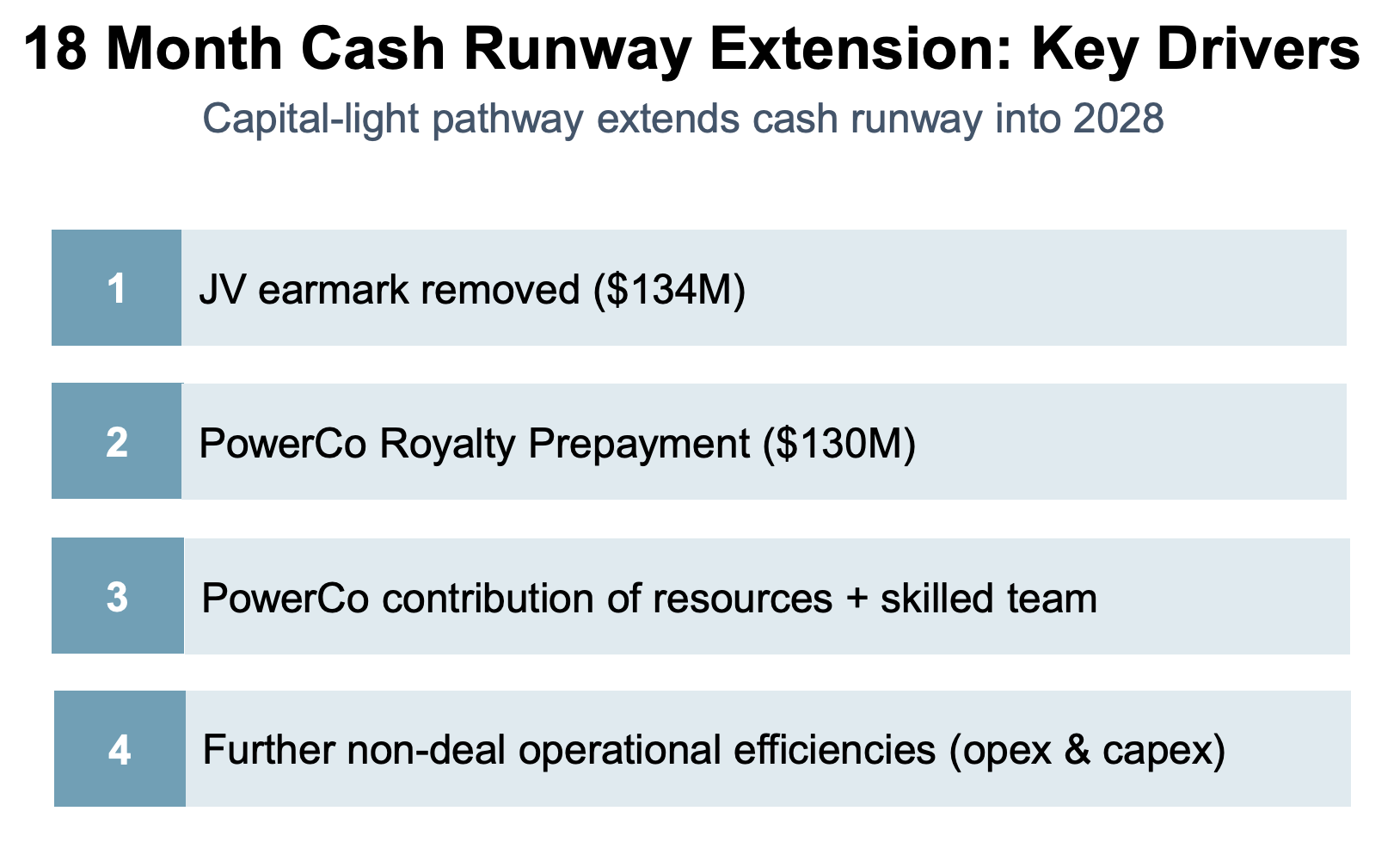
Access to alternative financing remains uncertain. While QuantumScape could pursue government-backed loans, such as DOE Title XVII support in the U.S. or European industrial funding, these programs typically require cost-sharing and significant documentation. Even if secured, they would likely only cover a portion of the multibillion-dollar capital requirements for scaling to commercial production. Absent a diversified set of OEM partnerships contributing co-investment, the equity burden will remain substantial.
For long-term investors, the financial risk is less about immediate solvency and more about the cost of bridging to commercialization. The company has sufficient liquidity to reach the next set of validation milestones, but not to fund mass-market production. This means future shareholder returns will be heavily influenced by the timing, size, and pricing of capital raises, factors largely outside of operational control and heavily dependent on market conditions.
Competitive and policy risk
While QuantumScape’s technological ambition positions it as a potential disruptor, the company faces formidable competitive and policy-related risks that could erode its long-term advantage. The global battery industry is evolving at breakneck speed, with incumbents and startups alike pursuing multiple chemistry pathways. The risk is that by the time QuantumScape’s solid-state cells reach scale, alternative technologies could achieve similar performance improvements and capture market share.
On the competitive side, incumbent lithium-ion producers such as CATL, LG Energy Solution, and Panasonic continue to drive cost and performance improvements in conventional chemistries. Innovations like high-nickel cathodes, silicon-dominant anodes, and advanced electrolyte formulations are extending the energy density, charging speed, and safety of lithium-ion cells. These incremental advances reduce the performance gap that QuantumScape must demonstrate to justify OEM adoption, effectively raising the bar for disruption. Additionally, competitors such as Solid Power and Toyota are pursuing their own solid-state programs, some with broader customer bases and closer ties to diversified OEMs. Even if QuantumScape delivers, it may not be the only supplier, diluting its potential pricing power and market share.
Alternative chemistries present a second threat. Sodium-ion, for example, is gaining traction as a lower-cost solution for certain segments, particularly in China. Meanwhile, hydrogen fuel cells continue to attract interest for long-haul applications. While these may not compete head-on with QuantumScape’s target market, they fragment the future energy storage landscape, making it harder for any single technology to dominate.
Policy risk compounds these competitive pressures. QuantumScape’s long-term economics will likely rely on subsidies, incentives, and regulatory tailwinds such as the U.S. Inflation Reduction Act and the EU’s Green Deal industrial policies. However, policy frameworks are inherently volatile, subject to political cycles and fiscal constraints. A shift in government priorities, subsidy rollbacks, or changes in trade policy could materially impact the economics of scaling manufacturing in the U.S. or Europe. Equally, regulations mandating domestic sourcing of critical materials could increase input costs or complicate supply chain planning, particularly given the scarcity of high-quality lithium and ceramic raw materials.
The interplay of competitive and policy risks is significant. If QuantumScape is delayed, rivals or incremental technologies may capture OEM commitments first. If subsidies weaken, the cost curve could shift unfavorably, requiring larger equity raises. The ultimate risk is that QuantumScape achieves technical success, but in a market where the strategic window has narrowed, leaving it as one of several players in a fragmented, subsidy-dependent ecosystem rather than a dominant category leader.
QuantumScape’s story is ultimately about navigating execution risk in an unforgiving market. The company has liquidity, strong partnerships, and a differentiated technology platform, but its future hinges on proving durability, manufacturability, and scale before capital markets patience runs thin.
If it succeeds, it could capture a first-mover advantage in one of the largest industrial shifts of the century; if it falters, years of R&D may be eclipsed by faster-moving rivals and shifting policy winds. The risk-reward equation is clear: QuantumScape is not a gradual compounder, it is a high-stakes bet on whether vision can survive the realities of industrialization.
Yet alongside these risks lie discrete milestones and catalysts that could drive step-changes in valuation as the story unfolds.
14. Catalysts
QuantumScape’s valuation will move in sharp jumps, not smooth curves, each technical, commercial, and manufacturing milestone is a binary catalyst that compounds or collapses the story.
For a pre-revenue company like QuantumScape, catalysts are the heartbeat of the equity story. With no sales to anchor valuation, investor perception swings on discrete milestones, prototype data, pilot-line progress, OEM validation, and subsidy inflows. Each update has the potential to reset sentiment dramatically, creating sharp binary re-ratings in either direction.
Unlike mature industrials, where quarterly earnings define trajectory, QuantumScape’s next several years will be shaped by a sequence of proof points that must be cleared in order. Tracking this chain of catalysts is essential to calibrating conviction and timing exposure.
Near-term catalysts (12-18 months)
In the near term, QuantumScape’s valuation will be highly sensitive to technical progress updates and validation milestones, as the company remains pre-revenue and investor perception is driven more by milestones than financial results. Over the next 12-18 months, several discrete catalysts could shape market sentiment and determine the trajectory of the equity.
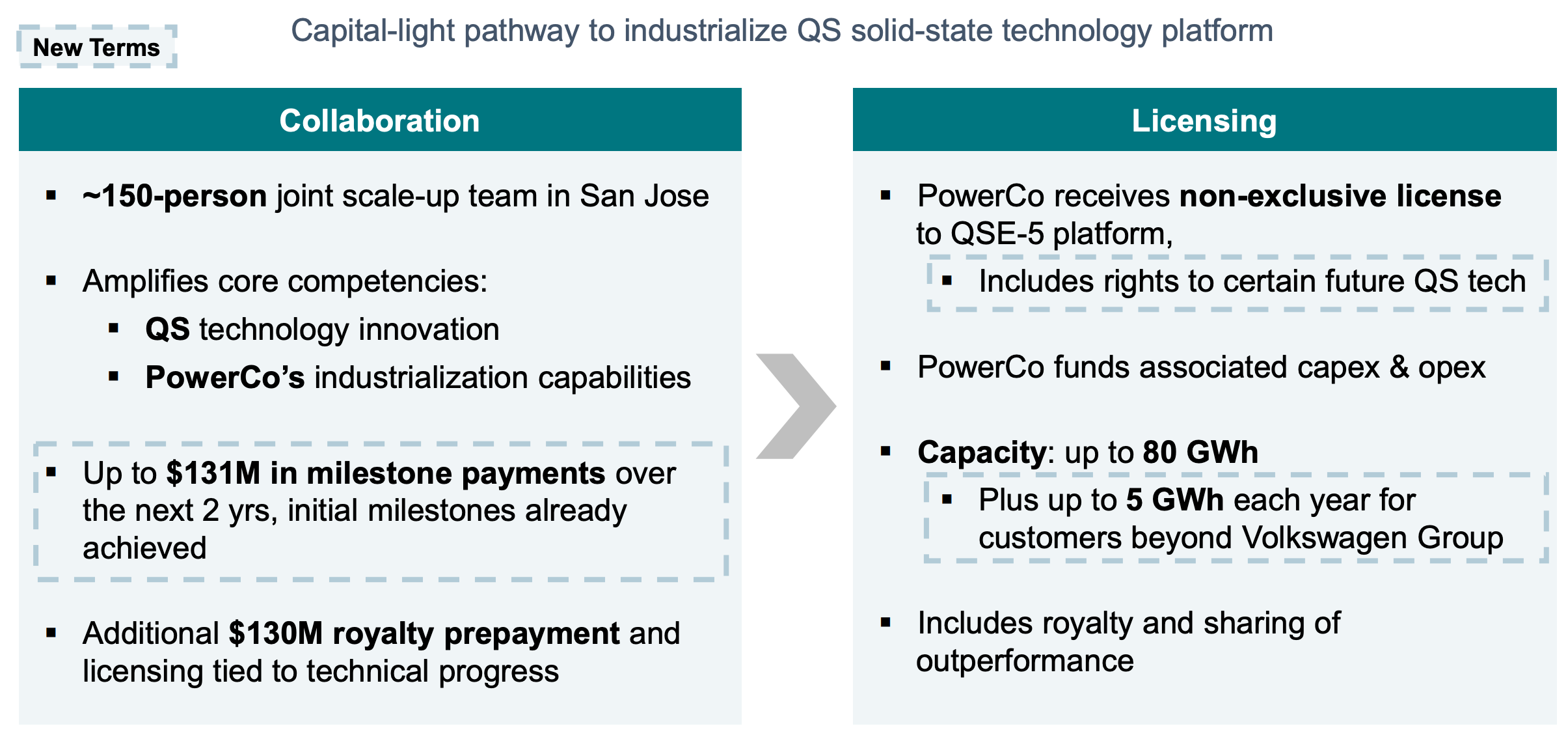
The most important catalyst is the delivery of performance data from multilayer solid-state cells. QuantumScape has previously demonstrated single-layer and early multilayer prototypes, but the next stage of validation requires showing consistent durability, cycle life, and energy density at higher layer counts. Updates confirming that prototype cells can meet or exceed automotive requirements, particularly with >800 cycles at high energy densities, would significantly de-risk the technology and validate years of R&D spend. Conversely, underwhelming results or delays in reporting new data could reinforce skepticism about the scalability of solid-state designs.
Another near-term milestone is progress on pilot-line operations. QuantumScape has invested heavily in expanding pilot manufacturing capacity, with a goal of producing A-sample cells for OEM partners. Evidence that the pilot line is operational, yielding cells at meaningful volumes with stable performance, would mark a critical inflection point. Independent validation by OEMs or third parties would further strengthen credibility, reducing investor concerns about internally reported metrics.
In parallel, policy-driven funding announcements could act as near-term catalysts. The company is well-positioned to benefit from U.S. Inflation Reduction Act incentives, DOE loan programs, and European Union industrial subsidies. Securing a substantial grant or low-cost financing package would extend runway, reduce dilution risk, and signal government confidence in QuantumScape’s technology. Investors should monitor DOE Title XVII loan activity and EU industrial strategy programs for announcements.
Finally, near-term sentiment will be shaped by external factors, including competitor developments and EV adoption trends. Negative news from rival solid-state players, such as Solid Power or Toyota’s program delays, could strengthen QuantumScape’s perceived leadership. Similarly, strong EV adoption growth and OEM commitments to next-generation batteries would reinforce the strategic importance of QuantumScape’s technology. Conversely, slowing EV demand or lithium-ion cost improvements could pressure sentiment by making solid-state less urgent.
The next 12-18 months will likely bring binary valuation swings around these catalysts. Successful demonstration of multilayer durability, coupled with credible pilot-line progress and subsidy inflows, would materially improve the risk-reward profile. Failure or delay would leave the company reliant on equity raises at depressed levels. The near-term investment case hinges on whether QuantumScape can deliver enough evidence to keep its strategic narrative intact until medium-term commercialization milestones.
Medium-term catalysts (2–4 years)
The medium-term horizon represents the most pivotal phase for QuantumScape, where the company must transition from promising prototypes to meaningful pre-commercial production and customer integration. Over the next two to four years, progress across pilot and joint venture milestones will largely determine whether QuantumScape evolves into a credible supplier or stalls in extended development.
A central catalyst in this window is the company’s collaboration with Volkswagen. The two firms have established a joint venture to build pre-commercial production capacity, with the goal of validating solid-state cells at volumes sufficient for OEM qualification testing. Concrete announcements around facility commissioning, initial output levels, and sample shipments to Volkswagen will be closely watched. Successful delivery of A-samples and eventually B-samples would signal tangible progress along the automotive adoption pathway. These milestones are critical, as OEMs typically require a progression from early prototypes to A-, B-, and C-sample phases before committing to vehicle integration.
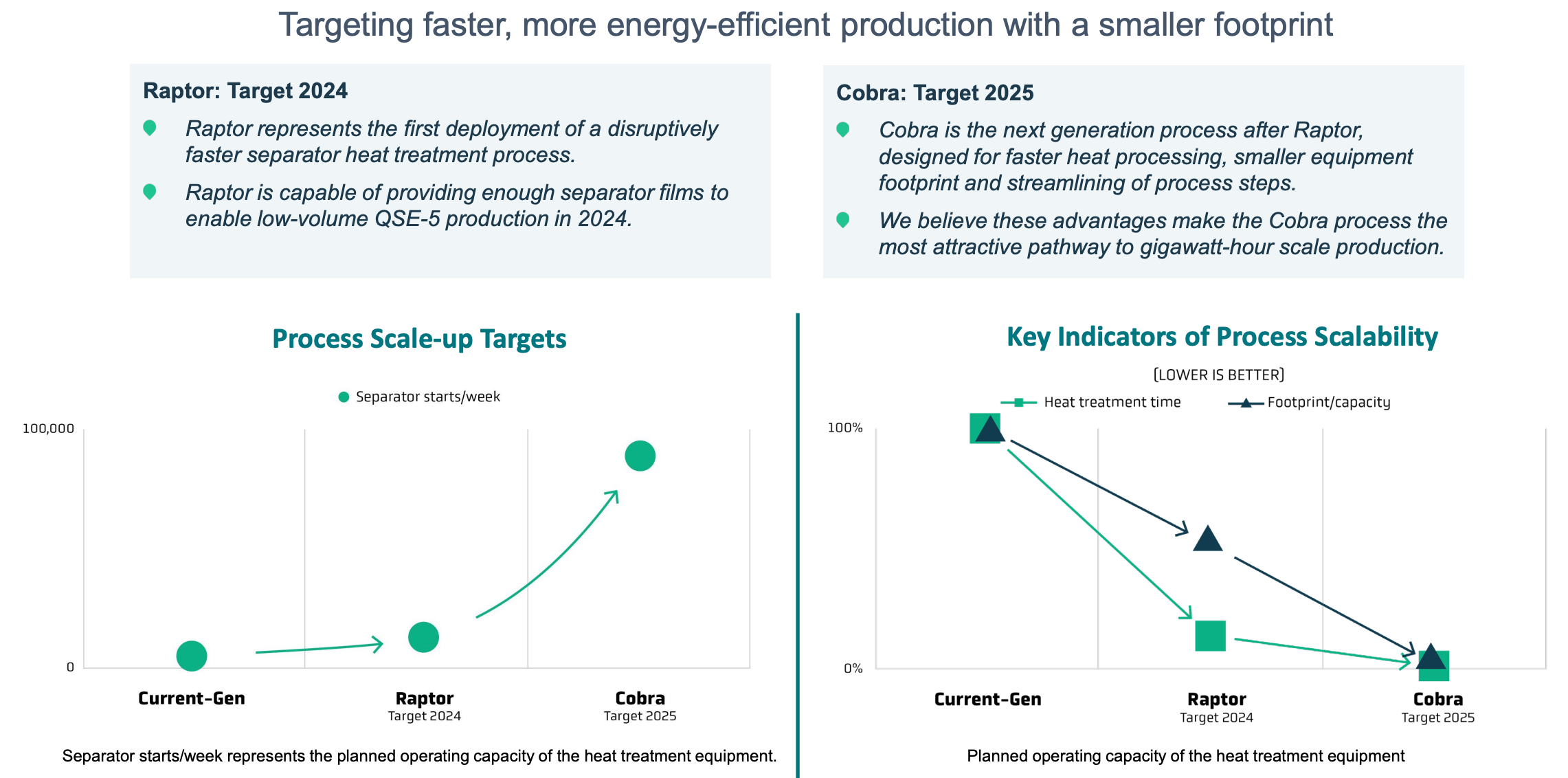
Equally important will be the expansion of QuantumScape’s customer base. While Volkswagen remains the anchor partner, investors will look for evidence of diversification through additional OEM partnerships. Announcements of new collaborations, even if initially limited in scope, would de-risk concentration risk and broaden the potential demand pool. Securing multiple OEM engagements also strengthens bargaining power and validates that interest in solid-state technology extends beyond a single strategic backer.
Medium-term catalysts also include scaling pilot-line output from lab batches to hundreds of megawatt-hours annually. Demonstrating that cells can be produced in sufficient quantities to support rigorous OEM testing would not only validate manufacturability but also position QuantumScape for subsequent funding rounds. Progress on yield, consistency, and cost curves will be critical, as they serve as leading indicators of eventual gross margins at commercial scale.
Finally, this period offers the potential for strategic partnerships or licensing agreements beyond automotive. Consumer electronics, aerospace, or stationary storage applications may provide earlier revenue opportunities and additional validation. Even limited revenue from niche markets would represent a shift in QuantumScape’s profile from a purely pre-revenue entity to one generating commercial cash flows, however modest.
The 2-4 year period is where conviction will be tested. Successful delivery of A- and B-samples, expansion into new partnerships, and validation of pilot-line economics would materially de-risk the business and support a rerating. Conversely, delays or underwhelming results would raise existential concerns, as peers and incumbents continue to advance. The medium-term window is thus the make-or-break phase for QuantumScape’s investment case.
Long-term catalysts (5+ years)
The long-term horizon for QuantumScape represents the potential realization of its disruptive vision: becoming a commercial-scale supplier of solid-state batteries to the automotive industry and potentially beyond. These catalysts are tied less to incremental technical validation and more to strategic execution, market penetration, and scale-driven economics. If achieved, these milestones would transform QuantumScape from a speculative R&D play into a durable, cash-generating enterprise.
The most significant long-term catalyst is the commissioning of gigafactory-scale production facilities. Delivering operational plants capable of producing gigawatt-hours of solid-state cells annually would establish QuantumScape as one of the first companies to commercialize this next-generation technology. The transition from pilot-scale to mass production will be a defining inflection point, as it demonstrates not only technical success but also operational readiness and cost competitiveness. Announcements of facility openings, production ramps, and yield improvements will be central drivers of valuation.
Equally transformative would be the integration of QuantumScape cells into mass-market vehicle platforms. OEM adoption at scale, starting with Volkswagen and potentially extending to other automakers, would signal commercial validation and open up multibillion-dollar revenue opportunities. Each program launch, from premium vehicles to mainstream EV platforms, represents a discrete catalyst, as automaker commitments lock in long-term demand and position QuantumScape within global EV supply chains.
Beyond automotive, long-term catalysts also include expansion into adjacent markets. Stationary energy storage offers a potentially massive opportunity, particularly as renewables penetration grows and grid balancing becomes critical. Aerospace and defense applications, while smaller, provide high-margin niches where performance advantages justify premium pricing. Even consumer electronics could emerge as an earlier commercial opportunity if solid-state cells achieve form factor and cost targets. Diversification into these verticals would reduce reliance on automotive and broaden the company’s total addressable market.
Finally, strategic corporate activity cannot be overlooked. Given the capital intensity and strategic importance of battery technology, QuantumScape could eventually become an acquisition target for a major OEM or incumbent cell producer. Alternatively, joint ventures and licensing agreements may emerge as the company seeks to accelerate adoption without bearing the full burden of global manufacturing buildouts. Either pathway represents a potential upside catalyst, crystallizing value earlier than standalone execution might allow.
For long-term investors, the payoff scenario rests on whether QuantumScape can translate years of development into sustainable commercial leadership. Gigafactory ramps, OEM program launches, and market diversification represent the critical long-term milestones. Achieving them would position QuantumScape not just as a speculative innovator, but as a cornerstone of the global energy transition.
Catalyst path dependency and investor implications
For QuantumScape, catalysts are not discrete or independent, they are path dependent, meaning the company must achieve them in sequence to unlock subsequent milestones. This layered dynamic heightens the binary risk profile: missing one step can cascade into delays across the entire roadmap, while successful execution compounds value creation. Understanding this sequencing is critical to timing entry points, managing risk, and calibrating conviction.
The first layer of catalysts involves technical validation, demonstrating that multilayer solid-state cells can deliver automotive-grade performance and durability. Without this, no amount of strategic partnership or policy support will matter. Achieving consistent results at the pilot scale is thus the foundation of the entire thesis. Success here unlocks the second layer: OEM engagement and sample qualification cycles. Each progression from A-samples to B- and C-samples represents a narrowing of technical and commercial risk, creating incremental opportunities for re-rating.
The third layer is manufacturing scale-up. Even if OEMs validate the technology, QuantumScape must prove it can produce at scale with acceptable yields and costs. Pilot-line success opens the door to pre-commercial and eventually gigafactory-scale production. Here, capital markets and policy support become critical, as execution requires billions in funding. If raised at premium valuations, supported by milestone execution, dilution can be minimized. But if technical or commercial delays coincide with financing needs, dilution risk compounds, eroding long-term equity returns.
Finally, the fourth layer is market penetration and diversification. Once QuantumScape achieves scale with an anchor partner (Volkswagen), catalysts shift toward adoption across multiple OEMs and expansion into adjacent sectors like stationary storage. These later-stage catalysts are conditional on clearing earlier hurdles. In practice, missing early milestones could shrink or eliminate the strategic window, as competitors secure OEM commitments or subsidies expire.
The implication is that value creation is asymmetrically tied to milestone execution. Each successful step not only derisks the story but also enables the next, creating a staircase of valuation inflections. Conversely, failure at any stage can set the company back years, forcing dilutive raises and ceding ground to rivals. This path dependency means that QuantumScape is unlikely to appreciate in a linear fashion; instead, its equity will move in discrete jumps tied to catalysts.
So to say, the investment case is highly contingent on timing and sequencing. Investors must track milestone progression closely, recognizing that early technical and partnership wins have outsized importance. Those who believe QuantumScape can thread the catalyst sequence successfully may see transformative upside. Those skeptical of its ability to clear each stage should expect prolonged dilution and execution risk to dominate returns.
The path to value creation in QuantumScape is highly path dependent: success in one phase unlocks the next, while failure can cascade into multi-year delays. Early wins on multilayer durability and pilot-line yield will matter far more than long-term vision, because without them, subsequent OEM adoption, gigafactory funding, and market penetration cannot materialize.
This creates a non-linear investment profile, valuation will likely move in step-changes around milestone announcements, not through steady compounding. The implication is clear: the reward is asymmetric for those who believe QuantumScape can thread the catalyst sequence, but the risks are equally stark if it stumbles. Timing entries and exits around these inflection points may matter as much as long-term belief in the technology itself.
Taken together, these catalysts and risks converge into a long-term outlook, framing the investment view and the asymmetric potential embedded in QuantumScape’s equity.
15. Opinion & Target View
QuantumScape is not just chasing an EV battery, it’s testing whether a decade of science can be transformed into an industrial platform that redefines energy storage.
The investment case for QuantumScape rests on whether it can translate a genuine materials breakthrough into a scalable industrial product. Its solid-state ceramic separator promises to unlock the long-elusive lithium-metal anode, offering energy density and safety gains far beyond incremental lithium-ion improvements.
Personally, I don’t think the opportunity will be measured in marginal chemistry tweaks but in the asymmetric upside of backing a platform that could redraw the EV and energy storage landscape. At this stage, the company is less about theoretical proof and more about proving manufacturability, a transition that will decide whether the story remains speculative or becomes foundational.
Breaking the materials barrier
QuantumScape’s investment case begins with a fundamental materials science challenge: how to commercialize a lithium-metal anode in a way that is safe, durable, and manufacturable. Traditional lithium-ion batteries rely on graphite or silicon-dominant anodes because pure lithium metal, while offering dramatically higher energy density, is plagued by dendrite formation that can pierce separators and cause short circuits. Attempts to stabilize this chemistry have historically failed, either due to inadequate cycle life, safety concerns, or insurmountable processing costs.
QuantumScape’s proposition is that its solid-state ceramic separator solves this problem by providing both ionic conductivity and dendrite resistance, eliminating the need for flammable liquid electrolytes. The result is a potential leap forward: higher gravimetric and volumetric energy density, faster charging, longer cycle life, and improved safety compared to today’s best-in-class lithium-ion cells. Importantly, this is not a marginal improvement; if scalable, it would represent a step-function change in EV battery performance.
The moat derives not simply from patents but from accumulated know-how in producing thin, defect-free ceramic films at scale and integrating them with lithium-metal anodes. This is a field where incumbents face inertia, existing multi-billion-dollar factories are optimized for liquid-based chemistries. Competitors experimenting with polymer or sulfide electrolytes face their own challenges in stability, manufacturability, and cost. QuantumScape’s lead, while not unassailable, is meaningful given its decade-long head start and partnership with Volkswagen.
This is why the equity retains option value: investors are underwriting not incremental chemistry tweaks, but the chance to back a platform with defensible IP and unique technical differentiation. If the barrier QuantumScape has crossed proves both real and scalable, the payoff is asymmetrically large.
The transition from science to industry
The most important phase for QuantumScape lies not in proving that its cells can work in a laboratory setting, this has largely been demonstrated, but in showing that they can be manufactured consistently, at cost, and in volumes suitable for automotive adoption. The company’s roadmap moves through well-defined stages: producing A-samples for initial validation, advancing to B-samples for more rigorous OEM testing, and eventually delivering C-samples that could be integrated into pre-production vehicles. Each step is a milestone not only for customers but also for investors, as it represents incremental de-risking of the technology.
This transition is where execution risk becomes paramount. Producing single- or few-layer cells is a fundamentally different challenge than producing hundreds of layers with uniform quality. Yield losses, cost overruns, or delays in scaling up the pilot line could derail timelines and force additional dilutive capital raises. On the other hand, demonstrating that cells can be reliably produced at scale will be the single strongest signal that QuantumScape is not just a science experiment but an industrial company in the making.
From an equity perspective, this is the defining inflection point. Once the company can credibly ship samples to OEMs for testing, the narrative shifts from speculative R&D to industrial execution and capacity buildout. At that point, QuantumScape begins to look less like a binary option and more like a capital-intensive specialty industry with long-term growth optionality. This is precisely the transition that will dictate whether the stock remains a volatile venture-style bet or earns a place alongside other scaled players in the EV supply chain.
Optionality beyond the core EV thesis
While automotive represents the immediate and largest addressable market, QuantumScape’s technology platform carries meaningful optionality across adjacent sectors. The attributes of solid-state cells, high energy density, fast charging, safety, are equally relevant in other markets.
Aerospace and defense applications, for instance, prize lightweight, energy-dense solutions where cost is less of a constraint. Consumer electronics could adopt solid-state cells to enable slimmer designs and longer battery life, creating high-margin niche opportunities. Stationary storage, while less demanding in terms of energy density, could eventually represent a massive market if the cost curve is competitive, as safety and cycle life advantages would be meaningful in grid applications.
This optionality matters for two reasons. First, it expands the potential revenue streams beyond the inherently cyclical and competitive automotive sector. Second, it provides resilience: even if EV adoption proves slower than expected or incumbents narrow the performance gap with lithium-ion improvements, QuantumScape could still find commercially viable applications for its technology. In the long run, companies with platform technologies, solutions that can be repurposed across multiple verticals, tend to enjoy better risk-adjusted outcomes.
The implication for the investment case is that QuantumScape is not just a binary bet on Volkswagen integration. While that remains the anchor partnership, the broader thesis rests on whether the company can leverage its materials platform into multiple revenue streams. If so, the upside case becomes not only about displacing lithium-ion in cars but about positioning itself as a foundational player in the broader energy storage ecosystem.
QuantumScape’s equity is best understood as an option on execution: if the company clears the manufacturing and qualification hurdles, it stands to capture a strategic position in a trillion-dollar market, with optionality extending into aerospace, consumer electronics, and stationary storage.
If it fails, years of R&D risk being stranded as sunk cost. The balance of risk and reward is stark, but the magnitude of the potential disruption justifies investor attention. Ultimately, this is not about betting on batteries, it is about betting on whether QuantumScape can transform a scientific edge into industrial scale before its strategic window closes.
16. Conclusion
QuantumScape is not just chasing incremental gains, it is a bold bet on reshaping the future of energy storage.
QuantumScape represents one of the most asymmetric opportunities in the clean energy and electrification space. The company has spent more than a decade addressing one of the hardest problems in energy storage and now stands at the threshold of moving from a scientific breakthrough to an industrial reality. Its ceramic separator and lithium-metal architecture offer the possibility of a genuine step change in battery performance, higher energy density, faster charging, and improved safety, attributes that could define the next generation of electric mobility.
The investment case is not without substantial risks. QuantumScape remains pre-revenue, capital-intensive, and dependent on successful scale-up in an industry notorious for technical and manufacturing setbacks. Execution delays, dilution, or competitive advances could erode or even eliminate equity value. For this reason, the stock should not be viewed as a steady compounder but as a venture-style investment within public markets.
Yet, for long-term investors willing to absorb volatility and binary risk, the potential reward is significant. If QuantumScape achieves even partial success, delivering qualified cells to OEMs, securing multi-year supply contracts, and scaling gigafactory-level production, it could emerge as a cornerstone supplier in the global EV supply chain. Beyond automotive, its platform offers optionality across aerospace, consumer electronics, and stationary storage, creating multiple vectors of upside that are not yet priced into the equity.
In sum, QuantumScape embodies the rarest kind of public-market investment: a high-risk, high-reward option on a generational technology shift. For investors with the horizon and discipline to withstand interim volatility, the equity offers a levered exposure to the electrification megatrend with the potential for transformative upside. The path will be uneven, but the destination, if reached, could fundamentally reshape energy storage and deliver outsize returns.
17. Acknowledgements & Disclaimer
This thesis is based on personal analysis and publicly available information from a range of sources, including company filings, industry reports, and public statements. It represents my own interpretation of the data and broader market context. Nothing contained herein should be construed as investment advice or a recommendation to buy or sell any security.
Important note: This analysis is purely educational and reflects my personal views. It is not financial advice or an investment recommendation. Always do your own due diligence or consult with a licensed professional before making investment decisions.
Thanks again for reading, and as always, stay curious and long-term oriented.
Sincerely,
A.C.L.